How to Clean Pleated Blinds

Authored By Michael Turner -30 Years Home Improvement Expertise | Updated 2026 | BlindShades.pro
Updated on June 30, 2026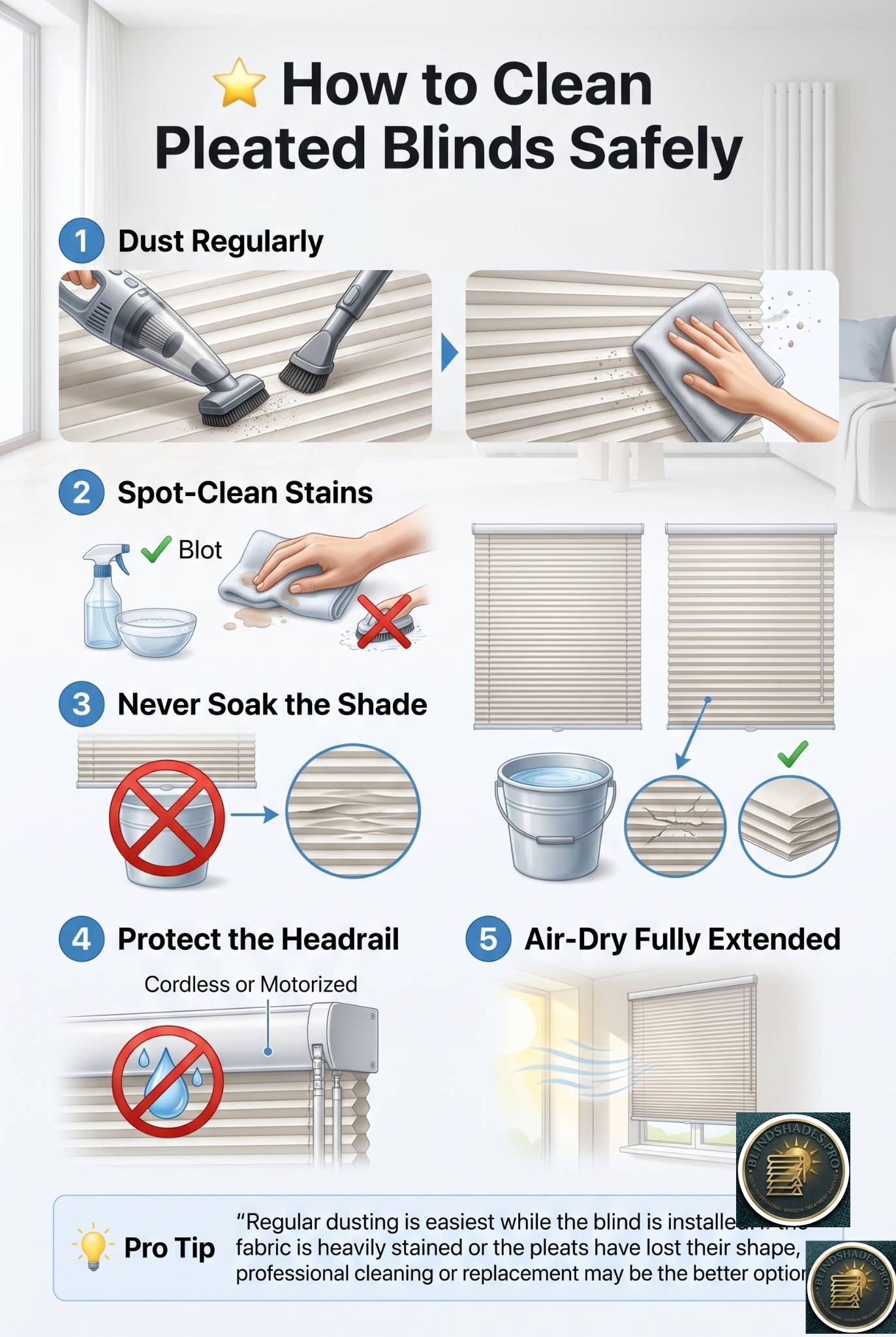
Authored by Michael Turner — 30 Years of Home Improvement Expertise | BlindShades.pro
To clean pleated blinds, dust them regularly and spot-clean stains gently, but do not soak a standard pleated shade, since submerging it can flatten the pleats and damage the fabric. For routine cleaning, run a vacuum on low suction with an upholstery brush along the pleats, or wipe with a dry microfiber cloth, always working along the folds rather than across them so you do not crush the crease. For a stain, dab, do not scrub, with a cloth barely dampened in mild soapy water, using more water and less soap, and let it air-dry fully extended. The most important rule is what not to do: standard pleated shades should not be dunked in a tub, scrubbed hard, or bleached, because all three ruin the pleats. This guide covers the safe way to clean them by mess and by fabric.
Key Takeaways
- Dust first, and dust often. Regular gentle dusting with a low-suction vacuum brush or a dry microfiber cloth prevents most deep cleaning from ever being needed.
- Work along the pleats, not across. Always clean in the direction of the folds so you do not flatten or crease the pleats.
- Blot stains, never scrub. Dab a stain with a barely damp, mildly soapy cloth; scrubbing hard flattens the pleats and can leave a mark.
- Do not soak a standard pleated shade. Submerging a single-layer pleated shade in a tub can flatten the pleats and delaminate a liner; check your manufacturer before ever wetting it heavily.
- Keep water off the headrail. Never soak a cordless or motorized headrail, since water can damage the internal mechanism.
⭐ Quick Answer
Here is how to clean pleated blinds without crushing the pleats: dust gently, spot-clean stains, and never soak a standard pleated shade.
- Dust regularly: vacuum on low with an upholstery brush, or wipe with a dry microfiber cloth, along the pleats, as The Spruce recommends.
- Spot-clean stains: dab with a cloth barely damp in mild soapy water, blotting, never scrubbing, the gentle approach Blindster advises.
- Do not soak a standard pleated shade; submerging it in a tub can flatten the pleats and delaminate a liner.
- Protect the headrail: keep water away from cordless and motorized mechanisms, and air-dry the shade fully extended.
- Deep clean professionally, not in the tub, using a certified ultrasonic cleaner as Bali suggests. See also how to install pleated blinds, pleated vs cellular shades, or our best pleated blinds guide.
Clean by the Mess: Which Method to Use
Match the method to how dirty the shade is.
| Mess | Method |
|---|---|
| Everyday dust | Low-suction vacuum with upholstery brush, or dry microfiber cloth |
| Light surface soil | Wipe with a barely damp cloth, mild soap, along the pleats |
| A spot or stain | Dab gently with a mildly soapy damp cloth, blot dry |
| Deep or set-in soil | Professional ultrasonic cleaning (for suitable shades) |
Most pleated blind cleaning is just dusting, which is why regular light maintenance keeps deep cleaning from ever being needed. Step up the method only as far as the mess requires: dust for everyday grime, a barely damp wipe for light soil, gentle spot-blotting for a stain, and professional cleaning for anything deep or set in. Starting with the gentlest method that works protects the pleats and the fabric.
Routine Dusting Without Crushing the Pleats
The direction you dust matters as much as the tool.
Regular dusting is the single most important thing you can do, and the trick is to do it without flattening the folds. Use a vacuum on its lowest suction setting with a soft upholstery or dusting brush attachment, and run it gently along the pleats, following the direction of the folds rather than dragging across them. A dry microfiber cloth or a soft duster works too, wiped along each pleat. Supporting the shade lightly with your other hand as you go stops the fabric from stretching or the pleats from creasing. For the back of the shade or the inside of the folds, a hair dryer on a cool, low setting can blow dust out without contact. Dusting like this every couple of weeks keeps most pleated blinds looking new.
Spot-Cleaning Stains
Blot gently; the common advice to scrub is exactly wrong.
| Fabric type | Spot-clean approach |
|---|---|
| Light-filtering pleated | Barely damp cloth, mild soap, blot along the pleat |
| Room-darkening or blackout-liner | Extra-gentle blotting; keep water minimal so the liner does not wet through |
| Woven or textured | Dry-brush first; dab only lightly, test a hidden spot |
| Any fabric | Air-dry fully extended; never bleach |
For a spot or stain, gentleness is everything. Dampen a clean, soft cloth with lukewarm water and a small amount of mild soap or dish detergent, using more water and less soap, then dab the stain gently, blotting rather than rubbing. Scrubbing hard is the most common mistake: it flattens the pleats and can spread or set the mark. Work from the outside of the stain inward, use a second clean, damp cloth to lift the soap, and then let the area air-dry with the shade fully lowered so the pleats keep their shape. Test any cleaning on a hidden corner first, since fabrics react differently, and never use bleach or harsh solvents, which can discolor the fabric permanently.
Can You Soak a Pleated Shade? The Rule That Saves Your Blinds
For a standard pleated shade, no, and this is the mistake to avoid.
| Type | Can you submerge or soak it? |
|---|---|
| Standard single-layer pleated shade | No, soaking can flatten the pleats and damage the fabric |
| Pleated shade with a blackout or fabric liner | No, water can delaminate or wrinkle the liner |
| Cellular (honeycomb) shade | Generally no, water gets trapped in the cells; check the maker |
| Cordless or motorized headrail | Never wet the headrail mechanism |
| Any shade | Only if the manufacturer specifically says it is washable |
You will find plenty of online advice, especially in forums, suggesting you drop pleated shades in a bathtub of soapy water or spray them with foaming cleaner and let them soak. For a standard pleated shade, this is risky and usually a mistake: submerging a single-layer fabric shade can flatten the crisp pleats permanently, cause a liner to delaminate or wrinkle, and leave water marks as it dries unevenly. Water trapped in a cellular shade’s honeycomb is even harder to remove. The safe rule is simple: do not soak a pleated shade unless the manufacturer specifically states it is washable, and never wet a cordless or motorized headrail. When a shade is too dirty for spot-cleaning, professional ultrasonic cleaning is the safer deep-clean route.
Deep Cleaning and Professional Options
When spot-cleaning is not enough, go professional, not into the tub.
If a pleated shade is heavily soiled or has stains that spot-cleaning will not lift, the best route is professional cleaning rather than submerging it yourself. Many window-covering brands maintain networks of certified ultrasonic cleaners, who clean fabric shades safely without crushing the pleats or damaging liners. Ultrasonic cleaning uses sound waves in a controlled bath to lift dirt gently, and it is designed for delicate window treatments. Ask the shade’s manufacturer or retailer for a certified cleaner in your area. Weigh the cost against the shade’s value, though, on an older or inexpensive pleated blind, replacement may cost little more than a professional clean, as discussed in our best pleated blinds guide.
Protecting the Headrail and Hardware
Keep water and moisture away from the mechanism.
Whatever cleaning you do, keep water off the headrail and its internal parts. On a corded shade, a wet cord lock can stiffen or corrode; on a cordless shade, moisture can affect the spring mechanism; and on a motorized shade, water near the motor can cause real damage. Wipe the headrail itself with only a barely damp or dry cloth, and never spray cleaner directly onto or into it. If your shade later will not hold its position after cleaning, that is usually a mechanism issue rather than cleaning damage, and it is covered in pleated blinds won’t stay up.
What Not to Do
The habits that ruin pleated blinds.
| Don’t | Why |
|---|---|
| Soak a standard pleated shade | Flattens pleats, can delaminate a liner |
| Scrub a stain hard | Crushes the pleats and can set the mark |
| Use bleach or harsh solvents | Discolors and weakens the fabric |
| Wet the headrail mechanism | Damages cordless or motorized parts |
| Dry with heat or a hot dryer | Can shrink or warp the fabric |
| Vacuum on high suction | Pulls and creases the pleats |
Every one of these is a common shortcut that does lasting harm. The theme is consistent: pleated shades are delicate, single-layer fabric, so anything aggressive, soaking, scrubbing, bleaching, high heat, or strong suction, damages the pleats or the fabric. Stick to gentle dusting, careful blotting, and professional help for deep cleaning, and a pleated blind will stay crisp for years. If you are comparing pleated with a more washable or durable option, see pleated blinds vs cellular shades.
Best Sources
- The Spruce — on dusting fabric shades with a vacuum hose and upholstery brush attachment or a microfiber cloth, and gentle handling for pleated and Roman shades.
- Bali — on spot-cleaning with mild soap and using a certified network of ultrasonic cleaners for deep cleaning rather than submerging shades.
- Blindster — on starting at the headrail, wiping with warm water and mild soap, and blotting stains gently rather than scrubbing.
- BISSELL — on fabric blinds being prone to dust and stains, gentle handling, and cautious use of steam only where appropriate.
- JustAnswer — on removing the shade and vacuuming with an upholstery brush, and the risks of over-wetting delicate pleated fabric.
Related Guides
- Best Pleated Blinds Buying Guide
- How to Install Pleated Blinds
- Pleated Blinds Won’t Stay Up
- Pleated Blinds vs Cellular Shades
Frequently Asked Questions
How do you clean pleated blinds?
Dust them regularly and spot-clean stains gently, and do not soak a standard pleated shade. For routine cleaning, vacuum on low suction with a soft upholstery brush along the pleats, or wipe with a dry microfiber cloth, always working in the direction of the folds so you do not flatten them. For a stain, dab, do not scrub, with a cloth barely dampened in mild soapy water, then blot dry and let the shade air-dry fully extended. Avoid soaking, scrubbing, bleach, and wetting the headrail, since all of these damage the delicate pleated fabric.
Can you soak or submerge pleated blinds to clean them?
No, you should not soak a standard pleated shade. Although online forums often suggest dunking pleated shades in a bathtub or spraying them with foaming cleaner and letting them soak, submerging a single-layer pleated shade can flatten the pleats permanently, delaminate or wrinkle a liner, and leave water marks as it dries. Water is also hard to remove from a cellular shade’s honeycomb, and it must never reach a cordless or motorized headrail. Only soak a shade if the manufacturer specifically says it is washable; otherwise, spot-clean, or use professional ultrasonic cleaning for a deep clean.
How do you clean pleated blinds without flattening the pleats?
Work gently and always along the direction of the pleats, never across them. Use a vacuum on its lowest suction with a soft upholstery or dusting brush, running it lightly along each fold, or wipe with a dry microfiber cloth in the same direction. Support the shade with your free hand to stop the fabric stretching. For stains, blot rather than scrub, since hard scrubbing is what crushes the pleats. Then air-dry the shade fully lowered so the pleats keep their shape. Avoiding high suction, hard rubbing, and soaking is the key to keeping the folds crisp.
How do you get stains out of pleated blinds?
Dab the stain gently with a soft cloth barely dampened in lukewarm water and a small amount of mild soap, using more water and less soap. Blot rather than rub, working from the outside of the stain inward, then lift the soap with a second clean damp cloth and let the area air-dry with the shade fully extended. Test on a hidden spot first, and never use bleach or harsh solvents, which can permanently discolor the fabric. For a stubborn or set-in stain that gentle blotting will not lift, professional ultrasonic cleaning is safer than soaking the shade yourself.
Can pleated blinds be professionally cleaned?
Yes, and for a deep clean it is the safest option. Many window-covering manufacturers maintain networks of certified ultrasonic cleaners who clean fabric shades without crushing the pleats or damaging liners, using sound waves in a controlled bath to lift dirt gently. Ask the shade’s maker or your retailer for a certified cleaner near you. Professional cleaning is the right choice when a shade is too soiled for spot-cleaning, since it avoids the pleat damage and water marks that come from soaking a shade at home. Weigh the cost against replacement on older or inexpensive shades.
