How to Clean Roller Shades Without Damaging the Fabric

Authored By Michael Turner -30 Years Home Improvement Expertise | Updated 2026 | BlindShades.pro
Updated on July 6, 2026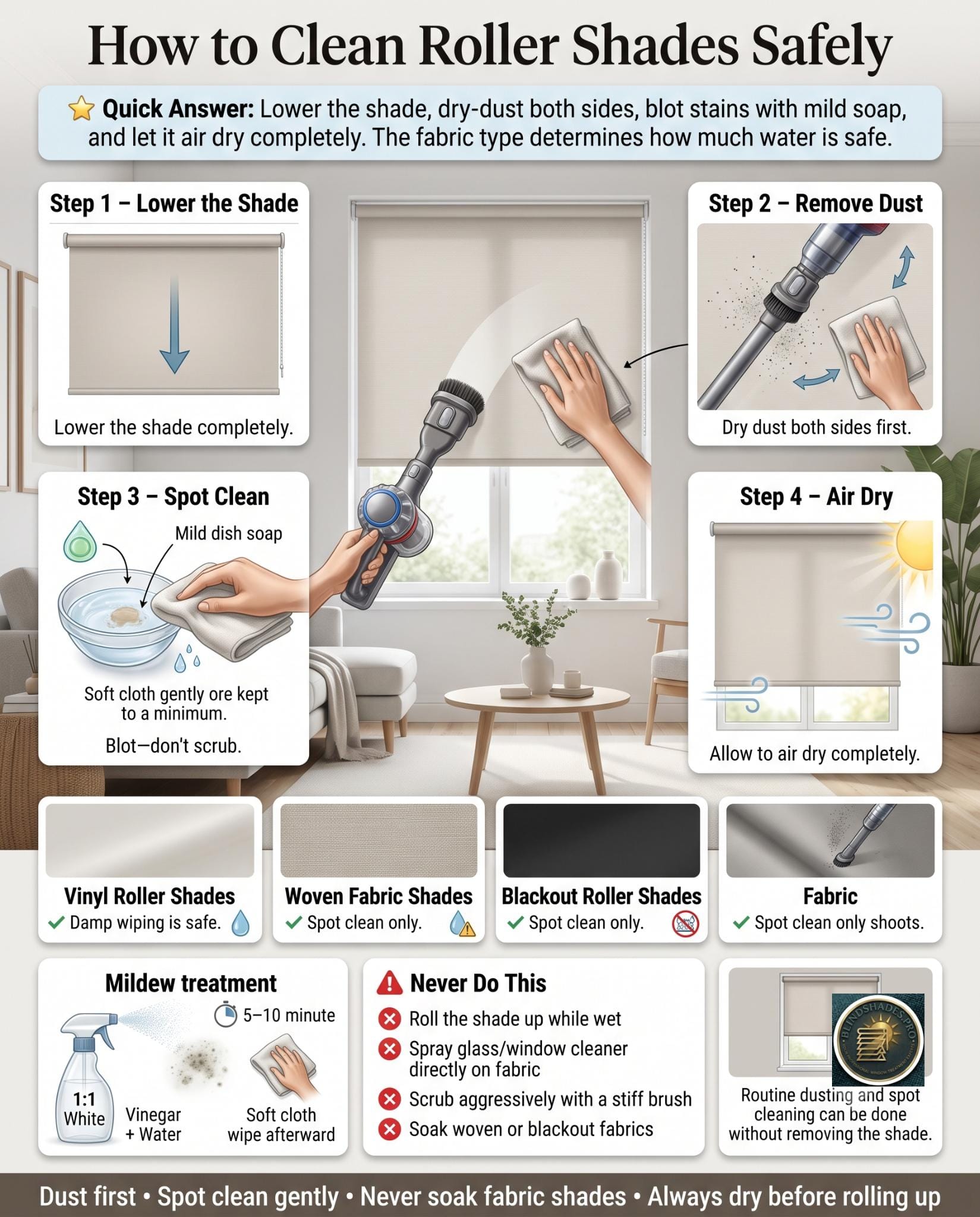
By Michael Turner | 30 years in window treatments
To clean roller shades, lower them fully, dry-dust both sides with a vacuum brush or microfiber cloth, spot-clean marks with a barely-damp cloth and a little mild dish soap, and leave them down to air-dry completely before rolling up. That is the safe routine for most shades. The part the generic guides skip — and the reason some people ruin a shade while cleaning it — is that the fabric type changes the rules. A vinyl shade you can wipe freely; a woven or blackout fabric you must never soak. This guide gives you the method, the stain fixes, and the mistakes that quietly wreck a shade.
🎯 5 Key Takeaways
- Dust first, spot-clean second, air-dry last. The core routine is dry-dusting both sides, blotting marks with a barely-damp mild-soap cloth, and letting the shade air-dry fully extended before rolling it up.
- Identify the fabric before you touch it. Vinyl tolerates wiping and more water; woven and blackout fabrics must be spot-cleaned only, never soaked, or they shrink, crease, or lose their coating.
- Never roll a wet shade back up. Trapped moisture leads to mold and musty odors, so the shade must be bone-dry before it goes up.
- Skip window cleaner and hard scrubbing. Glass cleaners and abrasive rubbing can discolor fabric and rub away a blackout coating — mild dish soap and gentle blotting are the safe tools.
- Most cleaning happens in place. You rarely need to remove a roller shade — dusting and spot-cleaning are done with the shade hung and lowered.
⭐ Quick Answer
How to clean roller shades: lower them fully, dry-dust both sides, spot-clean marks with a barely-damp mild-soap cloth, and air-dry before rolling up. The short version:
- The routine: vacuum with a soft brush or dry microfiber top to bottom, then blot marks with a little mild dish soap and water, as Blinds.com advises.
- The fabric decides the method: wipe vinyl freely, but spot-clean woven and blackout fabrics only, and never soak them.
- For mildew, spray a 1:1 white vinegar and water mix, wait five to ten minutes, then wipe with a damp cloth.
- Never roll the shade up wet, scrub hard, or use window cleaner, which Levolor warns can discolor fabric or strip a blackout coating.
- Clean in place with no removal, and a cassette headrail keeps dust off the roll; some fabrics like Sunbrella have their own approved cleaner.
Best Sources: Blinds.com (vinyl roller shade cleaning); Levolor (roller shade care and cautions); Bali Blinds (blinds and shades cleaning); 3 Day Blinds (deep-cleaning guidance); Sunbrella (fabric cleaner guidance).
How Do You Clean Roller Shades?
Lower the shade completely, dry-dust both sides, spot-clean any marks with a barely-damp mild-soap cloth, and let it air-dry fully before rolling it back up.
Here is the reliable three-step routine that works for the majority of roller shades. First, roll the shade all the way down so the entire fabric is exposed, and dry-dust it: a handheld vacuum with a soft upholstery brush glided top to bottom on both the front and back lifts loose dust without abrasion, and a dry microfiber cloth does the same if you have no brush attachment. Second, spot-clean any marks. Mix lukewarm water with a small amount of mild dish soap, dip a clean microfiber cloth or sponge, wring it out until it is just slightly damp, and gently blot — never scrub — the mark. Third, leave the shade fully extended and let it air-dry completely before rolling it up.
That routine, echoed across Blinds.com and 3 Day Blinds guidance, is safe for most shades. But before you reach for water, the single most important question is what the fabric is.
Does the Fabric Change How You Clean Roller Shades?
The Fabric-First Cleaning Rule: identify the fabric before you touch it, because the method that is safe for vinyl will ruin a woven or blackout shade — the fabric decides the method, not the stain.
This is the step the generic guides omit, and it is where shades get damaged. A vinyl shade and a woven fabric shade look similar but tolerate completely different treatment. Match the method to the material.
| Fabric type | Safe cleaning method | Avoid |
|---|---|---|
| Vinyl / PVC | Wipe with warm soapy water and a microfiber cloth | Abrasive pads that scratch the surface |
| Woven / textile | Dry-dust and spot-clean only, barely damp | Soaking, submerging, heavy water |
| Blackout (coated) | Spot-clean the face gently, protect the backing | Scrubbing that rubs off the coating |
| Solar screen | Wipe or rinse per maker; mild soap and water | Harsh solvents that degrade the weave |
Blinds.com is explicit that vinyl roller shades can simply be wiped down with warm, soapy water, while Levolor cautions to spot-clean with mild soap and avoid window-cleaning products that can discolor the material. The lesson: a vinyl shade forgives water, a blackout or woven shade does not.
Blackout fabrics deserve extra care because the coating is what does the darkening — see how that coating works in our guide on whether blackout roller shades block all light.
How Do You Remove Specific Stains From Roller Shades?
Match the treatment to the stain — dust and grime lift dry, grease needs dish soap, mildew needs a vinegar solution, and water marks need even, patient drying.
“How to clean roller shades stains” is a search of its own because different marks need different fixes. Here is the stain-by-type guide.
| Stain type | The fix |
|---|---|
| Loose dust and grime | Dry-vacuum with a soft brush or wipe with dry microfiber |
| General marks | Blot with a barely-damp cloth and a little mild dish soap |
| Grease or sticky residue | Mild dish soap solution, blotted (dish soap cuts grease) |
| Mold or mildew | Spray a 1:1 white vinegar and water mix, wait 5 to 10 minutes, wipe |
| Water marks or rings | Lightly dampen a wider area and blot outward so it dries evenly |
Bali Blinds recommends spot-cleaning with mild soap for everyday marks and, for deep stains it cannot lift, contacting a certified professional cleaner rather than forcing the stain out at home. The vinegar solution for mildew, drawn from the AI Overview consensus, is the one exception to “just soap and water,” and it is worth keeping on hand for bathroom or humid-room shades.
Can Roller Shades Be Washed or Soaked in the Tub?
Only some can — vinyl and certain manufacturer-approved fabrics tolerate a tub soak, but woven and blackout fabrics must never be submerged, so the honest answer is: check the fabric, and when in doubt, do not soak.
This is where the ranked guides openly contradict each other, and it is worth resolving. Some, like 3 Day Blinds, describe a fabric-safe deep soak — placing the roller shade fabric in a bathtub of warm, soapy water and gently agitating it — but note the crucial qualifier “if applicable.” Others, like the AI Overview’s source, warn plainly never to submerge fabric roller blinds because soaking can make the material shrink, crease, or lose its stiffness. Both are right, for different fabrics. The reconciliation is simple: a tub soak is only ever safe for vinyl or a specific fabric the manufacturer explicitly approves, and it is damaging for woven and coated blackout fabrics. Sunbrella, for example, publishes its own approved cleaner and a thorough rinse method precisely because its fabric tolerates it. Unless your manufacturer says the fabric is washable, treat “can roller shades be washed” as a no and spot-clean instead. When a shade is too soiled to spot-clean, a certified professional cleaner is safer than a gamble in the bathtub.
How Do You Clean Roller Shades Without Removing Them?
Almost all routine cleaning is done in place — lower the shade, vacuum and spot-clean it while it hangs, and let it air-dry fully extended, with no need to take it down.
The “without removing them” search reflects a real reluctance to unclip a shade, and the good news is you rarely have to. Dusting is done in place: lower the shade fully and run the vacuum brush or microfiber down both sides while it hangs. Spot-cleaning is done in place too: blot the mark with a barely-damp cloth, then leave the shade lowered to air-dry. Because the shade stays extended for drying anyway, removal adds nothing for routine and spot cleaning. The only time removal helps is a full deep clean of a washable fabric — and even then, a professional is often the safer route than wrestling a wet shade off its brackets. Keeping the shade hung also avoids the reattachment misalignment that causes crooked tracking.
What Should You Never Do When Cleaning Roller Shades?
Never soak a non-washable fabric, roll the shade up wet, use window cleaner, or scrub hard — each of these quietly ruins a shade that a gentler method would have cleaned safely.
The damage in this category is almost always self-inflicted and avoidable. Here are the mistakes and what each one costs you.
| Mistake | What it ruins |
|---|---|
| Soaking woven or blackout fabric | Shrinks, creases, or stiffens the fabric; can wick the coating |
| Rolling the shade up while wet | Traps moisture, causing mold and musty odors |
| Using window or glass cleaner | Discolors the fabric and can strip a coating |
| Scrubbing or using abrasives | Frays the weave and rubs off a blackout backing |
| Bleach on colored fabric | Permanent discoloration and fabric weakening |
Levolor’s caution about avoiding window-cleaning products captures the theme: the products that seem cleaning-appropriate for a window are often exactly wrong for the fabric beside it. Gentle, fabric-appropriate, and patient beats strong every time.
How Do You Keep Roller Shades Clean Longer?
Regular light dusting prevents the buildup that forces a deep clean, and a cassette headrail keeps dust off the rolled fabric between cleanings.
The easiest cleaning is the cleaning you avoid. A quick dust on a regular cadence stops grime from setting into the fabric, so you rarely need the soap-and-water step. Here is a simple maintenance schedule.
| Task | Frequency |
|---|---|
| Light dusting (vacuum or microfiber) | Every two to four weeks |
| Spot-clean marks | As they appear |
| Deep clean or professional clean | Annually, or as needed |
| Check and dust the headrail area | With each dusting |
One structural help worth knowing: a cassette headrail encloses the rolled-up fabric on three sides, which keeps dust off the roll between cleanings and is a genuine low-maintenance advantage in dusty or high-traffic rooms — a benefit we cover in our guide on what a cassette headrail is. Choosing the right fabric up front helps too; the full specification picture is in our best roller shades buying guide.
Related Buying Guides
- The Best Roller Shades Buying Guide — choosing an easy-care fabric
- Do Blackout Roller Shades Block All Light? — caring for the blackout coating
- What Is a Cassette Headrail? — dust protection for the roll
- Best Roller Shades for a Bedroom — low-maintenance bedroom picks
Frequently Asked Questions
How do you clean roller shades? Lower the shade fully, dry-dust both sides with a vacuum soft brush or microfiber cloth, then spot-clean any marks by blotting with a barely-damp cloth and a little mild dish soap. Leave the shade fully extended to air-dry completely before rolling it up. Match the amount of water to the fabric: wipe vinyl freely, but spot-clean woven and blackout fabrics only.
Can roller shades be washed? Only some can. Vinyl and specific manufacturer-approved fabrics may tolerate a wash or tub soak, but woven and blackout fabrics should never be submerged because soaking can shrink, crease, or stiffen them and damage a coating. Unless the manufacturer says the fabric is washable, spot-clean instead, and use a certified professional cleaner for stains you cannot lift.
What cleaning supplies are safe for roller blinds? The safe kit is a handheld vacuum with a soft brush or a dry microfiber cloth for dusting, mild dish soap mixed with lukewarm water for spot-cleaning, and a 1:1 white vinegar and water solution for mildew. Avoid window or glass cleaners, bleach on colored fabric, and abrasive pads, all of which can discolor the fabric or damage a blackout coating.
What is the best way to clean shades? The best way is the gentlest method that works: dry-dust first, spot-clean only what needs it with a barely-damp mild-soap cloth, and air-dry fully before rolling up. Identify the fabric before adding water, since vinyl tolerates wiping while woven and blackout fabrics need spot-cleaning only. Regular light dusting is what keeps deep cleaning rare.
What is the best cleaner for roller blinds? For most roller shades, a small amount of mild dish soap in lukewarm water is the best and safest cleaner, applied with a barely-damp cloth. For mildew, a 1:1 white vinegar and water solution works well. Some manufacturers, such as Sunbrella, sell a fabric-specific cleaner for their materials. Avoid window cleaners and harsh chemicals, which can discolor fabric or strip a coating.
How do you clean roller shades without removing them? You clean them in place: lower the shade fully, vacuum or wipe both sides while it hangs, blot any stains with a barely-damp cloth, and leave the shade lowered to air-dry. Removal is unnecessary for routine dusting and spot-cleaning, and it is only worth considering for a full deep clean of a washable fabric, where a professional is often the safer choice.
