How to Clean Vertical Blinds Without Damaging Them.

Authored By Michael Turner -30 Years Home Improvement Expertise | Updated 2026 | BlindShades.pro
Updated on June 23, 2026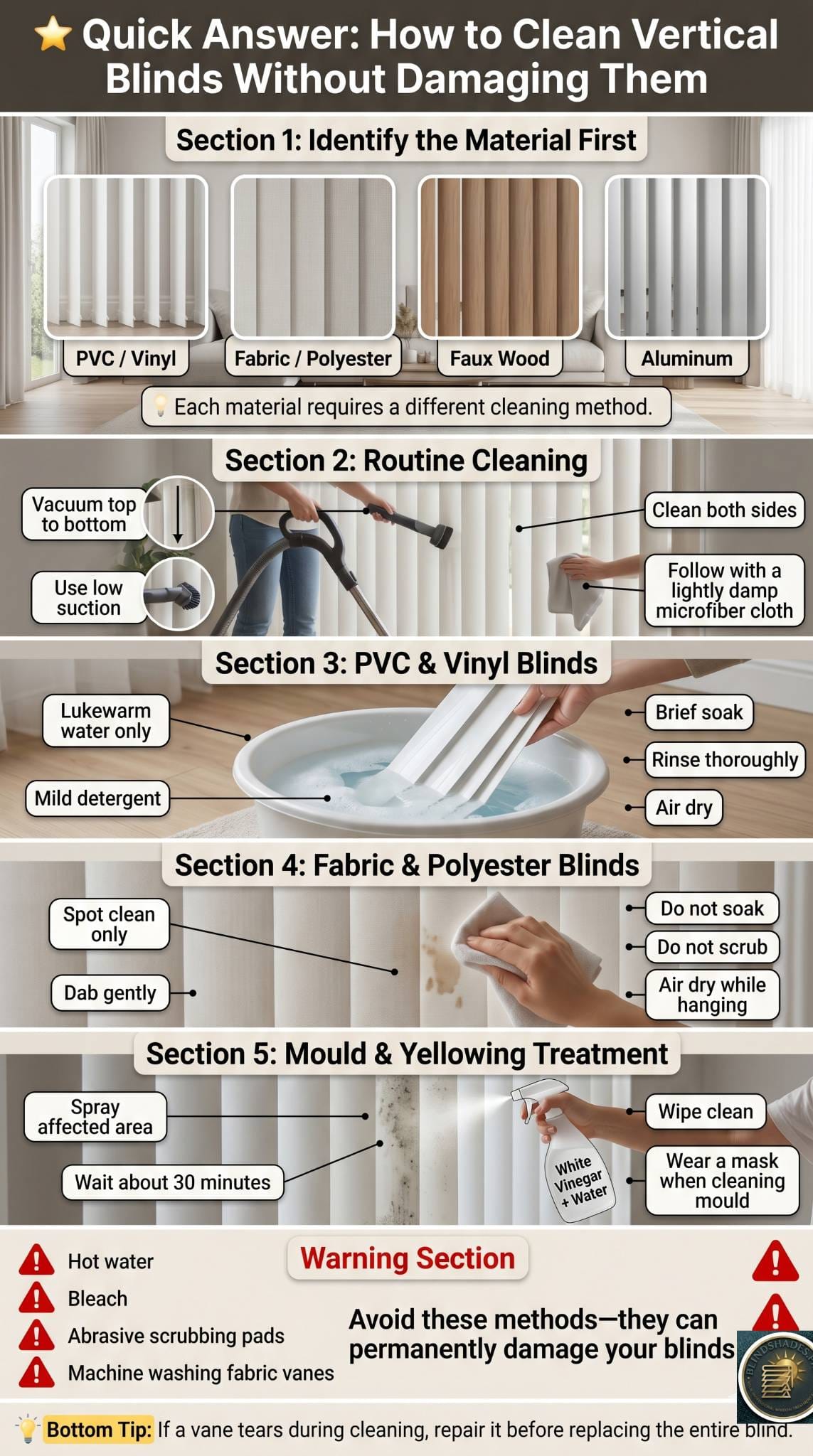
Authored by Michael Turner — 30 Years of Home Improvement Expertise | BlindShades.pro
The right way to clean vertical blinds depends entirely on what they are made of. PVC and vinyl vanes are forgiving: wipe them with lukewarm water and a mild detergent, and you can even bathe them briefly. Fabric and polyester vanes are delicate: spot-clean only, dab rather than scrub, and never soak them, because water destroys their shape and dust-repellent coating. Faux wood and aluminum get a damp wipe and no soaking. For routine care, vacuum every vane with a soft brush attachment on low suction. Get the material right and most cleaning takes minutes without removing a single vane. This guide gives the method for each material, the stains, the mould, and the mistakes that ruin blinds.
Key Takeaways
- Identify the material before you do anything. PVC and vinyl tolerate water and even a brief bath; fabric and polyester must only be spot-cleaned and never soaked; faux wood and aluminum take a damp wipe. Using the wrong method is how blinds get warped or stained.
- Never use hot water on PVC or vinyl. Hot water warps the slats permanently. Lukewarm water with a mild, clear detergent is all they need.
- Dab fabric stains, never scrub. Scrubbing fabric vanes causes pilling and fraying, and soaking them destroys both their shape and the dust-repellent coating that keeps them clean. Spot-clean with a barely damp cloth.
- Vacuum on low suction with the soft brush attachment. High suction or the hard floor attachment bends and creases fabric vanes and can transfer dirt onto them. Work top to bottom in vertical strokes, both sides.
- Cleaning is also maintenance. Dust that settles in the headrail and carriers is what makes blinds drag and gears grind, so regular cleaning keeps them operating smoothly, not just looking good.
⭐ Quick Answer
Knowing how to clean vertical blinds safely comes down to one thing: the material. PVC is forgiving; fabric is delicate; get it wrong and you warp or stain the vanes.
- Identify the material first. PVC/vinyl, fabric/polyester, faux wood, or aluminum — each cleans differently. The full trade-off is in fabric vs PVC vertical blinds.
- PVC and vinyl: wipe with lukewarm (never hot) water and a mild detergent; Swift Direct Blinds notes PVC is the easiest of all to keep clean.
- Fabric and polyester: spot-clean only and dab gently — never soak or scrub, which Blinds.com warns destroys the shape and dust-repellent coating.
- Routine clean: vacuum each vane top to bottom with a soft brush attachment on low suction, both sides, then wipe the headrail, which gathers the most dust.
- Mould or yellowing: use a white-vinegar-and-water solution; for mould, wear a mask, as English Blinds advises. If a vane tears, see how to fix vertical blind vanes, or choose easier-care blinds in our best vertical blinds guide.
What Material Are Your Vertical Blinds?
Every cleaning decision flows from the material, so identify it first and match the method.
Before you reach for water, work out what your vanes are made of, because the safe method changes completely. This master table is the heart of cleaning vertical blinds correctly:
| Material | Vacuum / dust | Damp wipe | Spot clean | Soak or wash | Never do |
|---|---|---|---|---|---|
| PVC / vinyl | Yes | Yes, lukewarm | Yes, mild detergent | Brief cool bath OK; rinse and dry | Hot water (warps); machine wash (breaks clips) |
| Fabric / polyester | Yes, low suction | Barely damp only | Yes, dab gently | No, soaking ruins shape and coating | Scrub, soak, bleach, machine wash |
| Faux wood | Yes | Lightly damp | Yes, mild detergent | No, soaking warps it | Soaking, harsh chemicals |
| Aluminum | Yes | Yes, antibacterial soap | Yes | Wipe only | Abrasive pads (scratch finish) |
PVC and vinyl are the most forgiving because the surface is non-porous and repels moisture, grease, and stains, which is exactly why they are recommended for kitchens and bathrooms. Fabric and polyester are absorbent and delicate, so they need the gentlest treatment. Faux wood and aluminum sit in between, taking a damp wipe but no soaking. If you are choosing new blinds partly for easy care, the full material trade-off is in fabric vs PVC vertical blinds.
How Often Should You Clean Vertical Blinds?
A light dust most weeks, a spot clean monthly, and a deep clean a few times a year keeps them effortless.
Vertical blinds are low-maintenance if you stay ahead of buildup. Rather than one big annual scrub, a simple cadence keeps them looking new and prevents dust from becoming permanent discoloration:
| Level | What you do | How often |
|---|---|---|
| Routine | Dust or vacuum each vane, both sides | Weekly, or every two weeks |
| Spot clean | Wipe marks with a damp cloth and mild detergent | Monthly, or as marks appear |
| Deep clean | Full wipe-down or removal, plus the headrail | Every few months, or seasonally |
High-traffic and grease-prone rooms like kitchens need more frequent attention; quiet bedrooms need less. Simply rotating the vanes regularly as you use them helps stop dust settling in the first place.
How to Clean Vertical Blinds Without Removing Them
For routine cleaning, you never need to take the vanes down — vacuum, then wipe.
Most cleaning can be done with the blinds hanging. Here is the safe routine method:
- Close the vanes flat. Rotate the vanes so they sit fully closed in one direction, presenting a flat surface to clean.
- Vacuum each vane. Using the soft brush attachment on low suction, vacuum each vane from top to bottom in vertical strokes, supporting the vane from behind with your free hand so you do not bend it. Avoid the hard floor attachment, which can transfer dirt.
- Rotate and repeat. Turn the vanes to the other side and vacuum again so both faces are dusted.
- Wipe with a damp microfiber cloth. Lightly dampen a microfiber cloth with lukewarm water (add a little mild, clear detergent for PVC or vinyl), wring it out well, and wipe each vane top to bottom. Keep fabric vanes barely damp.
- Dry off moisture. Go over the vanes with a dry microfiber cloth to lift any remaining moisture and prevent water spots.
- Clean the headrail. Wipe the headrail and visible track with a damp cloth; it gathers the most dust of anything on the blind.
For a lighter touch between cleans, a lint roller, feather duster, or short bursts of compressed air all lift surface dust quickly.
How Do You Remove Stains, Yellowing, and Grease?
Match the problem to the fix, and always spot-test first.
Different marks call for different treatments. Spot-test any solution on a hidden area first to be sure it will not affect the dye:
| Problem | Treatment |
|---|---|
| General dust | Vacuum with soft brush attachment, both sides |
| Light stain or mark | Damp microfiber cloth with mild, clear detergent; dab, do not scrub |
| Stubborn fabric stain | Mild detergent, or lemon juice and salt dabbed on; avoid strong stain removers |
| Yellowing (light vanes) | Equal parts white vinegar and warm water, wiped on with a cloth |
| Grease (kitchen) | Warm water and mild dish soap on PVC; take fabric vanes down if greasy |
| Mould or mildew | White vinegar solution (see next section) |
Two rules protect the vanes: never scrub, which pills and frays fabric and can damage the coating on PVC, and never use bleach or harsh chemicals, which fade colors and weaken the material. For yellowing, which is common on light-colored vanes exposed to sun and dust, the white-vinegar-and-water mix is the simplest safe fix.
How Do You Remove Mould From Vertical Blinds?
Vinegar handles most mould — wear a mask, and know that verticals resist mould better than you might think.
Mould appears on blinds in damp, poorly ventilated rooms such as bathrooms, or on windows that suffer heavy condensation. Reassuringly, vertical blinds are actually less prone to mould than roller or Roman blinds, because those roll up around a tube and never get the chance to air out, whereas vertical vanes hang open. PVC vanes resist mould best and are also the easiest to clean it from, since the surface does not absorb it.
To remove mould safely:
- Wear a face covering. Brushing mould releases spores, so protect your airways before you start.
- Brush off the surface. With the vanes laid flat, use a soft brush or the vacuum brush attachment to remove as much surface mould as possible.
- Apply a vinegar solution. Spray on a mix of distilled white vinegar, a little lemon juice, and water, dampening the fabric without drenching it. On fabric, let it penetrate; spot-test first.
- Let it sit. Leave the solution to work for about 30 minutes.
- Wipe and dry. Wipe the vanes clean with a damp cloth, pat as dry as possible with a towel, then let them fully air dry before rehanging.
A note for offices and second homes: vertical blinds left in unventilated, humid rooms for long stretches can develop mould, something many workplaces discovered after extended closures. Good airflow and a dehumidifier prevent recurrence.
How to Deep Clean by Removing the Vanes
For a thorough clean, take the vanes down, clean them flat, and do the headrail while they dry.
When vanes are heavily soiled or you want to clean the headrail properly, remove them:
- Unclip the bottom chain and weights from each vane, if your blind has them.
- Unhook each vane from its carrier clip and lay the vanes flat on a clean surface. Use the gentle release technique in how to fix vertical blind vanes so you do not crack the clips.
- Clean each vane flat by the method for its material, both sides.
- Clean the headrail and track while the vanes are off; this is the part that gathers the most dust and grime, and a clean track also helps the blind traverse smoothly, as covered in vertical blinds won’t open or close.
- Air dry the vanes hanging or flat, then rehang them so they keep their shape.
Can You Machine Wash Vertical Blinds?
Most cannot — but some PVC louvres can, cold and gentle in a bag, if the care label allows.
This is where advice conflicts, so here is the honest version. Most fabric and polyester vanes should never be machine washed, because they shrink, crumple out of shape, and lose their dust-repellent coating. Some PVC louvres, however, are machine washable on a cool, gentle cycle no hotter than about 86 degrees Fahrenheit (30 Celsius), placed inside a pillowcase or mesh laundry bag to prevent bending and to protect the clips. Always check the manufacturer’s care label first, because machine washing the wrong vanes will ruin them, and even with washable PVC, an aggressive cycle can destroy the clips. When in doubt, hand-clean instead.
Mistakes to Avoid: What Never to Do
A handful of common shortcuts permanently damage vertical blinds — avoid them all.
Most ruined blinds are the result of a few avoidable mistakes. Keep this list in mind:
| Mistake | Why it harms | Do instead |
|---|---|---|
| Hot water on PVC/vinyl | Warps and distorts the slats | Use lukewarm water |
| Machine washing fabric vanes | Shrinks, crumples, strips coating | Spot-clean by hand |
| Soaking fabric vanes | Destroys shape and dust-repellent coating | Damp-wipe only |
| Scrubbing | Pills and frays fabric, scratches PVC | Dab gently |
| Bleach or harsh chemicals | Fades color, weakens material, affects dye | Mild detergent or vinegar |
| Abrasive sponges or stiff brushes | Snag and scratch the surface | Soft cloth or soft brush |
| Steam cleaners | Heat and moisture can damage vanes | Only if the care label allows |
| High vacuum suction or floor attachment | Bends, creases, or transfers dirt | Low suction, soft brush attachment |
Cleaning Is Also Maintenance
Regular cleaning does not just keep blinds looking good — it keeps them working.
Here is the point most cleaning guides miss: the dust you clean off the vanes is also collecting inside the headrail, around the carriers and gears. That buildup is exactly what makes a vertical blind start to drag when you draw it, or makes the vanes grind and resist when you tilt them. By wiping the headrail and clearing the track as part of your routine, you are not just tidying appearances, you are preventing the operating faults covered in vertical blinds won’t open or close and vertical blinds won’t turn. Clean blinds last longer and run more smoothly.
When Cleaning Can’t Save Them
If stains, mould, or warping will not lift, it is time to replace rather than scrub forever.
Cleaning revives most blinds, but not all. If vanes are permanently yellowed, mould has set deep into fabric, or slats have warped or grown brittle, no amount of cleaning will restore them, and continued scrubbing only wears them further. At that point, replacing the blind, or switching to a lower-maintenance material or style, is the better investment. PVC and panel-track options are far easier to keep clean; see alternatives to vertical blinds and our best vertical blinds guide for easier-care choices.
Best Sources
- Swift Direct Blinds — on PVC being the easiest material to clean, vacuuming on low suction, the headrail gathering the most dust, and lemon-and-salt for fabric stains.
- Blinds.com — on dabbing rather than scrubbing to avoid pilling, and how soaking fabric vanes destroys their shape and dust-repellent coating.
- English Blinds — on removing mould with a vinegar solution, wearing a mask against spores, and why vertical blinds resist mould better than roller or Roman blinds.
- Cleaners Guide — on hot water warping PVC, machine washing destroying clips, and a weekly, monthly, and quarterly cleaning cadence.
- Ben Blinds — on white-vinegar-and-water for yellowing and deeper cleaning.
- Checkatrade — on baking-soda paste for stubborn stains and the brief bath-soak method for vinyl vanes.
Related Guides
- Best Vertical Blinds Buying Guide
- How to Fix Vertical Blind Vanes
- Vertical Blinds Won’t Open or Close
- Fabric vs PVC Vertical Blinds
Frequently Asked Questions
How do you clean vertical blinds without taking them down?
Clean vertical blinds without removing them by first closing the vanes flat, then vacuuming each one top to bottom with a soft brush attachment on low suction, supporting the vane from behind so it does not bend. Wipe each vane with a microfiber cloth lightly dampened with lukewarm water and mild detergent, then go over them with a dry cloth to prevent water spots. Keep fabric vanes barely damp and never soak them.
Can you wash vertical blinds in the washing machine?
Most vertical blinds should not go in the washing machine. Fabric and polyester vanes shrink, crumple, and lose their dust-repellent coating. Some PVC louvres can be machine washed on a cool, gentle cycle no hotter than about 86 degrees Fahrenheit inside a pillowcase or mesh bag, but only if the care label allows, since an aggressive cycle can destroy the clips. When in doubt, clean them by hand instead.
How do you remove mould from vertical blinds?
Lay the vanes flat, wear a face mask, and brush off as much surface mould as possible. Spray on a solution of distilled white vinegar, a little lemon juice, and water, dampening rather than drenching the fabric, and let it sit for about 30 minutes. Wipe clean with a damp cloth, pat dry, and let the vanes fully air dry before rehanging. PVC vanes are the easiest to clean mould from because the surface does not absorb it.
How do you get yellow stains out of vertical blinds?
Yellowing is common on light-colored vanes exposed to sun and dust. Mix equal parts white vinegar and warm water, dampen a microfiber cloth with the solution, and gently wipe the yellowed areas. Spot-test a hidden area first to be sure it does not affect the dye. Avoid bleach, which can fade and weaken the material further. If the yellowing has set in permanently, the vanes may need replacing.
How often should you clean vertical blinds?
For most homes, dust or vacuum the vanes weekly or every two weeks, spot-clean marks as they appear or about monthly, and do a deeper clean every few months. Kitchens and other high-traffic, grease-prone or humid rooms need more frequent cleaning, while quiet bedrooms need less. Rotating the vanes regularly as you use them helps prevent dust from settling and keeps the intervals between cleans longer.
