Best Vertical Blinds 2026: Fabric vs PVC, 7 Brands Ranked

Authored By Michael Turner -30 Years Home Improvement Expertise | Updated 2026 | BlindShades.pro
Updated on July 17, 2026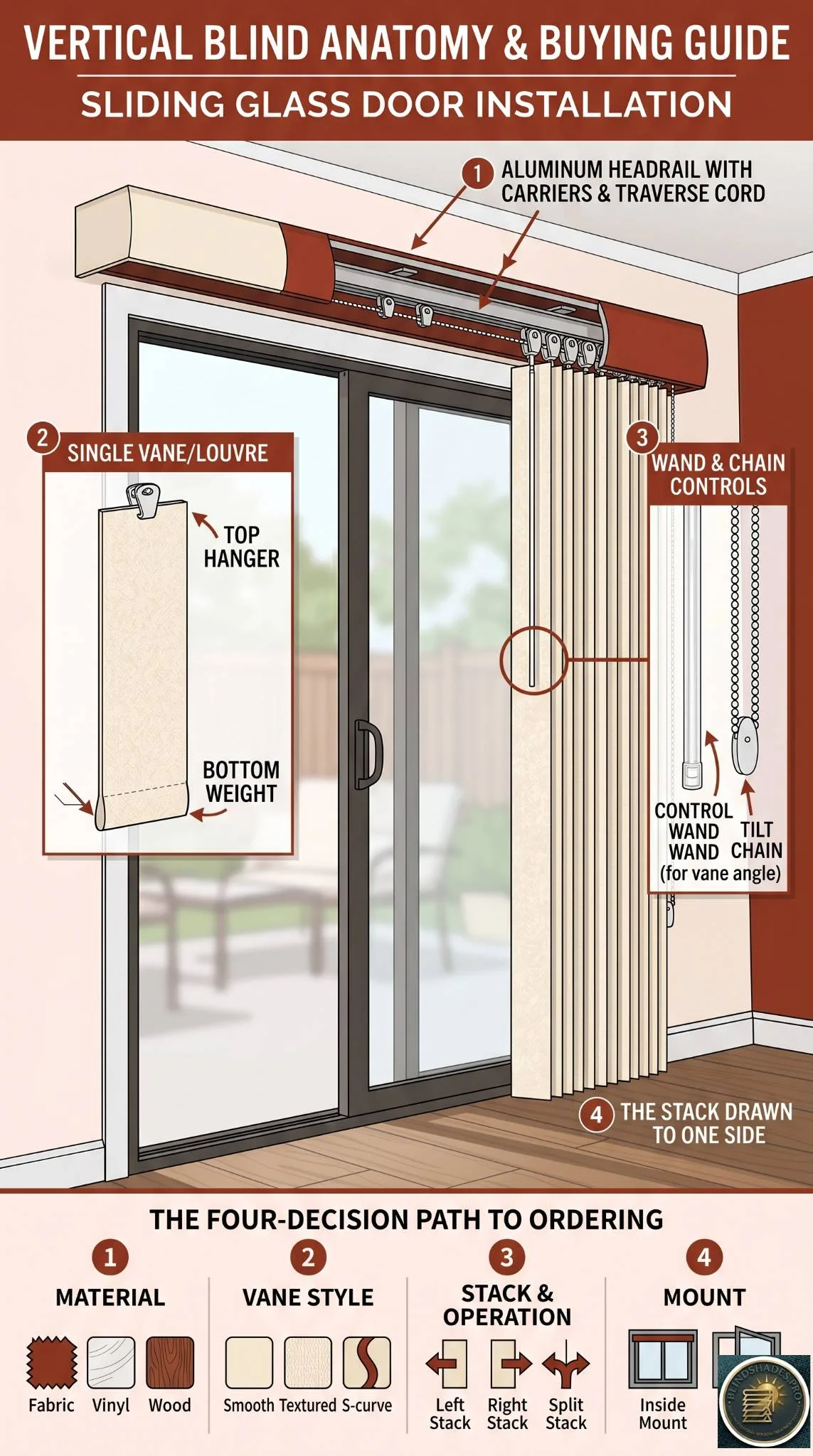
Vertical Blinds Have a Bad Reputation — Here Is Why Most of It Is Dead Wrong in 2026
By the Editorial Team at BlindShades.pro | Updated 2026 | 30 Years of Home Improvement Expertise
The best vertical blinds in 2026 come down to four decisions: the material (vinyl/PVC for moisture and value, fabric for a soft modern look, faux wood for warmth, aluminum for slim durability), the vane style (standard louvre, curved S-wave, wide panel track, or sheer vertical), the stack and operation (which way the vanes draw, and wand, cord-and-chain, or motorized control), and the mount (inside the recess or outside on the wall). Get those four right for your window — most often a wide window or a sliding patio door — and you get smooth side-to-side operation, precise light and privacy control across a large span, and a treatment that looks nothing like the clattering plastic strips of the 1990s. This guide walks through all four decisions, compares the real brands, names our category picks, and includes a specifier section for commercial and office projects.
Related guides: verticals are the large-format answer inside a bigger commercial system — glare specs, fire documentation, and motorization ROI live in the office & commercial window treatment guide.
Read the Complete Guide Below For:
How vertical blinds work and who they are for; the Four-Decision Path that settles every choice; a full material comparison; the vane-style options; stack direction and operation including motorization; mounting and measuring; the honest limits on blackout and noise; a head-to-head comparison of the major brands; our category picks; a room-by-room verdict; a full specifier section with CSI references, certifications, and technical ranges for commercial projects; and answers to the most common questions. Use the supporting-article links throughout to go deeper on any single topic.
Quick Specification Reference
The vertical-blind cheat sheet at a glance.
| Specification | Typical range |
|---|---|
| Standard vane width | 3.5 inches (89mm); some lines offer wider 5 inch vanes |
| Common materials | PVC/vinyl, polyester fabric, faux wood, aluminum, S-curve, sheer |
| Drop (height) | Made-to-measure; commonly up to about 96 inches |
| Width | Single headrail commonly to about 180 inches; wider via split or multiple headrails |
| Operation | Wand tilt with cord draw, cord-and-chain, or motorized |
| Stack direction | Left, right, centre-open, or split-stack |
| Light control | Light-filtering to room-darkening; blackout on S-curve or paired |
| Child safety standard | ANSI/WCMA A100.1 (cordless and motorized eliminate the cord hazard) |
| Best for | Wide windows, sliding and patio doors, floor-to-ceiling glass, offices |
Key Takeaways
- Vertical blinds are the practical answer for wide openings and doors. Their vanes hang from a track and draw to one side, so they cover large windows, sliding patio doors, and floor-to-ceiling glass without obstructing access, and they tilt to control light and privacy across the whole span. The decision is rarely “vertical or not” for a door; it is which vertical.
- Material is the first and biggest choice. Vinyl and PVC are the moisture-proof, low-cost, low-maintenance default; fabric brings a soft, drapery-like, modern look; faux wood adds warmth and resists humidity; aluminum is slim and durable. Match the material to the room and the look you want.
- Modern vertical blinds are not the plastic strips you remember. Today’s options include weighted fabric vanes that hang and move quietly, curved S-wave vanes that read like drapery and close more completely, and wide panel-track systems, all on cleaner, chainless headrails.
- Stack direction is the detail buyers get wrong. Plan for the vanes to stack on the opposite side from the active door panel, or split-stack to open from the centre, so the blind never blocks the doorway you use.
- They room-darken but do not fully black out. Like any vaned blind, verticals have small gaps between the vanes, so even blackout fabric leaves some light unless you choose overlapping S-wave vanes or pair the blind with drapery.
⭐ Quick Answer
Choosing the best vertical blinds comes down to four decisions: material, vane style, stack and operation, and mount.
- Material: vinyl/PVC for moisture, value, and easy cleaning; fabric for a soft modern look; faux wood for warmth; aluminum for a slim, durable vane — compare in fabric vs PVC vertical blinds.
- Vane style: standard 3.5-inch louvre (classic, cheapest), curved S-wave (drapery look, better closure), panel track (wide modern panels), or sheer vertical (elegant).
- Stack & operation: stack the vanes opposite the active door panel, and choose wand, cord-and-chain, or motorized — cordless and motorized are safest around children, per the Window Covering Safety Council.
- Mount: inside the recess if depth allows, or outside on the wall for sliding doors and shallow recesses — see how to measure for vertical blinds.
- Top picks: for value, durable vinyl from Bali; for premium sheer and motorized lines, Hunter Douglas — a brand also rated highly by reviewers like This Old House. For patio doors, see best vertical blinds for sliding doors.
What Are the Best Vertical Blinds, and Who Are They For?
Vertical blinds are the side-drawing, vane-based treatment built for wide windows and doors — and the best one follows the Four-Decision Path.
Vertical blinds consist of individual vanes (louvres) that hang from carriers in a headrail track. You rotate the vanes with a wand or chain to control light and privacy, and draw them to one side with a cord or wand to clear the opening. That side-to-side operation is what makes them the standard choice for sliding patio doors, wide picture windows, and floor-to-ceiling glass, where horizontal blinds and most shades struggle to span the width or clear a doorway.
Choosing the best vertical blind for your space is not guesswork once you break it into the four decisions that actually matter. We call this the Vertical Blind Four-Decision Path: Material, Vane Style, Stack & Operation, and Mount. Work through them in order and the right blind reveals itself. Each is covered in detail below.
Decision 1: Which Material Is Best?
Vinyl for value and moisture, fabric for softness, faux wood for warmth, aluminum for slim durability.
Material is the first and most consequential decision, because it sets the look, the durability, the moisture tolerance, and much of the cost. Here is the full comparison:
| Material | Cost | Moisture | Light control | Noise | Durability | Best for |
|---|---|---|---|---|---|---|
| Vinyl / PVC | Lowest | Excellent | Room-darkening to blackout | Can clatter | Very high | Kitchens, bathrooms, doors, rentals |
| Fabric (polyester) | Mid | Good (some moisture-resistant) | Light-filtering, soft | Quiet (weighted) | High | Living rooms, bedrooms, modern looks |
| Faux wood | Mid to high | Good | Room-darkening | Moderate | High | Warm look, kitchens, humid rooms |
| Aluminum | Low to mid | Excellent | Adjustable | Can clatter | High (thin vanes bend) | Offices, modern, slim look |
| S-curve / sheer | Mid to high | Varies | Better blackout (S-curve) | Quiet | High | Premium, drapery-like effect |
Related guides: vinyl, rigid PVC, or polyester — the material decoder behind every vane choice, plus films, insulation kits and the rest of the plastic family, is in the complete plastic & vinyl window covers guide.
Vinyl and PVC are the workhorses: cheap, waterproof, wipe-clean, and available in room-darkening and blackout opacities, which is why they dominate kitchens, bathrooms, and high-traffic doors. Fabric vanes, usually polyester, bring a softer, more contemporary, drapery-like look and, when weighted, hang and move quietly. Faux wood adds warmth and a higher-end feel while resisting the humidity that would warp real wood. Aluminum gives a slim, durable, modern vane, though thin aluminum can bend and clatter. The deeper material trade-off most buyers weigh is covered in fabric vs PVC vertical blinds.
Decision 2: Which Vane Style Should You Choose?
Standard louvre for classic value, S-wave for a drapery look, panel track for wide modern coverage, sheer vertical for elegance.
Vane style is a separate axis from material, and it is where modern vertical blinds have changed the most. Most guides treat it as an afterthought; it deserves its own decision.
| Vane style | Look | Blackout | Noise | Best window | Price tier |
|---|---|---|---|---|---|
| Standard louvre (3.5 in) | Classic, functional | Gaps between vanes | Can clatter | Any wide window or door | Lowest |
| S-wave / S-curve | Curved, drapery-like | Better (vanes overlap) | Quiet | Living rooms, statement walls | Mid to high |
| Panel track | Wide sliding fabric panels | Strong when closed | Quiet | Very wide spans, room dividers | Mid to high |
| Sheer vertical | Vanes within sheer fabric | Soft, diffused | Quiet | Premium living spaces | Highest |
The standard 3.5-inch louvre is the classic, most affordable vertical. S-wave (S-curve) vanes interlock in a rippled, curtain-like wave that looks far softer and closes more completely, reducing the light gaps. Panel track uses wide fabric panels that glide on a track, a sleek modern alternative for very wide openings that doubles as a room divider; the full head-to-head is in vertical blinds vs panel track blinds. Sheer verticals (such as Hunter Douglas Luminette) set fabric vanes within a sheer backing for a soft, elegant, drapery-like effect. If you have written off vertical blinds as dated, these modern styles are why that perception is outdated, as covered in are vertical blinds outdated.
Decision 3: Stack Direction and Operation — Including Motorization
Decide which way the vanes stack, then choose wand, cord-and-chain, or motorized control.
Stack direction is the detail that trips up the most buyers. When you draw a vertical blind open, the vanes gather into a stack, and that stack should sit on the opposite side from the door panel you actually use, so it never blocks your path. For a centre-opening look or a very wide door, a split-stack divides the vanes to draw to both sides. Decide this before you order, because it is built into the blind.
Operation comes in three forms. A wand rotates the vanes and a cord draws them, the traditional setup. A cord-and-chain uses a continuous loop. Motorized removes cords entirely, operates by app, remote, or voice, and is the safest and most convenient option for large or hard-to-reach door walls. Motorization usually requires professional setup, and the major systems differ in connectivity and price:
| Motor system | Tier | Smart-home / standard | Install | Best for |
|---|---|---|---|---|
| Hunter Douglas PowerView Gen 3 | Premium | Matter via firmware, app, scenes | Dealer / pro | Premium fabric range and style |
| Lutron Serena | Premium | Clear Connect reliability; Apple, Google, Alexa | Pro or DIY | Signal reliability, smart-home polish |
| Somfy | Premium | Widest dealer network, proven motors | Dealer / pro | Motor durability and dealer support |
| Motionblinds | Mid to premium | Open Matter and Thread, broad style range, retrofit kit | DIY-friendly | Open connectivity, DIY upgrade path |
(Connectivity and pricing change; confirm current compatibility with the manufacturer before buying. We never publish fabricated prices.)
Whichever operation you choose, cordless and motorized blinds are the safest around children and pets, eliminating the cord hazard addressed by the ANSI/WCMA A100.1 standard. If your existing blind has started sticking or refusing to draw, see vertical blinds won’t open or close, and if the vanes will not rotate, see vertical blinds won’t turn.
Decision 4: Inside or Outside Mount?
Inside the recess for a clean built-in look if depth allows; outside on the wall for doors and shallow recesses.
The final decision is how the blind mounts. An inside mount sits within the window recess for a tidy, built-in appearance, but it needs enough recess depth to clear the headrail and works only on windows, not doors. An outside mount fixes to the wall or trim above and around the opening, which is the standard choice for sliding doors, shallow recesses, and out-of-square openings, and it lets the blind overlap the frame to cut light gaps. Because vertical blinds are so often used on doors, outside mounting is the more common choice. Measuring correctly, including the stack allowance and the drop to just above the floor, is essential; the full method is in how to measure for vertical blinds.
How Much Light Do Vertical Blinds Block?
They room-darken well but do not fully black out — unless you choose S-wave vanes or pair with drapery.
It is worth being honest about light control, because retailers often are not. Like every vaned or slatted blind, vertical blinds have small gaps between the vanes where they meet, so even blackout-grade vinyl or fabric lets some light through at the edges of each vane. They will room-darken a bedroom or media room effectively, but they will not deliver the total darkness of a sealed blackout roller or cellular shade. If full darkness matters, the closest a vertical comes is overlapping S-wave vanes, which close more completely, or pairing the blind with curtains. For the alternatives that do black out fully, see alternatives to vertical blinds.
Are Vertical Blinds Noisy?
Older vinyl can clatter; modern weighted fabric, S-wave, and chainless designs are quiet.
The clatter that gave vertical blinds their dated reputation came from light vinyl vanes swinging and knocking in a draft. Modern designs largely solve it: weighted fabric vanes with sewn-in bottom hems hang heavier and move quietly, S-wave vanes interlock so they do not swing freely, and chainless bottom designs remove the rattling connector chain. If noise is a concern, especially on a door you open often, lean toward weighted fabric or S-wave vanes over bare lightweight vinyl.
How Do the Major Vertical Blind Brands Compare?
From value vinyl to premium motorized fabric, here is how the real brands stack up.
The vertical-blind market runs from inexpensive DIY vinyl to premium custom fabric and sheer systems. These are the brands you will actually encounter in the U.S. market:
| Brand | Tier | Materials / lines | Operation | Where to buy | Best for |
|---|---|---|---|---|---|
| Bali | Value to mid | Crown, Essentials, S-Shaped vinyl, panel track | Cord, wand, cordless | Blinds.com, Costco, Amazon | Best overall value |
| Hunter Douglas | Premium | Luminette, Skyline, Vertical Solutions | Wand, PowerView motor | Dealers, in-home | Premium, sheer, motorized |
| Levolor | Value to mid | Vinyl and fabric vertical | Cord, cordless | Lowe’s, Home Depot | Big-box availability |
| CHICOLOGY | Budget | Cordless vinyl, panel track | Cordless, wand | Amazon | DIY, rentals, budget |
| Lutron Serena / Motionblinds | Premium | Motorized fabric and panel | App, motor | Dealers, Amazon | Smart-home motorized |
Bali offers the best balance of price, durability, and availability for most homes, with vinyl, S-shaped, and panel-track lines sold through Blinds.com, Costco, and Amazon. Hunter Douglas sits at the premium end with its Luminette sheers, Skyline gliding panels, and Vertical Solutions, plus PowerView motorization, sold through dealers with in-home service. Levolor is the dependable big-box choice at Lowe’s and Home Depot. CHICOLOGY and similar Amazon brands cover the budget and rental end with cordless vinyl and panel-track systems. (Prices vary by size, material, and finish; always confirm current pricing with the retailer. We never publish fabricated figures.)
Best Vertical Blinds: Our Picks
Real, widely available brands chosen for material suitability, value, and availability — not lab-tested by us.
These are category picks based on what each brand does best, how widely available it is, and verified reputation. They are real products; we have not run independent lab tests, and you should confirm current pricing, sizes, and finishes before buying.
| Category | Pick | Why |
|---|---|---|
| Best Overall | Bali Crown / Essentials Vinyl | Durable, moisture-proof, widely available, value priced |
| Best Budget | CHICOLOGY Cordless Vinyl | Cordless safety and room-darkening at the lowest tier |
| Best Premium | Hunter Douglas Luminette / Skyline | Sheer and gliding-panel elegance, motorizable, lifetime quality |
| Best for Sliding Doors | Bali Sliding Panel Track / vinyl | Wide, smooth side-draw coverage for patio doors |
| Best Modern (S-Curve) | Bali S-Shaped Vinyl | Drapery-like curved vanes, better closure, quiet |
| Best Motorized | Lutron Serena / Hunter Douglas PowerView | Reliable, smart-home-ready, cordless |
- Best Overall — Bali Crown or Essentials Vinyl. The dependable default: waterproof, durable, easy to clean, widely stocked, and value priced.
[affiliate link] - Best Budget — CHICOLOGY Cordless Vinyl. Cordless safety, room-darkening vinyl, and easy DIY fitting at the budget tier, ideal for rentals and secondary rooms.
[affiliate link] - Best Premium — Hunter Douglas Luminette or Skyline. Sheer privacy vanes and gliding panels with a soft, drapery-like, high-end look, motorizable and backed by a strong warranty.
[affiliate link] - Best for Sliding Doors — Bali Sliding Panel Track or vinyl vertical. Smooth, wide side-to-side coverage built for patio doors; see best vertical blinds for sliding doors.
[affiliate link] - Best Modern S-Curve — Bali S-Shaped Vinyl. Curved, interlocking vanes that read like drapery, close more completely, and stay quiet.
[affiliate link] - Best Motorized — Lutron Serena or Hunter Douglas PowerView. Reliable motorization, smart-home integration, and cordless safety for large door walls.
[affiliate link]
Disclosure: this section contains affiliate links. Prices are indicative tiers, not quotes, and vary by size, finish, and retailer. We never publish fabricated prices, specifications, or testing claims.
Room-by-Room Verdict
Match the material and style to the room and the choice is straightforward.
| Room or use | Best choice |
|---|---|
| Sliding or patio doors | Vinyl or panel track, outside mount |
| Large or wide windows | Vinyl, fabric, or S-wave |
| Kitchens and bathrooms | Vinyl or PVC (moisture-proof) |
| Living rooms and bedrooms | Fabric, S-wave, or sheer |
| Offices and commercial | Vinyl or aluminum (see specifier section) |
| Budget or rentals | CHICOLOGY or Levolor vinyl |
| Premium and statement spaces | Hunter Douglas sheer or motorized |
For Specifiers: Commercial and Office Vertical Blinds
A specifier-grade reference for architects, designers, and facilities teams sourcing vertical blinds at scale.
Vertical blinds are a commercial and office standard, and projects need more than consumer marketing. This section provides the references and compliance points specifiers require. Present technical figures as honest categories and confirm project-exact values against manufacturer cut sheets.
CSI MasterFormat reference: Vertical louver blinds fall under CSI Division 12 — Furnishings, Section 12 21 16 (Vertical Louver Blinds), within 12 21 00 Window Blinds. Reference this section in specifications and submittals.
Technical specification ranges (confirm exact figures on the manufacturer’s cut sheet):
| Attribute | Typical specification |
|---|---|
| Vane width | 3.5 inches (89mm) standard; wider options available |
| Vane materials | PVC, vinyl, polyester fabric, faux wood, aluminum |
| Headrail | Extruded aluminum, wand or chain control |
| Operation | Wand, cord-and-chain, or motorized (low-voltage / Matter where offered) |
| Flame resistance | Specify NFPA 701-compliant fabric vanes where required |
| Cord safety | ANSI/WCMA A100.1; specify cordless or motorized for public buildings |
| Stack | Left, right, centre, or split; specify per opening |
| Opacity | Light-filtering to room-darkening; verify per fabric |
Compliance and certifications to specify as applicable:
- NFPA 701 — flame propagation for fabric vanes in commercial interiors.
- ANSI/WCMA A100.1 — corded window covering safety; cordless or motorized is recommended for offices, schools, and public spaces.
- GREENGUARD / GREENGUARD Gold — low chemical emissions for indoor air quality, where the product line is certified.
- ADA — specify accessible operation (wand or motorized) for reach-range compliance.
- CA Title 24 / LEED — daylighting and energy-performance credits; coordinate fabric openness and operation with the project’s energy model.
Energy performance: vertical louvers manage solar gain and daylight by rotation across wide glazing; fabric and cellular-backed options improve insulation. Do not rely on generic SHGC or U-factor figures — obtain product-specific AERC or manufacturer data for the energy model.
Specifier toolset (planned for this guide): a Sizing and Split-Stack Calculator, an Openness/Opacity selector, a Motorization and Power planner, downloadable cut-sheet references, and a B2B RFQ form. Contact us for project quantities and submittal packages.
Why Vertical Blinds Are Easy to Live With and Repair
Individual vanes and carriers replace cheaply, so a damaged blind rarely means a whole new unit.
A practical buying advantage rarely mentioned: vertical blinds are modular. A single torn vane slides out and a replacement clips in; a cracked carrier or clip swaps out without replacing the headrail. That makes them more economical over time than treatments that fail as a whole unit, especially in homes with children or pets. The common repairs are quick and DIY-friendly: see how to fix vertical blind vanes for falling or broken vanes, and how to clean vertical blinds for keeping them looking new.
The 10 Vertical Blind Guides in This Series
Go deeper on any topic with the full supporting series:
- Vertical Blinds Won’t Open or Close — fixing a blind that will not draw across.
- Vertical Blinds Won’t Turn — fixing vanes that will not rotate.
- How to Fix Vertical Blind Vanes — falling, broken, and replacement vanes and clips.
- How to Clean Vertical Blinds — material-by-material cleaning.
- How to Measure for Vertical Blinds — windows and sliding doors, step by step.
- Best Vertical Blinds for Sliding Doors — the picks for patio doors.
- Fabric vs PVC Vertical Blinds — the material decision in depth.
- Vertical Blinds vs Panel Track Blinds — the head-to-head for wide glass.
- Alternatives to Vertical Blinds — panel track, cellular, roller, and drapery.
- Are Vertical Blinds Outdated? — modern styles and when verticals still win.
Related Buying Guides
- Best Venetian Blinds Buying Guide
- Best Roller Blinds Buying Guide
- Best Roller Shades Buying Guide
- Best Panel Track Blinds Buying Guide
- Best Cellular Shades Buying Guide
Related guides: verticals for wide glass are a measured purchase — the protocol and the maker tiers are in the best made to measure blinds guide.
Frequently Asked Questions
What are the best vertical blinds for the money?
For most homes, durable vinyl vertical blinds from a widely available brand such as Bali offer the best value: they are moisture-proof, easy to clean, available in room-darkening opacities, and inexpensive. For a soft, modern look, weighted fabric or S-wave vanes are worth the step up. Premium buyers who want sheer elegance or motorization choose Hunter Douglas. Budget and rental buyers do well with CHICOLOGY or Levolor.
Are vertical blinds good for sliding glass doors?
Yes, vertical blinds are one of the best choices for sliding glass and patio doors because their vanes draw to one side and clear the doorway, unlike horizontal blinds whose slats catch in door tracks. Choose an outside mount, plan the stack to sit opposite the active door panel, and pick vinyl or panel track for durability. The dedicated picks are in our best vertical blinds for sliding doors guide.
Do vertical blinds block out all light?
No. Like any vaned blind, vertical blinds have small gaps between the vanes, so even blackout-grade material lets some light through and they room-darken rather than fully black out. Overlapping S-wave vanes close more completely, and pairing the blind with curtains gets you closer to total darkness. For full blackout, a sealed roller or cellular shade is more effective.
Are vertical blinds outdated?
No. Modern vertical blinds have moved well beyond the plain vinyl strips of the 1990s, with weighted fabric vanes, curved S-wave styles that look like drapery, sheer verticals, wider vanes, and motorization on cleaner headrails. They remain the most practical solution for wide windows and sliding doors. The full discussion is in our are vertical blinds outdated guide.
What material is best for vertical blinds in a bathroom or kitchen?
Vinyl and PVC are best for bathrooms and kitchens because they are fully moisture-proof, wipe clean, and resist warping and mould in humidity. Faux wood and aluminum also handle damp rooms well. Fabric vanes can be used if they are a moisture-resistant grade, but plain fabric is better kept to dry rooms.
Can vertical blinds be motorized?
Yes. Vertical blinds can be motorized to operate by app, remote, or voice, which is especially convenient on large door walls and safest around children. The main systems are Hunter Douglas PowerView, Lutron Serena, Somfy, and Motionblinds, which differ in smart-home connectivity and price. Motorization usually requires professional setup; confirm compatibility with the manufacturer.
