




Are Vertical Blinds Outdated? An Honest Look

Authored By Michael Turner -30 Years Home Improvement Expertise | Updated 2026 | BlindShades.pro
Updated on June 24, 2026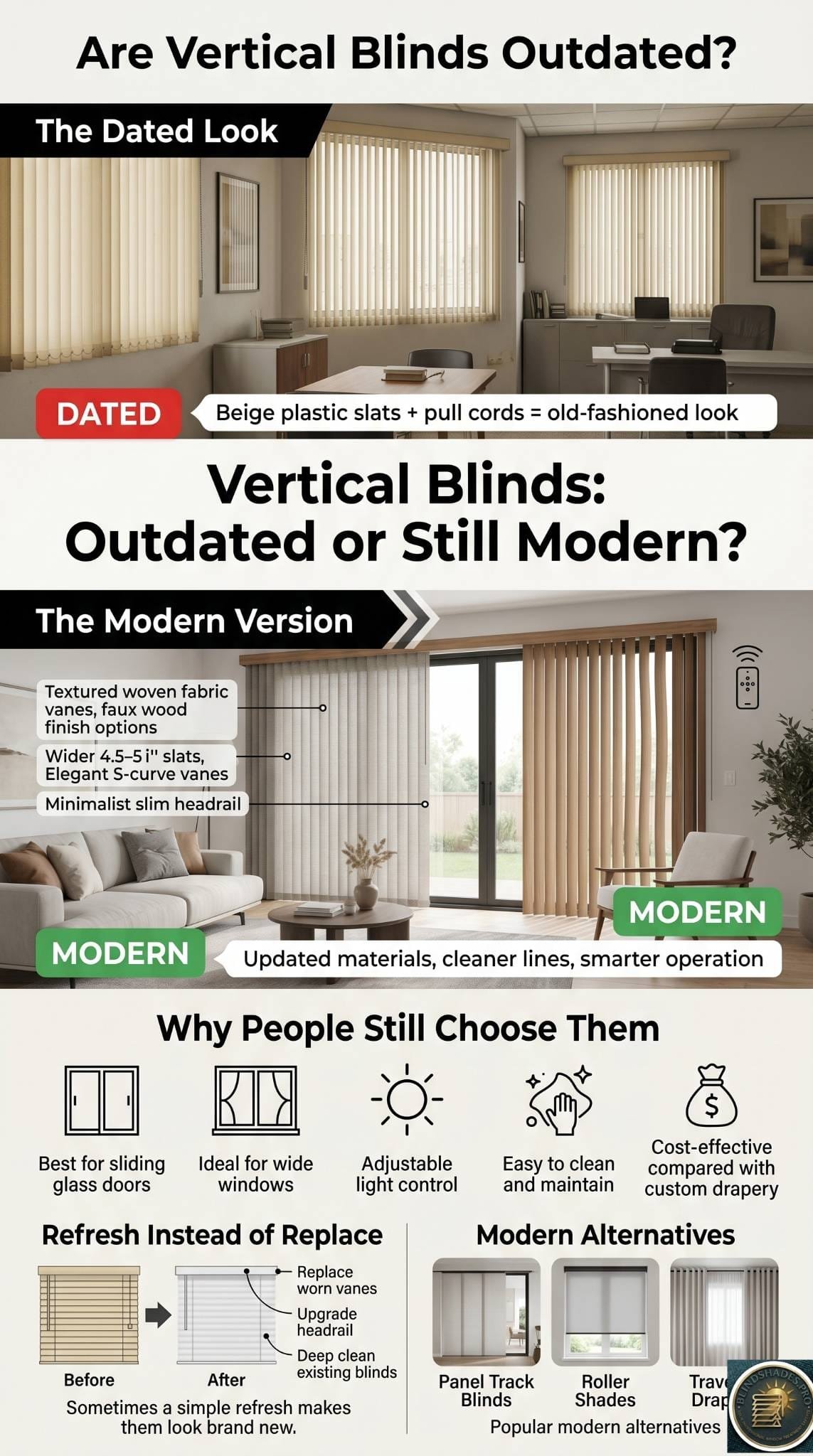
Authored by Michael Turner — 30 Years of Home Improvement Expertise | BlindShades.pro
The honest answer is both yes and no. In their traditional form, wide beige plastic slats with a pull cord, vertical blinds are widely seen as outdated, because they are tied to the office and rental look of the 1980s and 90s. But modern vertical blinds, made with woven fabrics, faux wood, wider 4.5 to 5 inch slats, S-curve vanes that close without gaps, slim quiet headrails, and motorization, look nothing like that and fit comfortably in contemporary homes. They are not the trendiest treatment in 2026, but for sliding doors and wide windows they remain the practical winner. So the real question is not whether vertical blinds are dated, but whether yours need refreshing, replacing, or simply choosing in a modern style. This guide gives the honest verdict.
Key Takeaways
- The dated reputation is earned by the old style, not the concept. Wide beige PVC slats, a clunky chain-and-cord, and limited colors are what feel dated, not vertical blinds as an idea.
- Modern vertical blinds have had a real makeover. Woven and linen-like fabrics, faux wood, wider 4.5 to 5 inch slats, S-curve overlapping vanes, chain-free weights, slim headrails, and motorization make them look current and operate quietly.
- They are not the trendiest, and that is fine. Zebra blinds and motorized rollers get more attention, but for sliding patio doors and openings wider than about 80 inches, modern vertical blinds are still the most practical choice.
- You can often refresh rather than replace. Upgrading the headrail, swapping to fabric or S-curve vanes, and cleaning can modernize tired blinds for far less than a full replacement.
- Replace them when they show real wear. Discoloration, warping, or trouble operating are the signs it is genuinely time for new blinds or a different treatment.
⭐ Quick Answer
Asking are vertical blinds outdated? The honest answer is both yes and no — it depends entirely on the style.
- The old style is dated: wide beige plastic slats with a pull cord read as 80s and 90s office or rental decor, which VelaBlinds calls a design status crisis.
- Modern vertical blinds are not: woven fabrics, faux wood, wider 4.5 to 5 inch slats, S-curve vanes, slim headrails, and motorization look contemporary, as BlindsPlanet details.
- Not the trendiest, but the practical winner for sliding doors and wide windows, where they beat sagging horizontal blinds, a point Jack Cooper makes well.
- Refresh before replacing: new vanes, a modern headrail, and a clean can transform tired blinds — see how to fix vertical blind vanes.
- If you do want to switch, panel track, roller shades, and traverse drapery are the popular swaps — see alternatives to vertical blinds, or choose a modern set in our best vertical blinds guide.
So, Are Vertical Blinds Outdated? The Honest Answer
Yes for the traditional version, no for the modern one — and that distinction is everything.
Most articles on this question answer a flat “no,” usually because they are selling vertical blinds. The honest answer is more useful. In their traditional form, wide beige or off-white plastic slats operated by a chain and cord, vertical blinds are indeed widely considered outdated, and there is no point pretending otherwise. They are strongly associated with the office and rental aesthetics of the 1980s and 90s that many homeowners are actively moving away from. But that judgement is about a specific old product, not about vertical blinds as a category. Today’s fabric, faux wood, and wide-slat versions look so different that most people are surprised they are the same type of treatment. So if your worry is the dated look, the fix is usually choosing a modern style, not abandoning vertical blinds altogether.
Why Vertical Blinds Got a Dated Reputation
It is a design-status worry, not a performance problem.
The “outdated” label is not really about vertical lines or how the blinds function, which has always worked well. It is about the whole package of the old product: for decades the materials never evolved, the blinds were mass-produced from cheap PVC in a narrow color palette, and the chain-and-cord mechanism felt clunky. When a product stops innovating, it starts to feel like a relic. Designers describe what their clients feel as a kind of design-status crisis: the concern has shifted from “does this work?” to “what message does this send about my home?” People are not worried that vertical blinds fail to control light; they are worried they look old-fashioned. Understanding that the problem is perception, not performance, is the key to solving it.
What Changed: Old vs Modern Vertical Blinds
Nearly every dated feature has a modern fix.
The gap between the blinds people remember and what is available now is wide. Here is what changed:
| Dated feature | Modern version |
|---|---|
| Narrow 3.5-inch slats | Wider 4.5 to 5 inch slats for cleaner lines |
| Cheap beige PVC only | Woven fabrics, linen blends, faux wood, sheers |
| Flat slats with light gaps | S-curve overlapping vanes that close seamlessly |
| Clattering plastic | Weighted fabric vanes that hang and drape quietly |
| Chain-and-cord operation | Wand, motorized, app, and voice control |
| Bulky headrail and chains | Slim headrails, chain-free bottom weights |
| Limited pale colors | Textured neutrals plus bold contemporary colors |
| Flimsy tracks, slats popping out | Current carrier stems that grip slats securely |
Touch a modern set next to an old one and the difference in build quality and look is obvious. For the material upgrade specifically, see fabric vs PVC vertical blinds.
Are They Trendy? No, But They’re the Practical Winner
Honesty matters: they are not the most fashionable choice, just the most sensible one for certain jobs.
It would be dishonest to call vertical blinds the trendiest window treatment of 2026. They are not. Zebra blinds and motorized roller shades get more design attention, and deservedly so for many windows. But trendiness and suitability are different things. For a sliding patio door or an opening wider than about 80 inches, modern vertical blinds remain the most practical solution on the market, solving a specific problem better than anything else. So the fair verdict is not that they are the most stylish option, but that they are the right tool for wide glass, and modern versions make sure they look good doing it.
Where Modern Vertical Blinds Still Win
There are openings where nothing else performs as well.
Vertical blinds never disappeared because they solve real problems that other treatments cannot. On wide openings, horizontal blinds get heavier and sag in the middle as they widen, while vertical blinds can span 10 feet or more without structural issues. They also offer variable opacity that roller shades cannot: you can tilt the vanes to about a 45-degree angle to bounce daylight up onto the ceiling and brighten the room while still blocking the direct, fading rays, rather than being limited to simply up or down. They remain the standard in offices and commercial spaces because they are durable, handle constant use, and let you replace a single damaged slat instead of the whole blind. And on sliding doors they move the way the door does, stacking aside for instant access. These are the situations where they still win:
- Sliding patio doors that need to open freely
- Floor-to-ceiling windows where vertical lines stay clean
- Wide openings over about 80 inches where horizontal blinds sag
- Open-plan rooms where glare and privacy shift through the day
- Offices and commercial spaces needing durability and easy slat replacement
For the door case in depth, see best vertical blinds for sliding doors.
What to Buy So They Don’t Look Dated
If you choose well, modern vertical blinds look contemporary, not corporate.
The difference between dated and modern is in the details you select. Use these rules:
| Feature | Choose this | Avoid this |
|---|---|---|
| Slat width | 4.5 inches or wider | Narrow 3.5-inch slats |
| Material | Fabric or faux wood for living spaces | Cheap beige PVC for show rooms |
| Vane shape | S-curve or overlapping | Flat slats with visible gaps |
| Operation | Wand or motorized, chain-free | Dangling chain-and-cord |
| Color | Textured neutrals or bold tones | Dated off-white only |
| Track | Quality headrail, test in person | Flimsy track, however nice the slats |
The track matters more than people realize: a cheap track with premium slats will still frustrate you, so test the mechanism and ask about the warranty. Keep vinyl for utility rooms where you need budget moisture resistance, and choose fabric where the look matters.
Refresh, Don’t Replace, and When You Should
Tired blinds can often be modernized for far less than replacing them.
If your vertical blinds look old but still work, you may not need to replace them at all. Refreshing is cheaper and quicker:
| Situation | Best action |
|---|---|
| Vanes intact, look dated | Swap to fabric or S-curve vanes |
| Clunky old headrail or cords | Upgrade hardware to a slim, modern system |
| Dusty, dingy, or discolored surface | Deep clean the vanes and headrail |
| A few broken or bent vanes | Replace just those vanes |
| Discoloration, warping, won’t operate | Replace the blind or switch treatments |
For refreshing, the vane and clip repairs are in how to fix vertical blind vanes and the deep clean in how to clean vertical blinds. Replace only when the blinds are genuinely worn out or the color is beyond updating.
If You Do Want to Switch
No pressure to keep them — here is what people switch to.
If you have decided the vertical look simply is not for you, that is a valid choice, and you are not stuck. The most popular modern replacements offer the same wide coverage and easy side-to-side operation with a more contemporary feel: panel track blinds, the sleek, chic cousin of vertical blinds; curtains or drapes on a traverse rod for a soft, elegant draw; and large roller shades for a clean, minimal look. The full field, with honest downsides for each, is in alternatives to vertical blinds, and the closest head-to-head is in vertical blinds vs panel track blinds.
The Verdict: Keep, Refresh, or Replace?
Match your situation to the right move.
So, are vertical blinds outdated? The old beige-plastic version, yes; the modern fabric and wide-slat version, no. If you need to cover a sliding door or wide window, keep them, just choose a modern style. If yours look tired but work, refresh them with new vanes, modern hardware, and a clean. If they are discolored, warped, or failing, replace them, either with a modern vertical set or one of the contemporary alternatives. The one thing not to do is dismiss vertical blinds on reputation alone, because today’s versions are a long way from the ones that earned it. To choose a current set, see our best vertical blinds guide.
Best Sources
- VelaBlinds — on the honest take that the traditional plastic form is outdated while modern versions are not, and the “design status crisis” framing.
- BlindsPlanet — on vertical blinds not being the trendiest but the practical winner for wide openings, the buying rules, wider slats, and track quality.
- Jack Cooper — on why vertical blinds remain popular in 2026, updated materials, and cleaner headrail designs.
- FSI Blinds — on motorization, smart-home integration, and the 45-degree solar-deflection advantage.
- Blinds To Go — on signs it is time to update, modern fabrics, and refreshing the look.
- Budget Blinds — on S-shaped vanes, chain-free weights, and motorized, cord-free safety.
Related Guides
- Best Vertical Blinds Buying Guide
- Alternatives to Vertical Blinds
- Vertical Blinds vs Panel Track Blinds
- Fabric vs PVC Vertical Blinds
- How to Fix Vertical Blind Vanes
Frequently Asked Questions
Are vertical blinds outdated in 2026?
It depends on the style. Traditional vertical blinds, the wide beige plastic slats with a pull cord, are widely considered outdated and tied to 1980s and 90s office and rental decor. But modern vertical blinds, made with woven fabrics, faux wood, wider 4.5 to 5 inch slats, S-curve vanes, slim headrails, and motorization, look contemporary and fit modern homes. They are not the trendiest treatment, but they remain the most practical choice for sliding doors and wide windows.
Are vertical blinds still in style for modern homes?
Yes, modern vertical blinds suit contemporary homes well. In woven or linen-like fabrics, faux wood, and neutral or bold colors, with slim headrails and motorized operation, they complement minimalist and open-concept interiors rather than clashing with them. Designers often pair them with soft drapes or sheers for a layered look. The key is choosing a modern style, since it is the old beige-plastic version, not vertical blinds in general, that looks dated.
What makes vertical blinds look dated?
The dated look comes from a specific old product: narrow 3.5-inch beige or off-white plastic slats, a clunky chain-and-cord mechanism, flat slats with visible light gaps, and a bulky headrail, all in a limited pale color palette. These read as 1980s and 90s office decor. Modern versions fix each of these with wider fabric or faux-wood vanes, S-curve profiles, slim headrails, chain-free weights, and motorization, which is why they look so different.
Should I replace my vertical blinds or update them?
Often you can update rather than replace. If the vanes are intact but look dated, switch to fabric or S-curve vanes; if the headrail or cords feel clunky, upgrade the hardware; and if they are just dingy, a deep clean can transform them. Replace them only when they are discolored, warped, or no longer operate smoothly. Refreshing is usually far cheaper than a full replacement and can modernize the look completely.
What is replacing vertical blinds in modern homes?
When homeowners do switch, the most popular modern replacements are panel track blinds, which use wide fabric panels for a sleek, contemporary look, curtains or drapes on a traverse rod for a soft, elegant draw, and large roller shades for a clean, minimal finish. Vertical cellular shades are also popular for insulation. All offer the wide coverage and easy operation of vertical blinds with a more current aesthetic, though each has its own trade-offs.
