How to Clean Mini Blinds

Authored By Michael Turner -30 Years Home Improvement Expertise | Updated 2026 | BlindShades.pro
Updated on June 25, 2026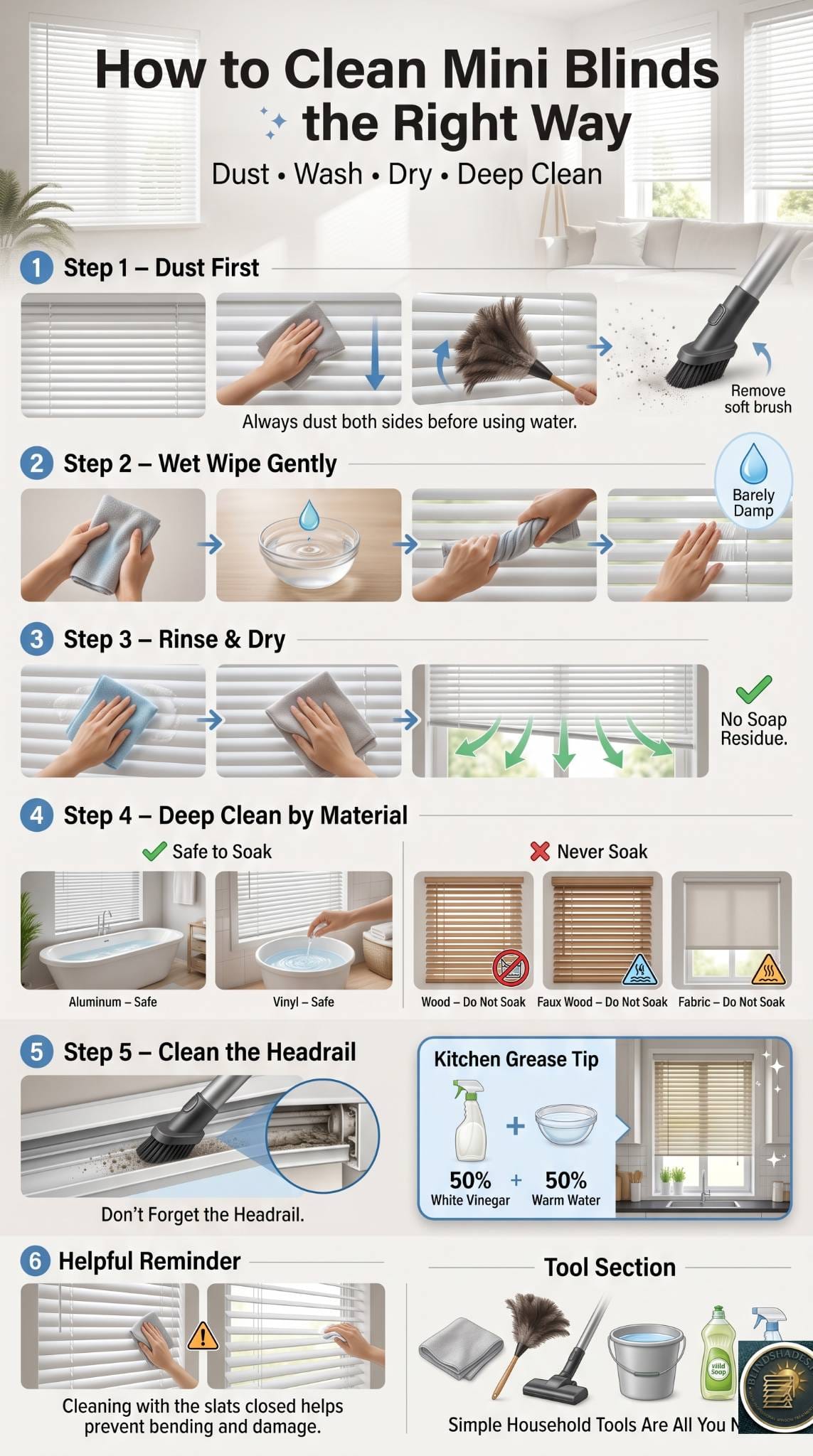
Authored by Michael Turner — 30 Years of Home Improvement Expertise | BlindShades.pro
To clean mini blinds, always dust them dry first, then wipe them with a barely damp cloth, because running a wet cloth over a dusty slat just smears the dirt into mud. Close the slats flat, work top to bottom, and clean both sides, including the back. For a deeper clean, aluminum and vinyl blinds can be soaked in the bathtub, but wood, faux wood, and fabric blinds must never be submerged. A weekly dust and a monthly wet wipe keep things easy, with a full deep clean every three to six months. This guide covers the fast dusting method, wet wiping without taking the blinds down, the bathtub soak, removing kitchen grease, whitening sun-yellowed slats, and what never to do.
Key Takeaways
- Always dust dry before you wipe wet. A damp cloth on a dusty slat smears grime around instead of lifting it, so dry dusting is always the first step.
- Submersion depends on the material. Aluminum, vinyl, and PVC slats can be soaked in a bathtub; wood, faux wood, and fabric blinds must never be submerged, as water warps, rusts, or voids the warranty.
- Close the slats flat and clean both sides. Tilt the slats fully closed to one side for an even surface, work top to bottom, then flip and repeat; dust collects on the back as much as the front.
- Dry immediately and never leave them closed wet. Soap residue attracts dust and trapped moisture breeds mildew, so rinse, dry each slat, and leave the blind raised to air-dry fully.
- Don’t forget the headrail. The top rail is an overlooked allergen trap, so vacuum it out with a brush nozzle as part of every clean.
⭐ Quick Answer
The key to how to clean mini blinds is the order: always dust dry first, then wipe wet, because a damp cloth on a dusty slat just smears the dirt into mud.
- Dust first, always: close the slats flat and dust top to bottom with a microfiber cloth or vacuum brush, the method Norman USA recommends.
- Do both sides and the headrail: dust collects on the back as much as the front, so flip the slats and repeat, then vacuum the top rail, as Consumer Reports advises.
- Wet wipe gently: use a barely damp cloth with mild dish soap, wring it well, then rinse off residue, dry, and leave the blind raised to air-dry, never closed.
- Deep clean by material: aluminum and vinyl can soak in a bathtub, but never submerge wood, faux wood, or fabric, which Factory Direct Blinds warns can warp or rust them.
- For kitchen grease, use a fifty-fifty vinegar and water mix. Cleaning with the slats closed also helps prevent the bends in how to fix bent mini blind slats; match care to your material in aluminum vs vinyl mini blinds, or pick a new set in our best mini blinds guide.
Why You Always Dust First, Then Wet
Wet cleaning a dusty blind just makes mud.
The single most important rule of cleaning mini blinds is the order: dry dusting always comes before any wet wiping. Mini blinds, with their thin 1-inch slats, are dust magnets, and if you go at a dusty slat with a damp cloth, you simply smear the dust into a muddy film that is harder to remove than the dust was. Dry dusting lifts the loose dust away cleanly first, so the wet wipe afterward deals only with the stuck-on grime and marks. Skip the dusting step and you double your work. So however dirty the blinds look, reach for the dry duster or vacuum brush before you reach for water.
What You’ll Need
A short, common tool kit.
You do not need special products. Gather a microfiber cloth or two, a vacuum with a soft brush attachment, a feather duster or a dedicated blind-cleaning wand if you have one, mild dish soap, white vinegar for grease, and an old towel to catch drips. A pair of kitchen tongs and some rubber bands enable a handy two-sided trick covered below. Avoid wood-spray and furniture polish on aluminum or vinyl, as they leave a sticky film that attracts more dust.
Method 1: Dry Dusting
The weekly five-minute routine that prevents deep cleans.
- Close the slats flat by twisting the wand or pulling the tilt cord until the slats lie flat and face one direction, giving you an even surface.
- Dust top to bottom with a microfiber cloth, blind duster, or vacuum brush on low suction, so falling dust does not re-dirty slats you have already cleaned.
- Flip and repeat by tilting the slats to face the other way, then dust that side the same way, top to bottom.
- Vacuum the headrail with the brush nozzle to clear the dust and allergens that collect in the top rail, an often-skipped step.
Keep the suction low, because high suction can bend the thin slats. Done weekly, this five-minute routine means you rarely need a wet clean.
Method 2: Wet Wiping Without Removing
For stuck-on grime, wipe in place — after dusting.
- Dust first using Method 1, never skipping it, to avoid muddy smearing.
- Mix a mild solution of a few drops of dish soap in about two cups of warm water; for greasy kitchen blinds, use a fifty-fifty mix of white vinegar and warm water instead.
- Try the tong trick: wrap a microfiber cloth around each arm of a pair of kitchen tongs, secure with rubber bands, dip lightly, and run the tongs along each slat to clean both sides at once. A clean sock over your hand works similarly.
- Wipe each slat with the barely damp, well-wrung cloth, working top to bottom.
- Rinse and dry: go over each slat with a second cloth dampened in clean water to remove soap residue, which otherwise attracts dust, then dry each slat and leave the blind raised to air-dry for twenty to thirty minutes.
Never leave the blind closed while wet, as moisture trapped between the slats encourages mildew.
Can You Submerge Mini Blinds? Material Matters
Only some materials can be soaked — get this wrong and you ruin the blind.
Before considering a bathtub soak, check what your blinds are made of, because submersion is safe for some materials and damaging for others:
| Material | Submerge in water? | Best method |
|---|---|---|
| Aluminum | Yes, then dry to avoid rust | Dust, wipe, or bathtub soak |
| Vinyl or PVC | Yes | Dust, wipe, or bathtub soak |
| Faux wood | No | Dust and barely damp wipe only |
| Real wood | No | Dust and dry or barely damp wipe |
| Fabric | No | Dust and vacuum only |
Aluminum and vinyl or PVC mini blinds tolerate a full soak, which is why the bathtub method works for them. Wood, faux wood, and fabric blinds must never be submerged, since water warps wood, can rust internal parts, and may void the warranty. When in doubt, treat the blind as non-submersible and stick to dusting and a barely damp wipe.
Deep Cleaning in the Bathtub
For very dirty aluminum or vinyl blinds only.
When aluminum or vinyl blinds are heavily soiled or greasy, a bathtub soak does the work for you:
- Take the blinds down by unclipping them from the brackets, and lay a towel or tarp in the tub to protect it.
- Fill the tub with warm water and a generous squirt of mild dish soap, then submerge the blinds.
- Soak for ten to thirty minutes to loosen built-up grease and grime without scrubbing.
- Wipe each slat gently with a soft cloth or sponge, then drain and rinse with clean water.
- Dry thoroughly and rehang to air-dry, keeping water out of the headrail, since moisture inside it can cause rust or affect the mechanism.
Take care not to get water inside the headrail at any point, as that is where soaking does its damage.
How Do You Remove Grease From Kitchen Blinds?
Cut grease with vinegar or a degreaser, not soap alone.
Mini blinds in a kitchen pick up a film of cooking grease that plain dish soap struggles to shift, and the smears make metal slats look dull. The fix is to cut the grease directly: wipe the slats with a fifty-fifty mix of white vinegar and warm water, which breaks down the grease and restores the shine, or apply a dedicated degreaser to the slat before lightly wiping. Dust first as always, then work along each slat, and rinse and dry afterward. Kitchen blinds usually need this wet treatment more often than blinds elsewhere, roughly monthly, because grease builds up faster than dust alone.
How Do You Whiten Yellowed Mini Blinds?
Sun-yellowed white slats can sometimes be brightened — carefully.
White aluminum and PVC slats can yellow over years of sun exposure, especially on south- and west-facing windows. You can often brighten them with a very diluted bleach soak, but only on white aluminum or PVC, never on colored or wood blinds, which it will permanently discolor. Take the blinds down, fill a tub with cold water and a small amount of bleach at roughly one part bleach to ten parts water, and soak for about ten minutes. Wear rubber gloves, open windows and run a fan for ventilation, then drain, rinse thoroughly, and dry. If the yellowing does not lift, the finish itself has aged and the slats may simply need replacing.
Common Problems and Fixes
A quick reference for the tougher cleaning jobs.
| Problem | Fix |
|---|---|
| General dust | Dry dust weekly, both sides, top to bottom |
| Stuck-on grime | Barely damp cloth, mild dish soap, then rinse and dry |
| Kitchen grease | Fifty-fifty white vinegar and water, or a degreaser |
| Sun-yellowing (white aluminum or PVC) | Diluted 1-to-10 bleach cold soak, gloves and ventilation |
| Mildew between slats | Clean, dry fully, never store the blind closed while wet |
| Allergens in the top rail | Vacuum the headrail with a brush nozzle |
What Not to Do When Cleaning Mini Blinds
A few mistakes can damage the slats or the finish.
| Don’t | Why it matters |
|---|---|
| Use high vacuum suction | Bends or warps the thin slats |
| Wipe wet before dusting | Smears dust into muddy grime |
| Use abrasive pads | Scratches the slat finish |
| Use wood-spray or polish on metal or vinyl | Leaves a sticky film that attracts dust |
| Submerge wood, faux wood, or fabric | Warps, rusts, or voids the warranty |
| Get water in the headrail | Causes rust and mechanism problems |
| Leave the blind closed while wet | Traps moisture and breeds mildew |
| Use bleach on colored or wood blinds | Causes permanent discoloration |
Cleaning Schedule and Prevention
A simple routine keeps deep cleans rare.
A light, regular routine beats occasional heavy scrubbing:
| Task | How often |
|---|---|
| Dry dusting | Weekly (monthly if low-dust) |
| Wet wipe-down | Monthly (kitchens more often) |
| Deep clean or bathtub soak | Every 3 to 6 months |
To keep dust at bay between cleans, rub the clean slats with a dryer sheet, which leaves an anti-static film that repels dust, keep windows closed on windy days, and vacuum the room regularly so there is less dust to settle. Cleaning with the slats closed flat, rather than at an angle, also protects them, supporting the bend-prevention advice in how to fix bent mini blind slats, and keeping the headrail clean helps the lift run smoothly, which ties into how to restring mini blinds. If a blind is too long and dragging, a clean is also a good moment to consider shortening it.
Best Sources
- Norman USA — on dusting first with a vacuum brush or microfiber cloth, working top to bottom on both sides, and cleaning without removing the blinds.
- Factory Direct Blinds — on care by material, not submerging wood or faux wood, drying immediately to avoid rust, and avoiding wood-spray that attracts dust.
- Home Depot — on the fifty-fifty vinegar solution, the sock-over-hand method, and the diluted bleach soak for sun-yellowed plastic and aluminum slats.
- Handwriting With Katherine — on dusting before wiping, the tong trick, vacuuming the headrail, rinsing soap residue, and air-drying raised, never closed.
- Consumer Reports — on vacuuming both the front and back of the slats and using a few drops of dish soap in warm water.
- Pro Housekeepers — on the bathtub soak for grease and rubbing clean slats with a dryer sheet to repel dust.
Related Guides
- Best Mini Blinds Buying Guide
- How to Fix Bent Mini Blind Slats
- How to Restring Mini Blinds
- Aluminum vs Vinyl Mini Blinds
Frequently Asked Questions
What is the easiest way to clean mini blinds?
The easiest routine is a weekly dry dusting. Close the slats flat, then run a microfiber cloth, blind duster, or a vacuum with a soft brush attachment along them from top to bottom, doing both sides. This five-minute habit stops dust building into grime and means you rarely need a wet clean. For stuck-on dirt, follow with a barely damp cloth and a little mild dish soap, but always dust first, since wiping a dusty slat just smears the dirt.
Can you clean mini blinds without taking them down?
Yes, most cleaning is done with the blinds hanging. Dust them in place with a cloth or vacuum brush, then for a wet clean, wipe each slat with a well-wrung damp cloth and mild soap, or use the tong trick of wrapping microfiber cloths around kitchen tongs to do both sides at once. Lay a towel beneath to catch drips. Only a heavy deep clean or a bathtub soak requires taking aluminum or vinyl blinds down.
How do you deep clean very dirty mini blinds?
For very dirty aluminum or vinyl blinds, take them down, lay a towel in the bathtub, and soak them in warm water with a squirt of mild dish soap for ten to thirty minutes to loosen grime. Wipe each slat gently, drain, rinse with clean water, dry thoroughly, and rehang to air-dry, keeping water out of the headrail. Never use the bathtub method on wood, faux wood, or fabric blinds, as soaking warps or ruins them.
How do you get grease off kitchen mini blinds?
Plain dish soap struggles with cooking grease, so cut it directly. After dusting, wipe the slats with a fifty-fifty mix of white vinegar and warm water, which breaks down grease and restores shine, or apply a degreaser to the slat before wiping. Rinse and dry afterward. Kitchen blinds typically need this wet treatment about monthly, more often than blinds in other rooms, because grease builds up faster than ordinary dust.
Why do white mini blinds turn yellow, and can you fix it?
White aluminum and PVC slats yellow over years of sun exposure, particularly on south- and west-facing windows. You can sometimes brighten them by soaking only white aluminum or PVC blinds in cold water with a very diluted bleach solution, about one part bleach to ten parts water, for around ten minutes, with gloves and good ventilation, then rinsing well. Never use bleach on colored or wood blinds. If the yellowing will not lift, the finish has aged and the slats may need replacing.
