What Are the Best Blinds for a Window Inside a Shower

Authored By Michael Turner -30 Years Home Improvement Expertise | Updated 2026 | BlindShades.pro
Updated on May 14, 2026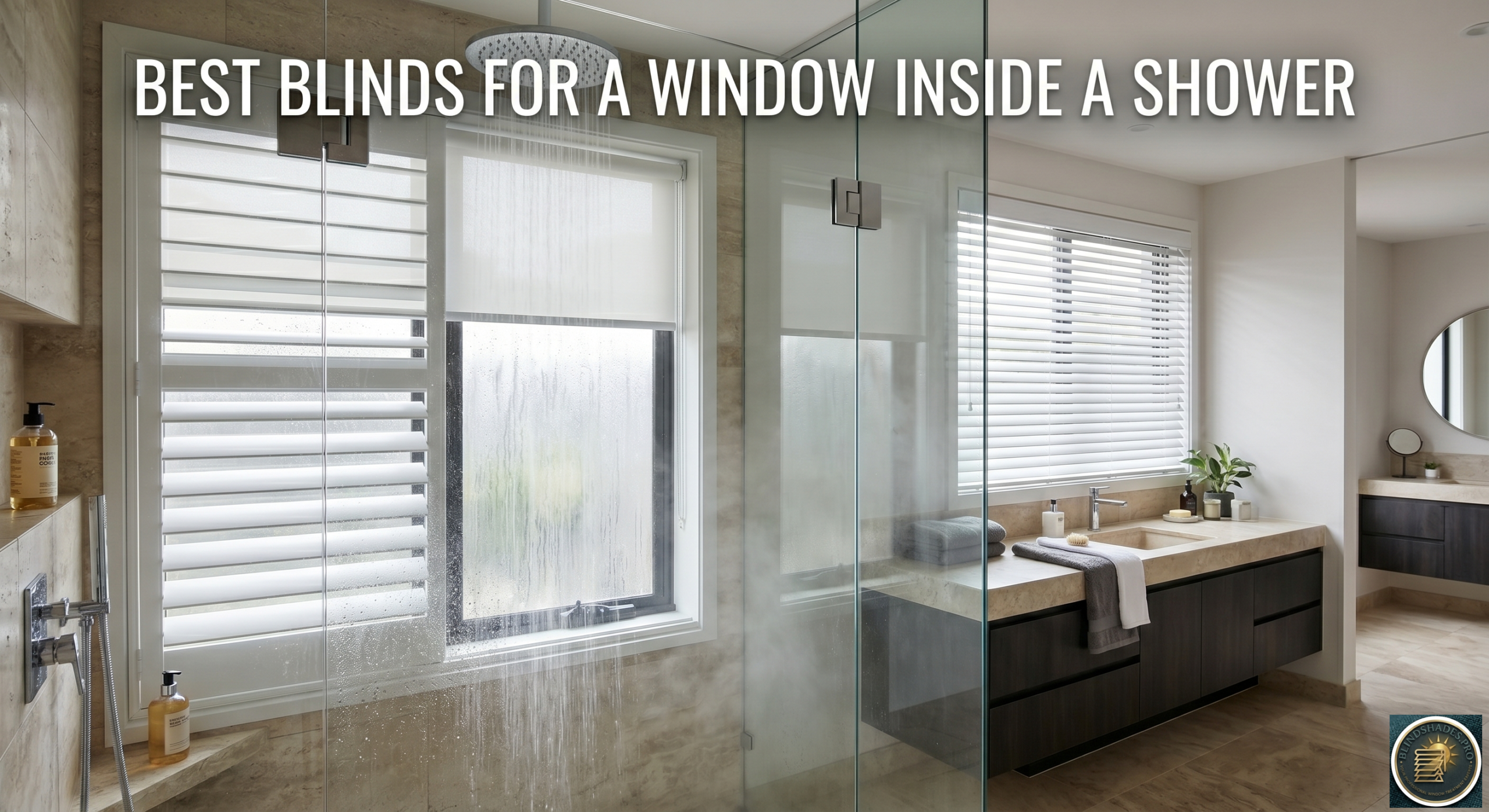
⭐ Quick Answer — What Are the Best Blinds for a Window Inside a Shower?
- Identify the Type First — Two Different Specifications: The best blinds for a shower window depend on window type. Type A (inside the shower enclosure, receives direct water spray): only solid polymer shutters (ABS or polycarbonate) or commercial-grade PVC roller with marine hardware. Type B (adjacent wall, steam only): high-grade vinyl roller or polymer shutter. These need completely different specifications — Type A materials used for Type B are over-specified; Type B materials used for Type A corrode and fail
- The Hardware Failure Nobody Warns You About: Standard blind mounting brackets are zinc-plated mild steel. In a Type A shower window with direct daily spray — zinc-plated steel corrodes structurally in 6–18 months. Correct Type A hardware: marine-grade 316 stainless steel or solid nylon polymer brackets. Always request the bracket material specification from the supplier before ordering any blind for a shower window
- Polymer Shutter — Why It’s the Better Type A Choice: ABS or polycarbonate shutters have three advantages over PVC roller shades for direct shower use: (1) Louvres tilt to drain water during showering — no water pooling; (2) Split-tilt rail (upper louvres open, lower closed) provides ventilation AND privacy simultaneously — critical if the shower window is the primary ventilation; (3) Light control from 0–100% without fully sealing the window
- Frosted Film — Only Marine Grade in a Shower: Standard self-adhesive frosted film fails in 3–12 months in direct shower spray — the adhesive lifts, bubbles, and peels creating water traps. Marine-grade or automotive tinting film (solvent-based adhesive) is rated for continuous water contact and is the correct specification for shower glass. It’s permanent, has no moving parts, no hardware, and no corrosion risk
- Light Quality — Opaque PVC Roller Darkens the Shower: A solid blackout PVC roller shade lowered for privacy creates complete darkness inside the shower — significant if the shower window is the primary light source. A polymer shutter with louvres at 30–45 degrees provides 30–50% diffuse natural light while maintaining privacy — a genuine advantage for morning shower use
- Best Sources: ABS polymer shutter → Norman USA PolyCore (specify nylon hardware) · PVC roller commercial grade → Blindsgalore commercial range (request 316 SS bracket) · Type B vinyl roller → SelectBlinds waterproof PVC range
⚠️ The Tile Drilling Problem and the Faux Wood Mistake for Shower Windows: The biggest installation challenge for blinds for a shower window is that the surrounding surface is usually ceramic tile — requiring a diamond-tipped drill bit and waterproof silicone around every penetration in the shower zone. Standard steel drill bits crack tile. For no-drill shower window applications, tension rod systems are available for Type B only (tension rod hardware corrodes in Type A direct spray). Some polymer shutter frames use clip-mount systems that grip the window bead without drilling — confirm Type A rating before specifying. And the most common purchase mistake: faux wood blinds are not suitable for Type A. Faux wood is PVC composite containing wood fibre — it is highly moisture-resistant but not 100% waterproof. Direct shower spray contact causes the wood fibre content to absorb water over time, eventually causing dimensional instability. For Type A shower windows: solid PVC or polymer only — no composite, no wood fibre, no fabric. See the full Type A specification below.
💡 PVC vs ABS vs Polycarbonate Shower Shutter — Which Material for Your Shower Window: All three are sold as “polymer shutters” for blinds for a shower window — but the material differences matter in a direct spray environment. PVC is lightest and least expensive but can yellow with prolonged UV exposure and has a lower temperature stability ceiling (~70°C). ABS (PolyCore, PowerCore brands) has better impact resistance, UV stabilisers in the compound, and handles temperature cycling to 80°C — the preferred mid-range shower specification. Polycarbonate is near-shatterproof, has the best UV stability and handles 120°C — the premium specification for shower windows with direct sunlight. For most shower windows: ABS polymer shutters with nylon hardware are the optimal balance of performance and cost. For south or west-facing shower windows with direct daily sun exposure: specify polycarbonate. For a full comparison of bathroom window materials and moisture ratings, see What Are the Best Blinds for a Bathroom Window. See the full material comparison table below.
📖 Read the complete guide below for: the Type A vs Type B shower window distinction, the hardware corrosion table (zinc-plated 6–18 months vs 316 SS 15+ years vs nylon immune), the polymer shutter material comparison (PVC vs ABS vs polycarbonate) for UV and temperature stability, the split-tilt shutter configuration for simultaneous ventilation and privacy, the marine-grade vs standard frosted film failure timeline, why solid blackout PVC rollers create dark showers when the window is the primary light source, the tile drilling procedure and no-drill alternatives, and the complete shower window specification table.
The Two Types of Shower Window — The Distinction Every Guide Misses
Definition: A shower window is any window located within or immediately adjacent to a shower enclosure. However, the exposure level of a shower window varies enormously between two distinct scenarios, and the specification must match the actual exposure type.
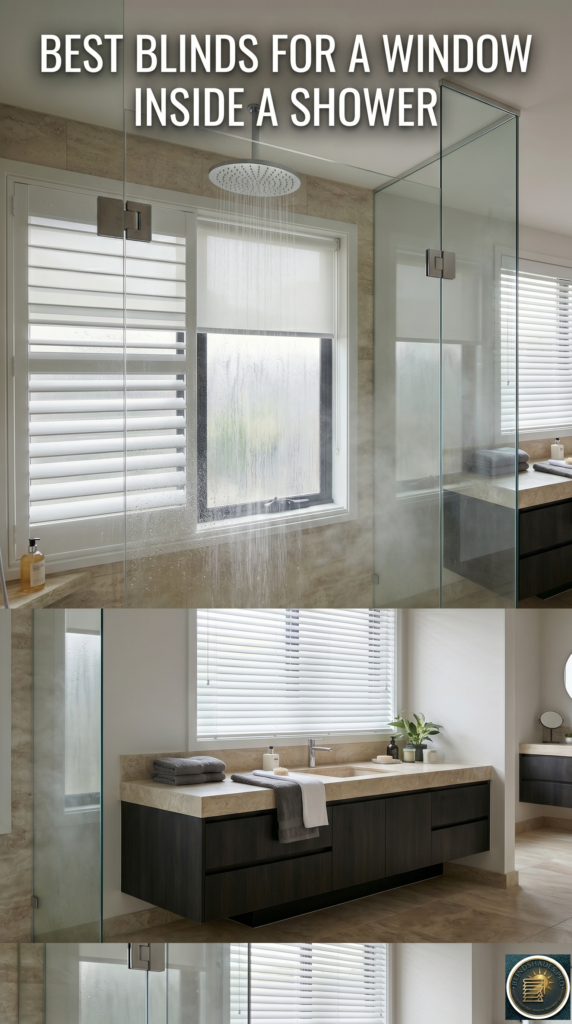
Type A — Window Inside the Shower Enclosure: The window is located within the shower walls. The shower head directly or indirectly sprays water onto the window and any window treatment installed there. This window:
- Receives direct water spray during every shower
- Experiences repeated water immersion of the window sill and lower frame
- Is exposed to hot water (38–42°C) every shower cycle
- Experiences repeated wet-dry thermal cycles every day
- Has virtually no air drying time if the shower enclosure is small
Type B — Window Adjacent to the Shower (but Outside the Spray Zone): The window is on the bathroom wall beside or above the shower area but outside the physical spray radius. This window:
- Receives heavy steam and condensation but no direct water spray
- Experiences 90–100% relative humidity during shower use
- Dries by air circulation and exhaust fan within 20–40 minutes
- Has the same Zone 1 humidity exposure as classified in What Are the Best Blinds for a Bathroom Window — Privacy and Moisture Guide, but without direct water contact
The critical specification difference: Type A requires 100% waterproof, fully submersible-grade materials with marine-grade hardware. Type B requires moisture-resistant materials with humidity-rated hardware — the Zone 1 specification covered in the main bathroom blinds guide. The rest of this article focuses specifically on Type A — the window directly inside the shower enclosure.
The Best Blinds for a Shower Window — By Type
Type A Specification — Polymer Composite Shutters (The First Choice)
Definition: Polymer composite shutters are window shutters manufactured from solid-injection-moulded thermoplastic material — either PVC, ABS (Acrylonitrile Butadiene Styrene), or polycarbonate — with no wood core, no fabric lining, and no organic component.
For a Type A shower window, polymer shutters are the first-choice specification for three reasons specific to the shower environment that no competitor guide explains:
Reason 1 — Drainage by louvre tilt: Unlike a roller shade that accumulates water on its surface when lowered, polymer shutter louvres can be tilted to allow water to drain off the louvre face during the shower. Tilting the louvres to a 30–45 degree downward angle while the shower is in use allows water that lands on the louvre surface to run off the face of the blade and drain downward rather than accumulating.
Reason 2 — Ventilation while maintaining privacy: A polymer shutter with a split-tilt rail (or divided tilt rod) allows the upper louvres to be opened while the lower louvres remain closed. In a shower where the window is the primary ventilation source — a sealed shower with no exhaust fan or limited ventilation — this split-tilt configuration allows fresh air circulation through the upper window zone while maintaining sightline-level privacy through the lower zone.
Reason 3 — Light control without full closure: The louvre tilt range (typically 0–90 degrees) allows the shower occupant to control the amount of light entering the shower without fully closing the shutter. A PVC roller shade must be either fully lowered (zero light) or fully raised (full view). A polymer shutter louvred open at 45 degrees allows diffuse natural light through while blocking sightlines.
Material comparison for Type A polymer shutters:
| Material | UV Stability | Impact Resistance | Temperature Stability | Weight |
|---|---|---|---|---|
| PVC | Moderate (yellows over time with UV) | Moderate | Good to 70°C | Light |
| ABS (PolyCore, PowerCore) | Good (UV stabilisers in compound) | Excellent | Good to 80°C | Moderate |
| Polycarbonate | Excellent (best UV stability) | Superior (near-shatterproof) | Excellent to 120°C | Moderate |
For a shower window that receives direct sunlight: Specify polycarbonate or ABS shutters rather than standard PVC — UV stability matters when sunlight hits a wet shutter surface repeatedly over years.
Where to order: Norman USA PolyCore ABS shutters — see normanusa.com for the full PolyCore shower-specification range. Blindsgalore polymer composite shutters — see the Blindsgalore bathroom range for compatible hardware options.
Type A Specification — Commercial-Grade PVC Vinyl Roller Shade (The Alternative)
A PVC vinyl roller shade is the second acceptable Type A specification — and the only non-shutter option suitable for a window inside a shower enclosure.
Why standard PVC roller shades fall short for Type A:
A standard residential PVC vinyl roller shade is manufactured for bathroom humidity resistance (Zone 1/Zone 2 tolerance) — not for the repeated direct water spray of a shower enclosure. The specific risks for a standard PVC roller shade in a Type A application:
Hardware corrosion: Standard roller shade brackets are mild steel with zinc plating or powder coating. In a Type A environment — where brackets receive direct water spray daily — zinc-plated steel corrodes within 6–18 months. The bracket fails structurally before the fabric does.
Tube seal degradation: The roller tube is typically aluminium with polymer end caps. The join between the aluminium tube and the end cap is a potential water ingress point. Repeated direct spray can introduce water inside the tube, accelerating corrosion of any internal metal components.
Water pooling on raised shade: When a PVC roller shade is lowered in a shower and then raised after the shower, the accumulated water on the shade fabric surface runs toward the headrail mechanism as the shade rolls up. Without drainage provisions in the headrail, this water pools inside the headrail housing and promotes corrosion of any metal internal components.
The commercial-grade specification for Type A PVC roller:
- Bracket hardware: marine-grade 316 stainless steel or solid nylon polymer — not zinc-plated mild steel
- Roller tube: aluminium with sealed polymer end caps and drainage apertures in the headrail
- Fabric: commercial-grade heat-stabilised PVC with a manufacturer’s temperature rating of 70°C or higher
- Headrail housing: polymer (not metal) construction to prevent corrosion from water pooling
This specification is significantly more demanding than a standard residential PVC roller shade. Specify through a commercial window treatment supplier or request specification sheet confirmation from any retailer before ordering.
The Hardware Material Specification — The Most Overlooked Shower Window Factor
Every guide mentions that shower window hardware “should resist rust.” None specify what this actually means.
The hardware corrosion hierarchy for shower window exposure:
| Hardware Material | Corrosion Resistance | Type A Suitability | Cost Premium |
|---|---|---|---|
| Mild steel (bare) | Very poor | ❌ Corrodes immediately | — |
| Zinc-plated mild steel | Poor — 6–18 months in direct spray | ❌ Type A fails | Standard |
| Powder-coated mild steel | Moderate — 2–5 years in direct spray | ⚠️ Type B only | +10–15% |
| 304 Stainless steel | Good — 5–10 years in direct spray | ⚠️ Type B preferred | +20–30% |
| 316 Marine stainless steel | Excellent — 15+ years in direct spray | ✅ Type A appropriate | +35–50% |
| Solid brass | Excellent — patinas, does not rust | ✅ Type A appropriate | +30–50% |
| Nylon/polymer | Immune — no corrosion | ✅ Type A ideal | Varies |
The practical implication: Polymer composite shutters mounted with nylon polymer hardware — available from PolyCore and several Australian polymer shutter manufacturers — are the most corrosion-proof specification available for Type A shower windows. The entire system (shutter frame, louvres, hinge pins, mounting brackets) contains no metal to corrode.
For PVC roller shades in Type A: specify 316 marine stainless steel brackets or solid nylon polymer brackets. Request the bracket material specification from the supplier before ordering — most residential roller shade brackets are zinc-plated mild steel, which is inadequate.
The Ventilation Problem — What Happens When the Shower Blind Is the Only Ventilation
For a shower window that serves as the primary ventilation source — common in shower enclosures without a dedicated exhaust fan — the choice of blind type directly affects air quality and moisture management.
PVC roller shade ventilation profile: A fully lowered PVC roller shade completely seals the window for ventilation. If the roller shade is lowered during every shower for privacy, and the shower has no alternative ventilation, humidity in the shower enclosure reaches and maintains 100% RH for the entire shower duration — and potentially for 30–60 minutes afterward until the shade is raised.
Sustained 100% RH with no air exchange creates the conditions for the most rapid mould and mildew growth on grout, silicone seals, and shower fittings. For a shower with a window as the primary ventilation — a fully sealing PVC roller shade contributes to faster mould development in the shower compared to a shutter that can be partially open.
Polymer shutter ventilation profile: A polymer shutter with louvres cracked open at the top provides air exchange while maintaining sightline privacy through the lower louvres. This simultaneous privacy-and-ventilation configuration is specific to louvred shutters and is not available with any roller shade design.
The specification for maximum shower ventilation and privacy: Polymer ABS or polycarbonate shutter with split-tilt rail — upper half louvres open 30–40 degrees for air exchange, lower half louvres closed for privacy. This configuration provides:
- Continuous air exchange during the shower
- Sightline privacy at the height zone of the shower occupant (typically 48–66 inches from floor)
- Natural diffuse light through the angled upper louvres
- No sealed-humidity buildup during shower use
The Light Quality Through Different Shower Window Blind Materials
This is the most practically important factor that no guide addresses for shower windows specifically.
The shower light problem: A shower window is often the primary light source for the shower enclosure. A blind that completely blocks this light turns the shower into a dark enclosed space — particularly relevant for interior bathrooms where the shower window is the only natural light source.
Light transmission by shower window blind type:
| Blind Type | Light When Closed | Light When Partially Open | Ventilation When Partially Open |
|---|---|---|---|
| PVC vinyl roller shade (solid blackout) | 0% — complete darkness | Not applicable | None |
| PVC vinyl roller shade (light-filtering) | 20–40% diffuse | Not applicable | None |
| Polymer shutter (louvres closed) | 0% — complete closure | Adjustable (0–100%) | None when fully closed |
| Polymer shutter (louvres 30° open) | 30–50% directional | Adjustable | ✅ Air exchange |
| Polymer shutter (louvres 90° open) | 90%+ | Not applicable | Maximum |
| Frosted film on glass (marine-grade) | 80–90% diffuse | Not applicable | None (fixed) |
The specification for light-sensitive shower users: If the shower window is the primary light source and the shower occupant prefers natural light during showering — specify a polymer shutter rather than a solid PVC roller shade. The louvre adjustment allows the shower occupant to dial in the precise balance of privacy and natural light required for each shower use.
Marine-Grade Frosted Film for Type A Shower Windows
Standard self-adhesive frosted window film — adequate for humid bathrooms — is not appropriate for direct shower spray applications.
Standard frosted film in a shower: Standard frosted film uses water-soluble or water-sensitive pressure-sensitive adhesive. Repeated direct water spray contact causes the adhesive to fail at the film edges, then progressively from the edges inward, causing the film to bubble, lift, and peel within 3–12 months in a Type A environment. Film that is lifting and bubbling in a shower creates water traps between the film and glass that promote mould growth.
Marine-grade frosted film for Type A: Marine-grade or automotive tinting film uses a solvent-based adhesive formulated for continuous moisture exposure. Brands including 3M’s marine tinting products and several UK manufacturers produce films with immersion-rated adhesives appropriate for shower glass. Marine-grade frosted film:
- Rated for continuous water contact
- UV-stabilised formulation
- Applied to the interior shower glass surface
- Provides permanent privacy without any moving parts, hardware, or mould risk
For a shower window where no blind or shutter is preferred — marine-grade frosted film is the simplest Type A privacy solution. It is not adjustable (permanent privacy) and provides no ventilation, but requires no hardware, no maintenance beyond cleaning, and has no corrosion risk.
For a full comparison of frosted film options for bathroom windows generally, see How Do I Get Privacy in a Bathroom Without Losing Natural Light.
The Complete Shower Window Specification Guide
| Scenario | First Choice | Second Choice | Avoid |
|---|---|---|---|
| Type A — inside shower, direct spray | Polymer shutter (ABS/polycarbonate) + nylon hardware | Commercial PVC roller + 316 SS hardware | Standard residential roller, faux wood, fabric, aluminium |
| Type A — light source priority | Polymer shutter with adjustable louvres | Marine-grade frosted film | Solid blackout PVC roller (blocks all light) |
| Type A — ventilation priority | Polymer shutter with split-tilt rail | No blind (marine-grade frosted film only) | Any roller shade (seals ventilation) |
| Type B — adjacent to shower, steam | PVC vinyl roller shade | Polymer shutter | Fabric, faux wood, aluminium mini-blinds |
| No-drill/no-screw mounting | Tension rod PVC roller (some designs) | Clip-mount polymer shutter (select brands) | Standard brackets in tile (tile drilling needed) |
The Tile Mounting Problem — The Most Practical Challenge
The most frequently overlooked installation challenge for shower window blinds is that the surrounding surface is usually tile — and drilling through tile requires a specialist drill bit and technique that most homeowners and general contractors are not equipped for.
Tile drilling considerations:
- Tile drill bit (diamond-tipped or carbide-tipped) required — standard steel drill bits crack ceramic tile
- Pilot hole through tile grout joint (where possible) avoids drilling through the glazed tile face
- Waterproof silicone sealant around any penetration in the shower zone
- Screw anchors must be appropriate for the tile substrate (hollow or solid tile backing)
No-drill alternatives for shower windows:
- Tension rod systems: a spring-loaded tension rod presses outward against the window recess walls — no drilling required; suitable for Type B only (tension rods corrode in Type A direct spray)
- Clip-mount polymer shutter frames: some PolyCore and ABS shutter systems use a polymer clip frame that grips the window bead without drilling — suitable for Type A if the frame is rated for direct spray
For the general bathroom window measurement and mounting guide, see What Are the Best Blinds for a Bathroom Window — Privacy and Moisture Guide.
Where to Order — Type A Shower Window Specification
For polymer composite shutters (first-choice Type A): Norman USA PolyCore ABS shutters — UV-stabilised ABS compound, fully polymer hardware available, split-tilt rail for shower ventilation. See normanusa.com/shutters. Specify nylon hardware option at ordering.
For commercial-grade PVC vinyl roller shades (alternative Type A): Request specification sheets from Blindsgalore commercial range — see blindsgalore.com/bathroom — confirming bracket material (specify 316 stainless or nylon) and tube end cap seal.
For marine-grade frosted film (no-moving-parts Type A solution): 3M marine window film or automotive tinting film from specialist film suppliers. Confirm immersion-rated adhesive before purchase.
Frequently Asked Questions
What are the best blinds for a window inside a shower? For a window directly inside a shower enclosure that receives direct water spray, solid-injection-moulded polymer composite shutters made from ABS or polycarbonate with nylon polymer hardware are the best specification — they have no metal components to corrode, allow louvre tilt for drainage during showering, and provide simultaneous ventilation and privacy through partial louvre opening. The alternative is a commercial-grade PVC vinyl roller shade with marine-grade 316 stainless steel or solid nylon polymer brackets, specified to confirm the tube end cap seal and headrail drainage provisions. Standard residential PVC roller shades with zinc-plated steel brackets corrode within 6 to 18 months in direct shower spray applications.
Can you put any blind in a shower window? No — only two material types are appropriate for a window inside a shower enclosure that receives direct water spray. Solid polymer shutters and commercial-grade PVC vinyl roller shades with corrosion-resistant hardware are the only appropriate specifications. Faux wood blinds are PVC composite containing wood fibre that makes them moisture-resistant but not fully waterproof — not appropriate for direct spray. Aluminium mini blinds corrode at the pivot mechanism and tilt rod within 1 to 3 years in direct spray even with powder coating. Fabric blinds, fabric roller shades, and any product with standard zinc-plated steel hardware are not appropriate for Type A shower window installation.
What mounting hardware is correct for shower window blinds? The correct hardware for a window inside a shower enclosure is marine-grade 316 stainless steel, solid brass, or solid nylon polymer brackets. Standard residential blind mounting brackets are mild steel with zinc plating or powder coating. In direct daily shower spray, zinc-plated mild steel corrodes and fails structurally within 6 to 18 months — before the blind fabric requires replacement. Polymer composite shutters with nylon hardware have no metal corrosion risk. For PVC roller shades in shower applications, specifically request 316 marine stainless steel brackets from the supplier and confirm this in writing before ordering.
Can you use frosted film on a shower window instead of a blind? Yes — but only with marine-grade or automotive tinting film, not standard self-adhesive frosted window film. Standard frosted film adhesive is not rated for water immersion or direct spray contact and will begin to lift and bubble within 3 to 12 months in a Type A shower window application. Marine-grade frosted film uses a solvent-based adhesive formulated for continuous moisture exposure, is UV-stabilised, and applied permanently to the shower glass surface. It provides permanent privacy with no moving parts, no hardware corrosion risk, and no maintenance beyond cleaning. It is not adjustable for ventilation or light control.
How do you get ventilation from a shower window with a blind installed? A polymer composite shutter with a split-tilt rail allows the upper louvres to be opened while the lower louvres remain closed for privacy, providing air exchange through the upper window zone during showering. This is the only shower window blind specification that provides simultaneous privacy and ventilation. A PVC roller shade in the lowered position completely seals the window opening, blocking all ventilation. For showers without a dedicated exhaust fan where the window is the primary ventilation source, a polymer shutter with split-tilt rail is strongly preferred over a roller shade.
Contextual Internal Links — Used in Article Body
| Anchor Text | Links To | Location in Article |
|---|---|---|
| What Are the Best Blinds for a Bathroom Window | /guide/best-blinds-for-bathroom-window/ | Type B specification section + Tile mounting section |
| How Do I Get Privacy in a Bathroom Without Losing Natural Light | /guide/bathroom-privacy-without-losing-light/ | Marine-grade frosted film section |
Related Guides on BlindShades.pro
- The Best Bathroom Window Blinds & Shades Buying Guide
- What Are the Best Blinds for a Bathroom Window — Privacy and Moisture Guide
- What Are the Best Window Treatments for a Bathroom Next to a Bathtub
- Do Bathroom Blinds Get Moldy — How to Prevent Mold on Bathroom Blinds
- Are Motorized Blinds Safe for a Bathroom — Waterproofing, IP Ratings and Smart Home
By Michael Turner | 30 Years Home Improvement Expertise | Updated 2026 | BlindShades.pro
