Are Mini Blinds Outdated in 2026?

Authored By Michael Turner -30 Years Home Improvement Expertise | Updated 2026 | BlindShades.pro
Updated on June 26, 2026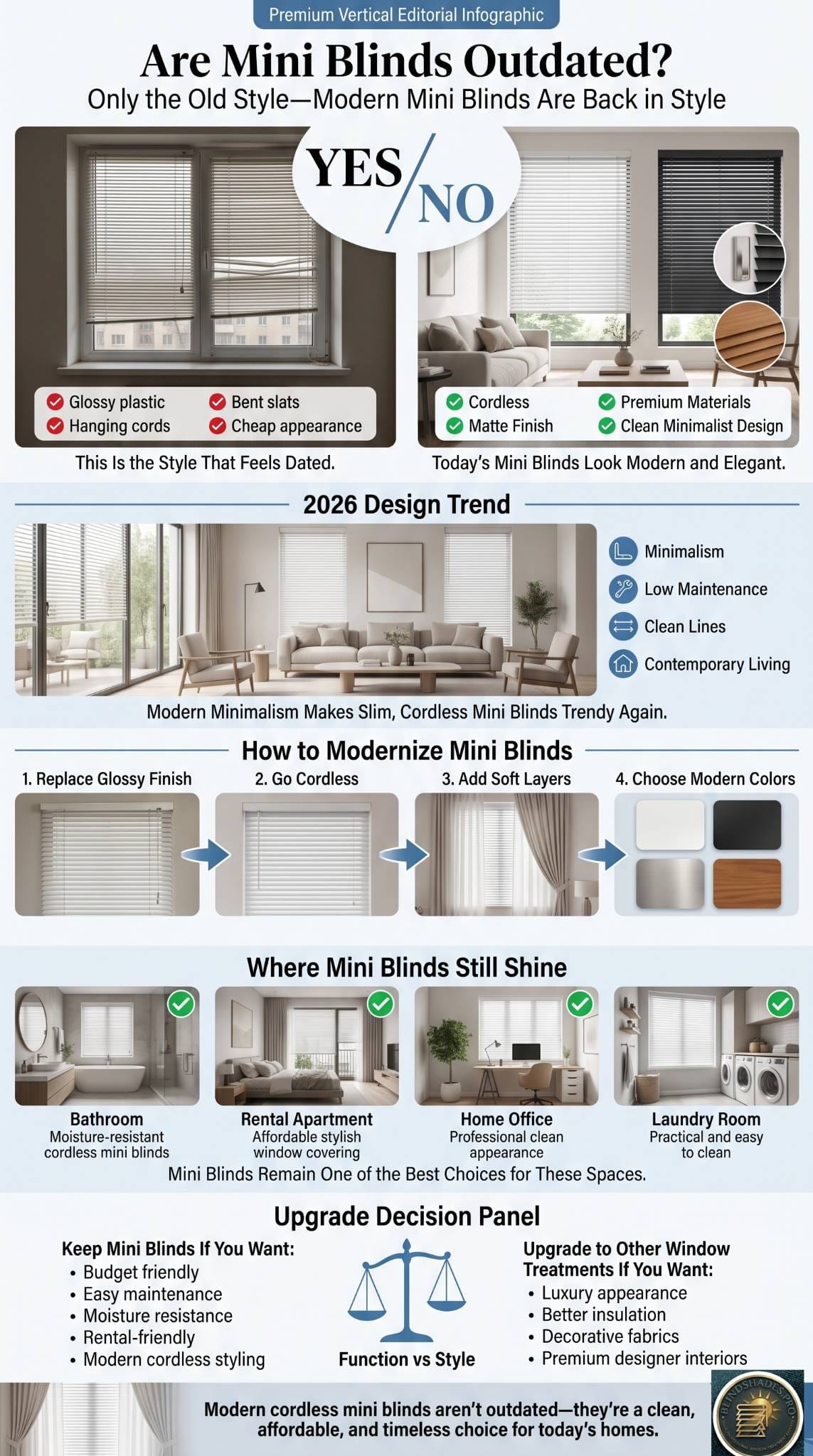
Authored by Michael Turner — 30 Years of Home Improvement Expertise | BlindShades.pro
Yes and no. The old-style mini blind, with its shiny plastic finish, dangling cords, and flimsy slats, does look dated, and it is what gives mini blinds their tired reputation. But the modern mini blind, with a matte or satin finish, cordless operation, and finishes like matte black, brushed nickel, or wood tones, looks clean and current, and is even enjoying a comeback in 2026 as minimalism drives demand for slim, low-maintenance lines. Mini blinds also remain the practical winner for budgets, rentals, bathrooms, and offices. So whether mini blinds are outdated depends entirely on which mini blind you mean and how you style it. This guide separates the dated reputation from the modern reality.
Key Takeaways
- It depends on the style, not the category. Glossy, corded, flimsy mini blinds look dated; matte, cordless, well-made ones look modern and intentional.
- Mini blinds are trending again in 2026. As design swings back to clean, slim lines and low-maintenance minimalism, mini blinds, especially aluminum in modern finishes, are having a genuine comeback.
- Finish is the biggest tell. Swapping a shiny plastic look for a matte or satin finish in matte black, brushed nickel, or a wood tone instantly modernizes the look.
- Cordless modernizes and protects. Going cordless removes the dated dangling-cord look and the child-safety hazard at the same time, so you can update without changing the style.
- They still win on practicality. For budgets, rentals, kitchens, bathrooms, and offices, mini blinds remain a smart, affordable, durable choice.
⭐ Quick Answer
Are mini blinds outdated? Yes and no:
- The old style is dated: shiny plastic finishes, dangling cords, and flimsy bent slats are what look tired.
- The modern style is not: matte or satin finishes, cordless operation, and tones like matte black, brushed nickel, or wood are clean and current.
- They are trending in 2026 as minimalism favors slim, low-maintenance lines.
- To modernize: choose matte over glossy, go cordless, and layer with sheers or drapery.
- They still win on budget, rentals, bathrooms, and offices.
If you do want to switch, see alternatives to mini blinds for the best upgrades by room.
Are Mini Blinds Outdated? The Honest Answer
The category is not dated; one version of it is.
The honest answer is that it depends on which mini blind you picture. If you are picturing the shiny aluminum or plasticky white blinds with dangling cords from a 1980s apartment, then yes, that look is dated, and it is exactly what gives mini blinds their stuck-in-the-past reputation. But today’s mini blinds have evolved well beyond that. With matte and satin finishes, cordless operation, modern colors, and precise sizing, they read as clean, minimal, and intentional, the kind of quiet window treatment that supports a room rather than dating it. So mini blinds are not inherently outdated; the old style is, and the modern version is genuinely current.
Why Mini Blinds Got a Dated Reputation
The reputation is earned by the old version, not the new one.
It helps to understand where the dated feeling comes from. Mini blinds were first popularized in the 1960s and 1970s as a lightweight, affordable, low-maintenance option, and for decades they were the default in apartments, rentals, and offices. That ubiquity is part of the problem: people associate them with cheap, builder-grade installs. The specific things that read as dated are the shiny plastic finish, the dangling cords, the narrow slats that block views and create visual clutter, and the flimsy, easily bent slats of low-quality versions, which can feel cold and sterile in a design-forward room. Every one of those traits belongs to the cheap old style, and every one has a modern fix.
Dated Look vs Modern Fix
Each dated trait has a direct update.
| Dated trait | Modern fix |
|---|---|
| Shiny plastic finish | Matte or satin finish |
| Dangling cords | Cordless or routeless lift |
| Shiny silver or stark white | Matte black, brushed nickel, wood tones |
| Flimsy, easily bent slats | Quality gauge, sturdier slats |
| Bare blind alone on the window | Layered with sheers or drapery |
| Sloppy, uneven install | Precise sizing and level mounting |
Why Mini Blinds Are Making a Comeback in 2026
Minimalism is pulling them back into style.
Far from fading, mini blinds are having a real moment in 2026. For a while, fabric shades and automation dominated, but design trends have swung back toward clean, slim lines and low-maintenance living, and mini blinds fit that minimalist movement perfectly. Their thin profile and crisp horizontal lines support an uncluttered, architectural look, and modern finishes let them either disappear into a neutral palette or deliver an intentional pop of color. Quality lines have widened the options dramatically, with some collections offering dozens of colors and finishes. The appeal now goes beyond price to versatility and design: mini blinds have become the simple, modern classic for homeowners who want streamlined windows without fuss.
The Honest Case Against Mini Blinds
The criticisms are fair, and worth weighing.
In fairness, the case against mini blinds is not all about old finishes. Even modern mini blinds have real drawbacks. Their narrow 1-inch slats block more of the window than wider treatments, which can obstruct a nice view and add visual lines some people find busy. Because there are many slats per window, they take longer to dust than a single fabric shade. They offer limited insulation compared with cellular shades. And in very design-forward or formal rooms, even a nice mini blind can read as a touch utilitarian next to soft drapery or woven wood. None of these make mini blinds outdated, but they are honest reasons some homeowners choose something else, and they are worth weighing against the low cost and durability.
What to Buy So They Don’t Look Dated
Choose these features for a modern result.
| Feature | Choose | Avoid |
|---|---|---|
| Finish | Matte or satin | Glossy plastic |
| Color | Matte black, nickel, wood tone, soft neutral | Shiny silver, stark bright white |
| Lift | Cordless or routeless | Visible dangling cords |
| Slat quality | Sturdier gauge | Thin, flimsy slats |
| Fit | Precisely measured, level | Loose, crooked, gappy |
The single biggest upgrade is the finish: choosing matte or satin over glossy plastic immediately makes a mini blind look more expensive and current. After that, go cordless for a cleaner face and better safety, pick a modern color, and insist on a precise, level install, since clean alignment instantly elevates the result. Get the size right first with how to measure for mini blinds and compare finishes and materials in aluminum vs vinyl mini blinds.
The Layering Trick
The fastest way to make mini blinds look designed.
If there is one move that transforms mini blinds from basic to intentional, it is layering. Pairing mini blinds with soft fabric, floor-length sheer panels, unlined linen-look drapery, or a roller shade adds warmth, movement, and dimension that a bare blind lacks. The rule designers use is simple: mini blinds provide the structure and precise light control, while the fabric layer adds softness and style. Inside-mount the blinds for a clean face, then frame the window with sheers or drapery. This single step is often the difference between a window that looks builder-grade and one that looks deliberately styled, and it costs far less than replacing the blinds entirely.
Where Modern Mini Blinds Still Win
There are rooms where mini blinds remain the right tool.
| Where | Why mini blinds win |
|---|---|
| Rentals | Affordable, easy to replace |
| Tight budgets | Lowest-cost custom option |
| Bathrooms and kitchens | Moisture-resistant aluminum or vinyl |
| Offices and commercial | Durable, practical, cord-safe |
| Secondary or utility windows | Not worth a pricier upgrade |
| Industrial-modern interiors | Sleek metal finish suits the look |
Mini blinds are not a compromise in these settings; they are the smart choice. In humid bathrooms and kitchens, their moisture resistance beats fabric shades outright, and in rentals, offices, and budget projects, their low cost and durability are hard to beat. Even in style-conscious homes, a matte aluminum mini blind complements an industrial-modern aesthetic beautifully.
If You Do Replace Them
An honest path out, if you decide to switch.
If you weigh it up and decide mini blinds are not for a particular room, that is a perfectly good call, and there are excellent upgrades. For the closest swap with the same tilt-and-lift feel, choose wood or faux wood blinds; for insulation and blackout, cellular shades; for a clean modern look, roller shades; and for warmth, woven wood or drapery. The full breakdown by room and priority is in alternatives to mini blinds. And if your main reason to replace is the old corded look or safety, remember you can often just switch to cordless mini blinds and keep the style you already have.
The Verdict: Keep, Refresh, or Replace
Three honest paths, depending on your goal.
| Your situation | Verdict |
|---|---|
| Budget, rental, bath, or office | Keep your mini blinds |
| They work but look dated | Refresh: matte finish, cordless, layering |
| Old corded blinds, safety concern | Refresh: switch to cordless |
| Bent or flimsy slats | Refresh: repair or replace the slats |
| Want views, warmth, or insulation | Replace with an alternative |
| Updating for resale | Replace with an upgraded finish |
For most rooms, the answer is to keep or refresh rather than replace. A matte finish, a cordless lift, and a layer of sheers will modernize mini blinds for a fraction of the cost of new treatments, and if the issue is just bent slats, you can often fix them, as in how to fix bent mini blind slats. Replace only when you genuinely want what mini blinds cannot give: wide-open views, soft warmth, or real insulation. To choose a modern set, see our best mini blinds guide.
Best Sources
- SelectBlinds — on mini blinds being still in style when done right, the shift to matte finishes, cordless and routeless designs, modern tones like matte black and brushed nickel, and layering with sheers.
- Andrew Norris and Associates — on 2026 as a comeback year for mini blinds, driven by a minimalism revival and clean, slim lines after fabric shades and automation dominated.
- Wessco Blinds — on minimalist mini blinds with sleek color pops and quality lines offering dozens of color choices for streamlined modern looks.
- Budget Blinds of Boise — on the dated, cold, or sterile perception of old mini blinds, narrow slats blocking views, and cordless updates for safety.
- LA Smart Blinds — on flimsy, easily bent older mini blinds reading as dated, and warmer wider-slat and natural-material alternatives.
- 3 Day Blinds — on thin aluminum mini blinds among styles that can date a room, and 2026 trends toward minimalist, slim-profile designs.
Related Guides
- Best Mini Blinds Buying Guide
- Best Cordless Mini Blinds
- Alternatives to Mini Blinds
- Aluminum vs Vinyl Mini Blinds
Frequently Asked Questions
Are mini blinds outdated in 2026?
Not inherently. The old style of mini blind, with a shiny plastic finish, dangling cords, and flimsy slats, does look dated, but modern mini blinds with matte or satin finishes, cordless operation, and tones like matte black, brushed nickel, or wood are clean and current. In fact, mini blinds are enjoying a comeback in 2026 as minimalist design favors slim, low-maintenance lines. Whether they look outdated depends on the finish, the lift, and how they are styled, not on mini blinds as a category.
How do you make mini blinds look modern?
The fastest upgrades are finish, lift, and layering. Choose a matte or satin finish over glossy plastic, in a modern tone like matte black, brushed nickel, or a wood look rather than shiny silver. Go cordless or routeless for a cleaner face and better safety. Then layer the blinds with floor-length sheer panels or drapery, which adds softness and makes the window look intentionally designed. Finally, measure precisely and install level, since clean alignment instantly elevates the result.
Why do mini blinds look cheap?
Mini blinds look cheap mainly because of a glossy plastic finish, visible dangling cords, thin flimsy slats, and sloppy installation, all hallmarks of low-cost, builder-grade versions. Their long association with rentals and offices adds to the perception. The fixes are straightforward: a matte or satin finish, cordless operation, a sturdier slat gauge, a modern color, and a precise, level install. With those changes, a mini blind reads as streamlined and intentional rather than cheap.
Are mini blinds coming back in style?
Yes. After years of fabric shades and automation dominating, design trends in 2026 have swung back toward clean, slim lines and low-maintenance minimalism, which suits mini blinds perfectly. Modern aluminum mini blinds in matte finishes and contemporary colors are being embraced for streamlined, uncluttered windows, and quality collections now offer a wide range of colors and finishes. Their thin profile supports an architectural, minimalist look, making them a current choice again rather than a dated one.
Should I replace my mini blinds or keep them?
For most rooms, refresh rather than replace. If your mini blinds work but look dated, a matte finish, a cordless lift, and a layer of sheers will modernize them affordably, and bent slats can often be repaired. Keep them as-is in rentals, bathrooms, kitchens, offices, and on budget or secondary windows, where they are the practical choice. Replace them only when you genuinely want wide-open views, soft warmth, or real insulation that mini blinds cannot provide, in which case alternatives like cellular or wood blinds are worth considering.
