Are Cellular Shades Good for French Doors?

Authored By Michael Turner -30 Years Home Improvement Expertise | Updated 2026 | BlindShades.pro
Updated on July 15, 2026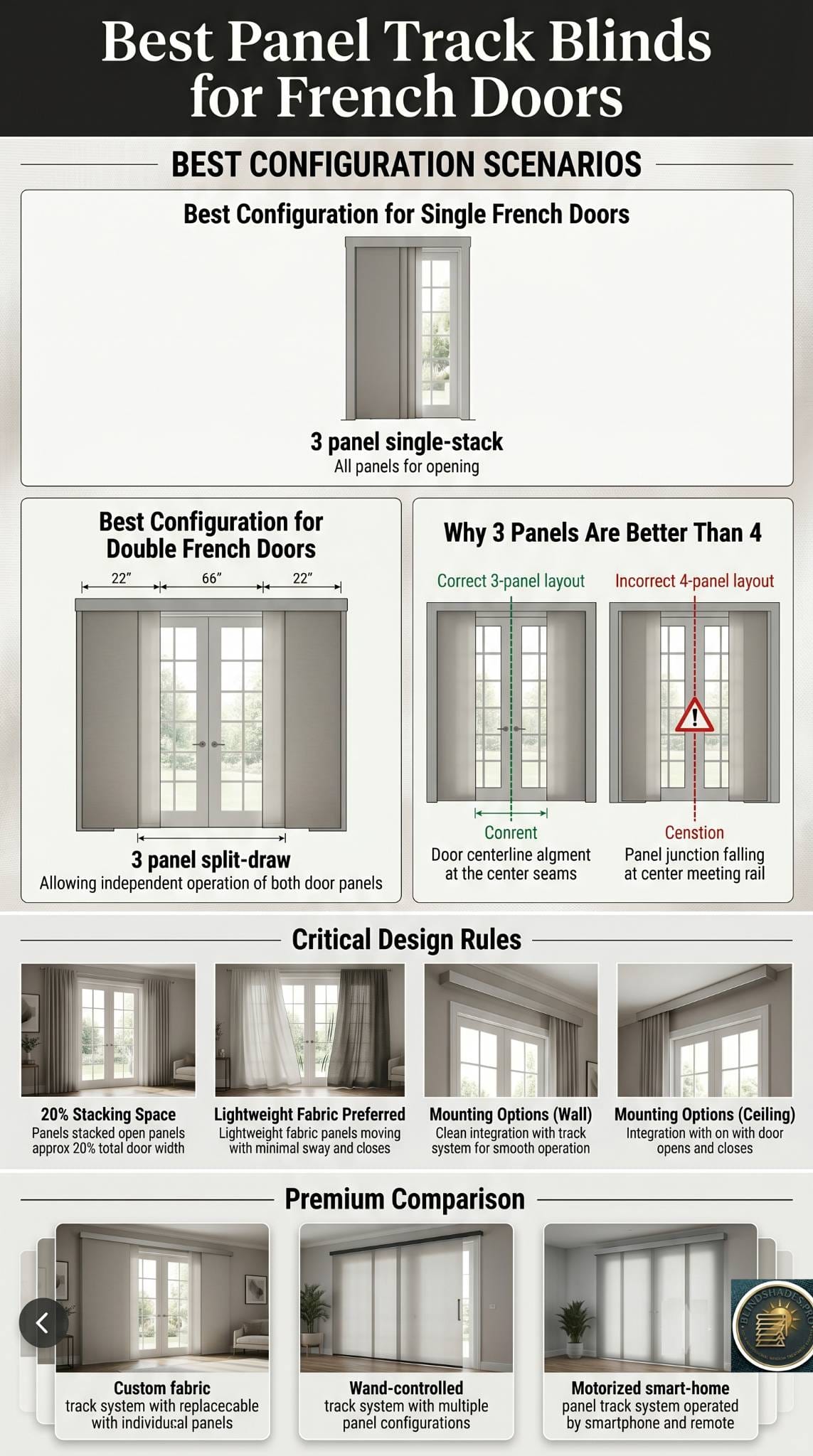
Key Takeaways:
- Cellular shades are good for French doors — the US Department of Energy confirms cellular shades can reduce heat loss through windows by 40% or more in heating seasons and cut unwanted solar heat gain by up to 60% in cooling seasons; on large glass French doors these energy savings are proportionally greater than on standard windows; Bringnox (March 25, 2026) confirms cellular is “one of the best all-around options for French doors” for its slim profile, insulation, and availability in both light-filtering and blackout fabrics
- The most important specification for French door cellular shades is the headrail depth: standard cellular shades have a 9/16-inch or deeper cell and a correspondingly deeper headrail that projects 1.5 to 2.5 inches from the door face; French doors have very limited mounting space above the glass panel (typically 0.5 to 1.5 inches from the glass top to the door face header); the 3/8-inch French door specific cellular shade has a significantly slimmer headrail that fits in this narrow space; Blinds Chalet confirms: “single-cell 3/8 to 1/2 inch fabrics are usually slimmer and friendlier to shallow headrails”
- The Blinds.com French door cellular shade does not require hold-down brackets — a self-tensioning mechanism maintains constant tension between the headrail and the bottom rail, keeping the shade pressed flat against the door face without clips; this is an exception to the universal French door blind rule (all other French door treatments require hold-down brackets); the trade-off is slightly more resistance when raising and lowering the shade
- For single versus double cell on French doors: single-cell cellular at full door height (72 to 80 inches) weighs approximately 0.8 to 1.2 lbs per panel; double-cell weighs approximately 1.2 to 1.8 lbs; the heavier double-cell creates more pendulum force when the door opens, increasing stress on hold-down brackets; for inswing French doors where door slam creates air displacement, single-cell is the preferred specification; double-cell is acceptable for outswing bedroom French doors where maximum thermal insulation justifies the additional weight
- Cellular shades are NOT suitable for kitchen French doors or bathroom French doors: Blinds.com explicitly warns that their cellular French door shades “aren’t well suited for high-moisture areas (bathrooms, kitchens)”; moisture and grease accumulate inside the honeycomb cells and cannot be cleaned out without damaging the cell structure; for kitchen and bathroom French doors, specify a roller shade or vinyl mini-blind instead
⭐ Quick Answer — Are Cellular Shades Good for French Doors?
- Yes — But Only With the Correct 3/8-Inch Cell Depth Specification: Cellular shades for French doors are one of the best all-around French door window treatment options — Bringnox (March 2026) confirms: “slim profile, help with insulation, and come in both light-filtering and blackout fabrics.” The US Department of Energy confirms cellular shades can reduce heat loss through windows by 40% or more in heating seasons and cut unwanted solar heat gain by up to 60% in cooling seasons. The critical specification most buyers miss: order 3/8-inch (single cell) depth — not the standard 9/16-inch. French doors have very limited mounting space above the glass panel — typically 0.5 to 1.5 inches from the glass top edge to the door face header. A standard 9/16-inch cellular shade headrail projects 1.5 to 2.5 inches from the door face when mounted, often exceeding this available space and preventing correct installation. The 3/8-inch French door cellular headrail projects approximately 1.0 to 1.5 inches — fitting the narrow mounting space above the glass panel on most French doors. Blinds Chalet confirms: “single-cell 3/8 to 1/2 inch fabrics are usually slimmer and friendlier to shallow headrails; double-cell improves insulation but can have slightly thicker stacks; check the headrail dimensions rather than fabric alone”
- The Self-Tensioning Exception — The Only French Door Treatment That Does Not Require Hold-Down Brackets: Every French door blind guide states hold-down brackets are essential. The Blinds.com French door cellular shade is a direct exception. Blinds.com confirms: “These shades do not require hold-downs to keep them from banging against the door, unlike most French door window treatments.” The self-tensioning mechanism in the Blinds.com headrail maintains constant upward tension on the bottom rail at all positions, keeping the shade pressed flat against the door face regardless of door movement or air displacement — without any clips. The trade-off: slightly more resistance when raising and lowering the shade. For all other cellular shades on French doors that use a standard cordless mechanism, hold-down brackets remain essential — Blindsgalore confirms: “add hold-down brackets to your order — these small clips install at the bottom of the door and secure the shade so it doesn’t swing every time the door moves.” For the installation protocol including hold-down bracket placement, see [How Do You Install Blinds on French Doors](/guide/install-french-door-blinds/)
- Single Cell vs Double Cell for French Doors — The Weight and Pendulum Decision: Blinds Chalet confirms: “pick double-cell for maximum insulation; pick single-cell for slimmer stacks.” For French door cellular shades, weight is the determining factor beyond insulation. Single-cell cellular at full French door height (72 to 80 inches) weighs approximately 0.8 to 1.2 lbs per panel; double-cell at the same height weighs approximately 1.2 to 1.8 lbs. The heavier double-cell creates more pendulum force when the door opens — more tendency to swing against the hold-down brackets and more stress on the bracket clip points with every opening. For inswing French doors where door slam and air displacement push the shade: single-cell is the correct specification (lighter weight = less pendulum force = less clip stress). For outswing bedroom French doors where the door swings away from the shade: double-cell is acceptable — maximum thermal insulation justifies the weight; no air displacement into the room. Single-cell is also the correct specification for interior French doors (room dividers, office glass panels) where no thermal insulation is needed and slimmer profile is preferred
- TDBU Cellular Shades for French Doors — The Street-Level Privacy Solution and the Kitchen Exclusion: Top-down bottom-up cellular shades for French doors are the only configuration that provides daylight with full privacy at eye level. Wellwhisk (3 weeks ago) confirms TDBU is “the only configuration that gives you daylight with full privacy” for street-facing bedrooms — adding 30 to 50% to the product cost but providing what no other cellular configuration delivers. Three specific French door applications: (1) basement bedroom at ground level — lower the shade from the top to cover the eye-level portion; the upper glass remains open for sky light; (2) street-facing bedroom — raise from bottom to cover the lower 60% (blocking bed from street view) while admitting sky light above; (3) corridor-facing office glass — covers eye-height viewing zone while admitting overhead light. Blinds Chalet confirms TDBU “adds a mid-rail and slightly larger stack — verify the fully recessed depth for TDBU versions.” The kitchen exclusion: Blinds.com explicitly warns their French door cellular shades “aren’t well suited for high-moisture areas (bathrooms, kitchens)” — grease and moisture accumulate inside the honeycomb cells, cannot be removed, and eventually cause discoloration and structural failure of the cells; for kitchen or bathroom French doors, specify a roller shade or vinyl mini-blind instead
- Headrail Depth vs Door Handle Clearance and the Motorized Hold-Down Compatibility Rule: Two additional cellular shade French door specifications absent from all guides. (1) Headrail depth vs handle clearance: Hunter Douglas confirms “some French doors require a cut-out in order for the window treatment to pass behind the door handle or knob.” The pre-purchase check: measure the lever handle projection from the door face (typically 2.5 to 3.5 inches); the 3/8-inch French door cellular headrail projects approximately 1.0 to 1.5 inches — naturally clearing most lever handles; standard 9/16-inch cellular projects 1.5 to 2.5 inches — may approach or equal handle projection and require a cut-out. (2) Motorized hold-down compatibility: standard manual hold-down brackets require the user to unclip the bottom rail before the motor can raise the shade — the motor cannot pull against a locked clip without stripping the drive mechanism; magnetic auto-release hold-down brackets allow the motor to release the clip automatically; the Blinds.com self-tensioning cellular (no hold-downs) is the simplest motorized French door cellular configuration — the motor operates freely with no hold-down interaction required at any cycle. For the full French door measurement guide including handle projection, see [How Do You Measure French Doors for Blinds](/guide/how-to-measure-french-door-blinds/)
- Best Sources: 3/8-inch cell depth; no hold-downs; self-tensioning mechanism; TDBU standard; not for high-moisture areas → Blinds.com French Door Cellular Shades product page · Cellular best all-around for French doors; DOE 40% heat loss and 60% solar heat gain reduction; kitchen frequency; cordless safety → Bringnox best shades for French doors 2026 · Single vs double cell depth; TDBU mid-rail depth; shallow headrail specification for tight mounting spaces → Blinds Chalet single vs double cell guide
⚠️ The Cleaning Protocol and the Interior French Door Specification — Two Details No Guide Covers: (1) Cleaning cellular shades on French doors: when a cellular shade is installed on a door face, the honeycomb cells face toward the room interior — dust enters the cells from room air circulation every time the door opens and closes. The correct cleaning method: vacuum with a soft brush attachment on the lowest suction setting, moving gently from the headrail downward with the shade fully lowered; monthly dusting for living room and bedroom French doors; every two weeks for doors adjacent to kitchens. What permanently damages cellular shades: wiping with a damp cloth compresses and crushes the cell walls — once compressed, the cells cannot recover and the shade must be replaced; spray cleaners and spot cleaners wick solvent into the cells and degrade the fabric coating. Bringnox (March 2026) confirms: “if it is on a kitchen blind door, clean it a little more often because grease and residue build up faster.” But for kitchen French doors specifically, Blinds.com recommends against cellular entirely — the grease and moisture that builds up inside the cells cannot be cleaned out. (2) Interior French door specification: interior French doors (room dividers, hallway glass panels, office glass partitions) have a completely different specification from exterior patio French doors — no thermal insulation is needed since both sides are at the same interior temperature; single-cell 3/8-inch light-filtering cellular is the standard specification; blackout is rarely needed unless the adjacent room requires media projection darkness; narrower glass panels (typically 18 to 22 inches) require custom sizing from the same retailers. Hold-down brackets remain essential on interior French doors — they move and create air displacement just as exterior doors do. See the full self-tensioning mechanism explanation below.
💡 The Complete Worth-It Verdict by French Door Application: Cellular shades for French doors are excellent for most applications and the wrong product for two. Excellent (specify 3/8-inch single cell cordless): primary entrance patio French door living room; bedroom French door; interior French door room divider or office glass; basement ground-level French door (specify TDBU). Excellent (specify 3/8-inch single cell blackout TDBU): street-facing bedroom French door; corridor-facing study glass panel at eye height. Acceptable (double cell for outswing bedroom, confirm headrail depth): outswing bedroom French door where maximum thermal insulation is the priority and the heavier double cell weight is acceptable on an outswing door. NOT recommended: kitchen French door — grease and moisture damage honeycomb cells; cannot clean without crushing cell walls; use roller shade or vinyl mini-blind instead. Bathroom French door — steam causes spunlace fabric to sag and cells to degrade; use moisture-resistant roller shade. Top products: Blinds.com French Door Cellular (3/8-inch, self-tensioning, no hold-downs, $45 to $120); Hunter Douglas Duette Honeycomb (premium, cut-out may be needed for handle, $200 to $500+); SelectBlinds Cordless Cellular with MeasureSafe ($40 to $100); Bali Blinds motorized with magnetic auto-release hold-downs ($100 to $250). For the complete comparison of all French door window treatment options including roller shades and Roman shades, see What Are the Best Blinds for French Doors. See the full worth-it table below.
📖 Read the complete guide below for: the 3/8-inch specification and why standard 9/16-inch cellular won’t fit above most French door glass panels (0.5-1.5 inch mounting space available; standard headrail projects 1.5-2.5 inches), the self-tensioning mechanism that eliminates hold-downs (Blinds.com only; constant upward tension on bottom rail; slightly more resistance to raise/lower), single vs double cell weight for French doors (single 0.8-1.2 lbs = inswing; double 1.2-1.8 lbs = outswing acceptable), TDBU applications (basement ground level; street-facing bedroom lower 60%; corridor eye-level; Wellwhisk confirms +30-50% cost), headrail depth vs lever handle clearance (3/8-inch projects 1-1.5 inches = naturally clears 2.5-3.5 inch lever; standard may need cut-out per Hunter Douglas), motorized hold-down compatibility (manual = user unclip required; magnetic auto-release = motor compatible; self-tensioning = simplest motorized), interior French door specification (no thermal needed; single cell light-filtering; 18-22 inch panels), and cleaning protocol (vacuum only; never wipe cells; monthly frequency; kitchen/bathroom = avoid cellular).
Are Cellular Shades Good for French Doors — The 3/8-Inch Specification That Changes Everything
The single specification absent from every cellular shade guide — the cell depth that determines whether the product fits a French door at all.
<strong>Cellular shades for French doors</strong> work exceptionally well in the right specification. The problem most buyers encounter is ordering a standard cellular shade (9/16-inch cell depth) and discovering that the headrail does not fit in the narrow mounting space above the French door glass panel.
The mounting space problem: French doors have a structural layout where the glass panel terminates at the top, and the horizontal wood member (the top rail of the door) is directly above the glass. The flat door face area between the glass top edge and the door top rail is typically only 0.5 to 1.5 inches wide — the available mounting surface for the headrail.
Standard cellular shade headrail depth: 1.5 to 2.5 inches projection from the door face. This often exceeds the available mounting space above the French door glass panel, causing the headrail to sit proud of or against the door top rail.
3/8-inch French door cellular headrail depth: approximately 1.0 to 1.5 inches projection. This fits within the narrow mounting space above the glass panel on most French doors.
Blinds.com confirms: “French Door Light Filtering Cellular Shades have a 3/8-inch cellular depth that is the perfect dimension for covering the shallow window depth on French Doors.”
Blinds Chalet confirms: “Single-cell (3/8 to 1/2 inch) fabrics are usually slimmer and friendlier to shallow headrails. Double-cell improves insulation but can have slightly thicker stacks. Check the headrail dimensions rather than fabric alone.”
The pre-purchase specification check: Before ordering any cellular shade for a French door:
- Measure from the glass top edge to the door top rail — this is your available mounting depth
- Confirm the headrail projection depth of the specific product ordered
- If headrail projection > available mounting depth: the headrail will not fit inside the glass panel area and must be mounted higher on the door face (which may not have a flat mounting surface) or outside the door on the wall above
The Self-Tensioning Mechanism — The French Door Cellular Exception to the Hold-Down Rule
The most important structural difference between standard cellular shades and French door cellular shades — absent from all guides.
Every French door blind guide states: hold-down brackets are essential. Blindsgalore confirms: “Add hold-down brackets to your order. These small clips install at the bottom of the door and secure the shade so it doesn’t swing every time the door moves.”
The Blinds.com French door cellular is a direct exception to this rule.
How the self-tensioning mechanism works: Standard cordless cellular shades use a bottom-weighted bottom rail that hangs freely from the folded fabric. When a door opens, air displacement pushes this bottom rail outward (pendulum motion away from the door face). Hold-down brackets clip the bottom rail to the door face to prevent this swing.
The Blinds.com French door cellular uses a self-tensioning system where the lift mechanism maintains constant upward tension on the bottom rail at all positions. This tension keeps the fabric taut and the bottom rail pressed against the door face regardless of door movement or air displacement.
Blinds.com confirms: “These shades do not require hold-downs to keep them from banging against the door, unlike most French door window treatments.”
The trade-off: The self-tensioning mechanism adds resistance to the raising and lowering operation. The shade requires slightly more force to pull down from a raised position than a standard cordless cellular because the tension must be overcome. Reviewers note the shade feels “firm” rather than weightless in operation.
When hold-downs are still needed: For cellular shades that use a standard cordless mechanism (not self-tensioning), hold-down brackets remain essential. Blinds Chalet confirms: “To hold the bottom of the French door shades in place you will need to order hold downs. These are brackets at the bottom of the shades that tie the bottom rail to the door to keep it from swinging away from the door as it opens and closes.”
For the full hold-down bracket installation protocol, see How Do You Install Blinds on French Doors.
Single Cell vs Double Cell — The French Door Weight and Pendulum Decision
The weight specification absent from every French door cellular guide.
Blinds Chalet confirms the general rule: “Pick double-cell for maximum insulation, quieter rooms, and light-sensitive spaces. Pick single-cell for slimmer stacks, wide windows, and budget-friendly whole-home coverage.”
For French doors specifically, weight is the determining factor:
Single-cell cellular shade at full French door height (72–80 inches):
- Weight approximately: 0.8 to 1.2 lbs per panel
- Cell depth: 3/8 inch (correct for French door slim headrail)
- Insulation: moderate — one air pocket layer; R-value approximately 2–3
- Pendulum force when door opens: low (light weight, less momentum)
Double-cell cellular shade at full French door height:
- Weight approximately: 1.2 to 1.8 lbs per panel
- Cell depth: 9/16 inch (may not fit shallow French door headrail space)
- Insulation: improved — two air pocket layers; R-value approximately 3–5
- Pendulum force when door opens: higher (heavier weight, more momentum)
The French door-specific decision:
| Door Type | Recommended Cell | Reason |
|---|---|---|
| Inswing French door (opens into room) | Single cell | Door slam creates air displacement; lighter shade = less pendulum swing; less stress on hold-down brackets |
| Outswing bedroom French door | Double cell acceptable | Door opens away from shade; no air displacement into room; additional insulation justified for bedroom thermal comfort |
| High-traffic French door (primary entrance) | Single cell | Fewer daily hold-down bracket releases; lighter shade easier to clip in and release |
| Low-traffic French door (formal room) | Double cell acceptable | Infrequent operation; maximum insulation value justified |
| Interior French door (room divider) | Single cell | No thermal insulation needed; slimmer profile; lighter operation |
The TDBU Advantage for French Doors — The Street-Level Privacy Solution
The top-down bottom-up configuration and its specific French door applications — absent from most guides.
Wellwhisk (3 weeks ago) confirms the TDBU value case: TDBU is “the only configuration that gives you daylight with full privacy” for street-facing bedrooms and bathrooms. It adds 30 to 50% to the product cost but provides a control option unavailable from any other cellular configuration.
How TDBU works on French doors: A TDBU cellular shade has two operating rails — the standard headrail at the top and a mid-rail that can move independently. The fabric can be:
- Lowered from the top (standard position) — covering the upper glass while leaving the lower glass open
- Raised from the bottom — covering the lower glass while leaving the upper glass open
- Both rails at any intermediate position — covering only the middle section while leaving top and bottom open
The three TDBU French door applications most guides miss:
Application 1 — Basement bedroom French door at ground level: The window sits at ground level — passers-by see directly into the room at eye height. Lower the TDBU shade from the top to cover the eye-level portion of the glass. The upper portion of the glass remains open, admitting light from above without the privacy risk.
Application 2 — Street-facing bedroom French door: The occupied bed is at eye height relative to the window. Raise the shade from the bottom to cover the lower 60% of the glass (blocking the bed from street view). The upper 40% remains open for sky light. The room is naturally lit without being visible from the street.
Application 3 — Office or study French door to corridor: The glass faces a common area where passersby can see in at eye height. TDBU covers the eye-level zone while admitting light from above the line of sight.
TDBU specification for French doors: Blinds Chalet confirms: “TDBU adds a mid-rail and slightly larger stack. Verify the fully recessed depth for TDBU versions.” The mid-rail adds approximately 0.25 to 0.5 inches to the stacked headrail assembly depth when the shade is fully raised. Confirm the French door has adequate flat door face space above the glass panel for the TDBU headrail assembly before ordering.
The Headrail Depth vs Door Handle Clearance Check
The pre-purchase measurement that prevents the most common cellular shade French door return.
Hunter Douglas confirms: “Some French doors require a cut-out in order for the window treatment to pass behind the door handle or knob.”
The measurement:
- Measure the door handle projection from the flat door face: lever handles typically project 2.5 to 3.5 inches; round knobs typically project 2.0 to 2.5 inches
- Note the headrail projection depth of the cellular shade being ordered (confirmed from product specifications)
- Compare:
| Comparison | Result | Action |
|---|---|---|
| Headrail projection < handle projection | Shade lowers fully behind handle | No action needed |
| Headrail projection = handle projection | Shade just clears handle at the contact point | Test before accepting order |
| Headrail projection > handle projection | Headrail extends beyond handle; shade bottom rail cannot lower past handle | Cut-out required or different product needed |
The 3/8-inch French door cellular advantage: The slim 3/8-inch cell depth produces a headrail that projects approximately 1.0 to 1.5 inches from the door face — less than the typical lever handle projection of 2.5 to 3.5 inches. In most cases, the Blinds.com French door cellular naturally clears the door handle without modification.
Standard cellular shades with 9/16-inch or deeper cell construction produce headrails projecting 1.5 to 2.5 inches — approaching or equaling the lever handle projection, which may require the cut-out Hunter Douglas references.
For the complete French door measurement guide including handle projection measurement, see How Do You Measure French Doors for Blinds.
Motorized Cellular Shades on French Doors — Hold-Down Compatibility
The mechanical compatibility detail absent from all motorized French door cellular guides.
Motorized cellular shades on French doors introduce a hold-down bracket compatibility requirement:
With standard hold-down brackets (manual clip): The hold-down clip requires the user to manually unclip the bottom rail before the motor can raise the shade. The motor cannot pull the bottom rail upward against a locked clip — attempting to do so strips the motor’s drive mechanism. For motorized operation with standard hold-downs, the user must: (1) unclip the bottom rail; (2) press the remote to raise; (3) press the remote to lower; (4) re-clip the bottom rail. This defeats much of the convenience of motorization.
With magnetic auto-release hold-down brackets: Magnetic hold-down brackets use a magnet to hold the bottom rail against the door face. When the motor drives the shade upward with sufficient force, the magnetic connection releases automatically. The bottom rail rises with the shade and the shade operates fully motorized without manual intervention. On the way down, the motor lowers the shade until the bottom rail contacts the magnetic hold-down and snaps back into position.
With self-tensioning mechanism (Blinds.com French door cellular): No hold-down brackets of any kind are required. The motor operates the shade freely upward and downward — the self-tensioning mechanism maintains the bottom rail position against the door face throughout all positions. This is the simplest motorized French door cellular configuration.
The specification recommendation: For motorized cellular shades on French doors: either specify the self-tensioning French door cellular (Blinds.com) or specify magnetic auto-release hold-down brackets alongside the motorized system. Standard manual hold-down clips are incompatible with motorized operation without user intervention at every cycle.
Interior French Doors — A Different Specification
The cellular shade specification for room dividers, hallway panels, and office glass — absent from all guides.
All cellular shade French door guides address exterior patio or entrance French doors. Interior French doors — glass panels between a living room and study, hallway glass panels, bedroom corridor glass, office glass partitions — have a different specification:
What changes for interior French doors:
- Thermal insulation: not required; both sides are at the same interior temperature; the cellular shade’s energy efficiency is irrelevant
- Primary function: privacy and light control between interior spaces
- Glass panel dimensions: interior French door glass panels are often narrower (18 to 22 inches vs 22 to 28 inches for exterior)
- Moisture: typically not a concern for interior French doors
- Standard specification: single-cell 3/8-inch light-filtering cellular shade; no blackout needed unless the interior room requires media projection darkness
What does NOT change:
- Hold-down brackets still required (interior doors move and create air displacement just like exterior doors)
- Slim headrail still preferred (interior door frames also have limited mounting space above glass panels)
- TDBU still useful for corridor-facing glass where eye-level privacy is needed
What to avoid: Blackout cellular on an interior French door to a general living space: blackout fabric blocks all light transmission between the spaces, eliminating one of the functional advantages of glass-panel French doors (borrowed light). For interior French doors, light-filtering or sheer cellular preserves the visual openness of the space while providing privacy.
Cleaning Cellular Shades on French Doors — The Protocol Most Guides Skip
Why cellular shade cleaning on French doors differs from any other window treatment on any other surface.
When a cellular shade is installed on a French door face, the honeycomb cells face toward the room interior. Unlike a window-mounted cellular shade where the cells face the glass (protected from direct room dust), a door-mounted cellular shade has its cells open to room air circulation.
How dust accumulates in door-mounted cellular shades: Room air circulates past the door face every time the door opens and closes. The honeycomb cells act as small dust traps — the same mechanism that causes dust accumulation in skylight cellular shades. Over time, dust, pet hair, and airborne particles settle into the cells.
The correct cleaning protocol:
- Fully lower the shade so the cells are horizontal (the correct cleaning position)
- Use a vacuum with a soft brush attachment on the lowest suction setting
- Move the brush gently from the headrail downward, barely contacting the cell surface
- Work across the full width of the shade in vertical strokes
- Monthly dusting is adequate for living room and bedroom French doors; every two weeks for doors adjacent to kitchens
What permanently damages cellular shades:
- Wiping with a damp cloth: compresses and crushes the cell walls; the cells cannot recover from compression; the shade must be replaced
- Spot cleaners or spray cleaners: the solvents wick into the honeycomb cells and degrade the fabric coating
- Kitchen or bathroom exposure (exterior French doors): Blinds.com explicitly warns their cellular shades “aren’t well suited for high-moisture areas (bathrooms, kitchens)” — grease and steam enter the cells and cannot be removed; the cells become discolored and eventually structural
The kitchen and bathroom rule: For kitchen or bathroom French doors, specify a roller shade (smooth fabric surface, wipe-clean) or vinyl mini-blind (wipe-clean with damp cloth) instead of cellular shades. Cellular shades are excellent for every other French door application.
The Worth-It Verdict — Cellular Shades for French Doors by Application
| Application | Cellular Shade? | Recommended Specification |
|---|---|---|
| Primary entrance patio French door, living room | ✅ EXCELLENT | 3/8-inch single cell, cordless, self-tensioning or magnetic hold-downs |
| Bedroom French door, privacy primary | ✅ EXCELLENT | 3/8-inch single cell blackout, TDBU for street-facing |
| Bedroom French door, insulation priority | ✅ GOOD | Double cell acceptable for outswing; single cell for inswing |
| Interior French door, room divider | ✅ GOOD | 3/8-inch single cell light-filtering; no blackout |
| Basement French door at ground level | ✅ EXCELLENT | 3/8-inch TDBU single cell (upper open, lower covered) |
| Kitchen French door | ❌ NOT RECOMMENDED | Use roller shade or vinyl mini-blind — moisture and grease damage cellular cells |
| Bathroom French door | ❌ NOT RECOMMENDED | Use moisture-resistant roller shade or vinyl |
| High-humidity climate, any application | ⚠️ WITH CAUTION | Specify moisture-resistant fabric variant where available |
The short verdict: Cellular shades are one of the two best French door blind options (alongside roller shades) for nearly all residential applications except kitchens and bathrooms. The 3/8-inch specification is essential — standard cellular shades are the wrong product for French doors. For the full comparison of all French door blind options, see What Are the Best Blinds for French Doors.
Related guides: cellular is the lead pick of a larger system — the swing rules, tracked upgrades, and enclosed alternatives live in our French door buying guide.
Top Products — Cellular Shades for French Doors
Blinds.com French Door Cellular Shades — Best Overall
The defining French door cellular product. 3/8-inch cell depth; self-tensioning (no hold-downs required); TDBU standard; cordless standard; light-filtering and blackout versions; array of current popular colors. $45–$120 depending on dimensions.
Hunter Douglas Duette Honeycomb Shades — Best Premium
The most energy-efficient cellular shade available. Proprietary fabric technology; widest R-value range; PowerView motorization; TDBU available; Sonnette Cellular Roller hybrid variant for roller aesthetics plus cellular insulation. Some French door applications require a cut-out for door handle — confirm headrail depth vs handle projection before ordering. $200–$500+ depending on configuration.
SelectBlinds Cordless Cellular Shades for Doors — Best Value with MeasureSafe
SelectBlinds’ MeasureSafe measurement guarantee applies to door cellular orders — free remake if measured incorrectly. Custom sizing; single and double cell options; cordless; TDBU available; standard hold-down brackets required. $40–$100.
Bali Blinds Cellular Door Shades — Best Motorized Option
Motorized cellular with magnetic auto-release hold-down brackets — the motorized-compatible hold-down design that makes full automated operation possible. Compatible with smart home systems. $100–$250.
Frequently Asked Questions
Are cellular shades good for French doors? Yes. Cellular shades are one of the best all-around options for French doors. Bringnox (March 2026) confirms they have a slim profile, help with insulation, and come in both light-filtering and blackout fabrics. The US Department of Energy confirms cellular shades can reduce heat loss by 40%+ in heating seasons and cut solar heat gain by up to 60% in cooling seasons. The critical specification is 3/8-inch cell depth — standard 9/16-inch cellular shades are too deep for the shallow mounting space above most French door glass panels.
What size cellular shade do I need for French doors? Order 3/8-inch (single cell) depth for French door applications. Standard 9/16-inch cellular shades have headrails that are too deep for the narrow mounting space above French door glass panels. The Blinds.com French door cellular at 3/8-inch is the benchmark product. Measure the space between your glass top edge and the door top rail — this is your available headrail mounting depth.
Do cellular shades on French doors need hold-down brackets? Most do. Hold-down brackets clip the bottom rail to the door face to prevent swinging when the door opens. The Blinds.com French door cellular is an exception — its self-tensioning mechanism maintains the bottom rail flush against the door face without clips. For all other cellular shades on French doors, hold-down brackets are essential.
Can I use cellular shades on French doors in the kitchen? No. Blinds.com explicitly warns their cellular French door shades are “not well suited for high-moisture areas (bathrooms, kitchens).” Grease and moisture accumulate inside the honeycomb cells and cannot be removed without damaging the cell structure. For kitchen or bathroom French doors, specify a roller shade or vinyl mini-blind with a wipe-clean surface.
What is the TDBU option for French door cellular shades? Top-down bottom-up (TDBU) allows the shade to be opened from the top (letting in overhead light while maintaining lower privacy) or from the bottom (covering lower glass while admitting sky light above). It is the recommended configuration for street-facing bedroom French doors and basement windows at ground level where eye-height privacy with overhead light is the goal. TDBU adds 30 to 50% to the product cost.
Related Guides on BlindShades.pro
- The Best French Door Blinds & Shades Buying Guide
- What Are the Best Blinds for French Doors
- How Do You Measure French Doors for Blinds
- How Do You Install Blinds on French Doors
- How Do You Stop French Door Blinds From Swinging
- What Window Treatments Give French Doors the Most Privacy
By Michael Turner | 30 Years Home Improvement Expertise | Updated 2026 | BlindShades.pro
