Aluminum vs Wood Venetian Blinds: Which Should You Choose?

Authored By Michael Turner -30 Years Home Improvement Expertise | Updated 2026 | BlindShades.pro
Updated on July 14, 2026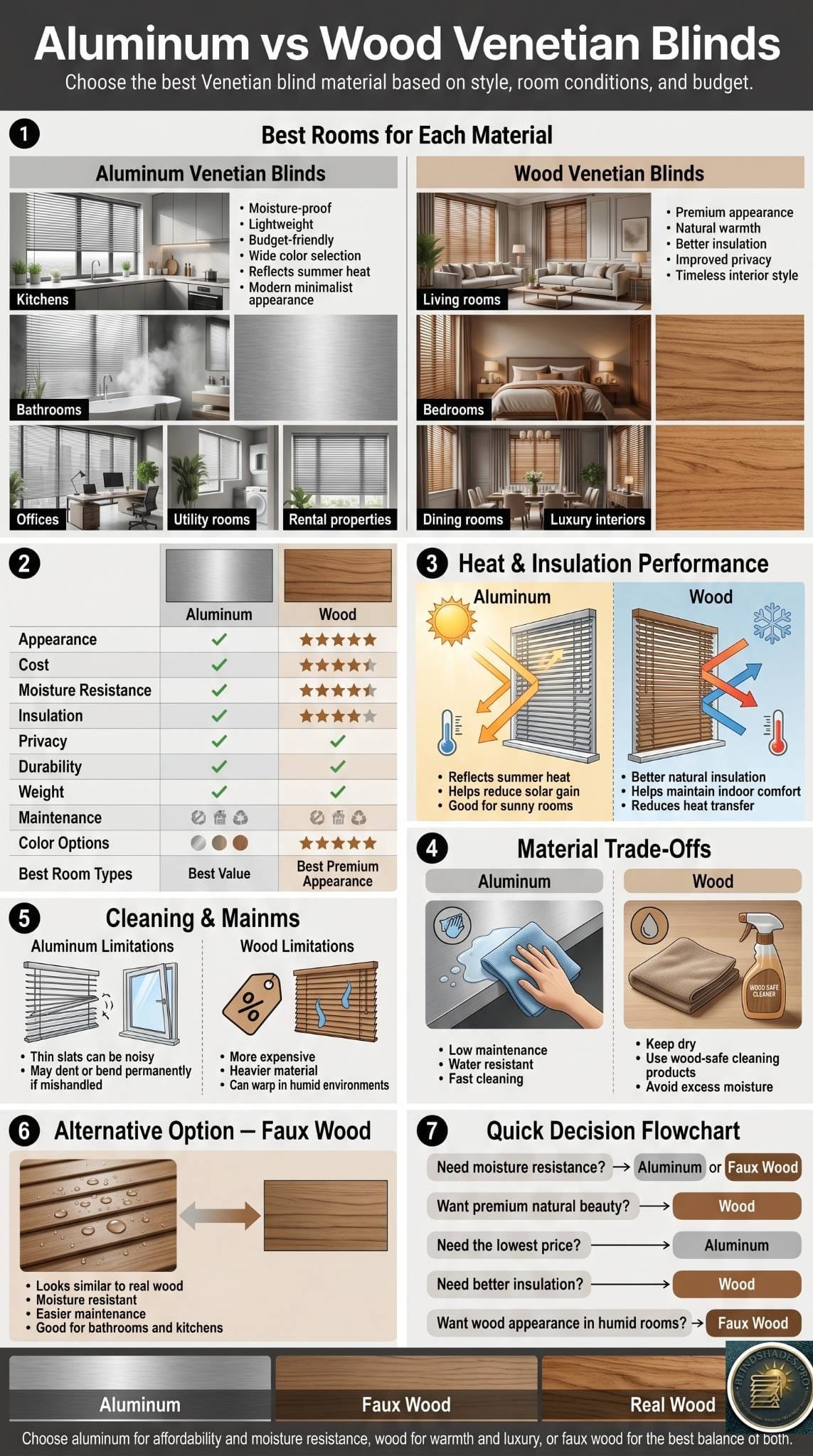
Authored by Michael Turner — 30 Years of Home Improvement Expertise | BlindShades.pro
Choose aluminum Venetian blinds for a slim, modern, low-cost slat that shrugs off moisture, which makes them ideal for kitchens, bathrooms, and offices. Choose wood Venetian blinds for a warm, premium look, better insulation, and tighter privacy in living rooms, bedrooms, and dining rooms. Aluminum is cheaper, lighter, and moisture-proof but can be noisy and bends permanently if mishandled; wood is warmer, more private, and better insulating but costs more, weighs more, and warps in humidity. The room and the look you want decide it.
Key Takeaways
- Moisture and room decide most of this. Aluminum is rust- and moisture-proof, so it belongs in kitchens, bathrooms, and other damp or hard-working rooms; wood warps and cracks in humidity, so it belongs in dry living spaces. As with most blind decisions, the room often settles it before any other factor.
- Aluminum is cheaper and slimmer; wood is warmer and more private. Aluminum gives a sleek 1-inch slat in a huge range of colors at the lowest price, with a modern or commercial feel. Wood gives a substantial 2-inch slat with genuine grain and warmth, a premium look, and tighter privacy, at a higher price.
- Wood insulates; aluminum reflects. Wood is a natural insulator that helps hold heat in winter, while aluminum reflects sunlight, which can help keep a room cooler in summer. They manage temperature in opposite ways, so the better choice depends on your climate and which season you are fighting.
- Aluminum can be noisy and bends permanently; wood is quieter and more robust. Thin aluminum slats can rattle in a draft and clatter when operated, and a creased aluminum slat stays creased. Wood is quieter, feels more solid, and survives a busy household better, though it can scratch and is heavier to lift.
- Faux wood is the third option that splits the difference. If you want the wood look but need aluminum’s moisture resistance, faux wood gives you both, which is why the real decision is often three-way rather than two.
⭐ Quick Answer
The choice of aluminum vs wood Venetian blinds comes down to look, room, and budget — modern and moisture-proof versus warm and insulating.
- Choose aluminum for a slim 1-inch slat that is modern, the cheapest option, and rust- and moisture-proof — ideal for kitchens, bathrooms, and offices, where Concorde Blinds rates it for durability and low cost.
- Choose wood for a warm, premium 2-inch slat with the best insulation and tighter privacy — Barlow Blinds notes solid wood slats block even shadows. Best for living rooms and bedrooms.
- Wood insulates, aluminum reflects. Wood holds heat in winter; aluminum bounces summer sun away, as Blindingly Obvious explains — so the better thermal pick depends on your climate.
- Aluminum trade-offs: thin slats can rattle, and a creased slat stays creased. Wood is quieter and more robust but heavier and warps in humidity.
- Want the wood look with moisture resistance? Faux wood is the third option — see wood vs faux wood blinds and best Venetian blinds for bathrooms. For the full decision and picks, see our best Venetian blinds guide.
Aluminum vs Wood Venetian Blinds: The Full Comparison
Every deciding factor side by side — the table most guides leave out.
| Factor | Aluminum Venetian blinds | Wood Venetian blinds |
|---|---|---|
| Look | Slim, modern, commercial | Warm, natural, premium |
| Typical slat size | 1 inch (25mm) | 2 inch (50mm) |
| Moisture resistance | Excellent (rust-proof) | Poor (warps in humidity) |
| Cost | Lowest | Premium |
| Weight | Light | Heavier |
| Insulation | Lower (but reflects heat) | Best (natural insulator) |
| Privacy | Good | Best (solid, opaque) |
| Noise | Can rattle and clatter | Quiet |
| Durability | Dents and bends permanently | Robust, but can scratch |
| Color range | Very wide (matte to metallic) | Stains and painted finishes |
| Best rooms | Kitchens, bathrooms, offices | Living rooms, bedrooms, dining |
Read down the column that matches your priorities. The sections below explain the factors that decide most rooms.
What Are Aluminum and Wood Venetian Blinds?
Aluminum is the slim metal mini blind; wood is the substantial hardwood slat — and slat size is part of the choice.
Aluminum Venetian blinds are made from lightweight metal slats, classically the 1-inch (25mm) mini blind that has been a fixture in homes and offices for decades. They come in an enormous range of colors and finishes, from flat neutrals to glossy and metallic, and each blind has a built-in headrail that gives a clean, designer look.
Wood Venetian blinds are milled from hardwoods, most commonly basswood, pine, or oak, usually in a chunkier 2-inch (50mm) slat. They take stains and painted finishes, show genuine grain, and bring the warmth and substance that metal cannot match.
That slat-size difference is itself part of the decision: the slim 1-inch aluminum slat reads minimal and modern and stacks compactly, while the 2-inch wood slat gives a bigger view when open, a bolder closed look, and a more traditional feel. Choose the material and you are largely choosing the slat scale too.
Which Handles Moisture Better?
Aluminum, easily — which is why it owns kitchens and bathrooms.
This is the most practical divider. Aluminum is rust- and moisture-proof, so steam, splashes, and humidity do not harm it, making it a natural fit for kitchens, bathrooms, and laundry rooms. Wood is the opposite: it absorbs moisture, swells, and over time warps or cracks, which rules it out of consistently damp rooms. If a window sees steam or splashes, aluminum wins this factor outright. If you love the wood look but need moisture resistance, faux wood is the bridge — covered in wood vs faux wood blinds.
Which Is Cheaper?
Aluminum, by a clear margin.
Aluminum Venetian blinds are typically the most affordable Venetian option, while wood sits at the premium end because of the cost of the hardwood and the craftsmanship. For a buyer weighing budget against look, aluminum delivers a clean, modern result for noticeably less, especially across several windows. Wood asks a higher upfront investment that buys warmth, substance, and resale appeal rather than pure function.
(Prices vary by brand, size, and finish — confirm current costs before ordering. We never publish fabricated figures.)
Which Insulates Better — and Does Aluminum Help in Summer?
Wood insulates better in winter; aluminum reflects heat, which can help in summer. They work in opposite directions.
Most guides simply say wood insulates better, which is true but only half the story. Wood is a natural insulator: its cellular structure slows heat transfer, helping hold warmth in winter and reduce heat gain, which can trim heating and cooling costs. Aluminum conducts heat more readily, so it insulates less, but its reflective metal surface bounces sunlight away, which as Blindingly Obvious notes can help keep a room cooler in summer. So the better thermal choice depends on your climate: wood for cold winters where you want to retain heat, aluminum’s reflectivity for hot, sunny rooms where you want to reject it.
Which Gives More Privacy?
Wood — because solid opaque slats block sightlines and shadows that thin metal can let through.
Privacy is a real and under-discussed difference. As Barlow Blinds points out, wooden blinds offer an exceptional level of privacy because the solid, opaque slats make it impossible for passers-by to see even shadows or shapes through them. Thin aluminum slats, by contrast, can leave finer gaps where they meet and, with a light behind them at night, can let more of a silhouette read from outside. For bedrooms, bathrooms, or any room where nighttime privacy matters, wood (or a tightly closing faux wood) has the edge.
Are Aluminum Blinds Noisy, and Can You Fix It?
Yes, thin aluminum slats can rattle and clatter — but cloth tapes and a few habits quiet them down.
One of aluminum’s genuine drawbacks, which competitors mention but never solve, is noise. Because the slats are thin, light metal, they can rattle against each other in a draft or by an open window, and they clatter more than wood when raised, lowered, or tilted. It is rarely a dealbreaker, but it is real. To reduce it: choose a blind with cloth ladder tapes rather than bare cords, which cushion the slats and dampen rattle; lower the blind or close the slats before opening a nearby window on a windy day; and operate the blind gently rather than letting it drop. Wood, being solid and heavier, is naturally quieter and does not rattle.
Which Is More Durable?
Wood is more robust day to day; aluminum’s thin slats bend permanently if mishandled.
Durability cuts both ways, and the honest picture matters. Aluminum resists moisture and will not warp, but its thin slats bend and crease permanently if a child, pet, or careless vacuum catches them, and a creased aluminum slat cannot be straightened back. Wood is heavier and more solid, so it survives knocks and a busy household better and will not crease, though it can scratch or dent and must be kept dry. For a high-traffic room with kids or pets, wood (or faux wood) generally holds up better than thin aluminum; for a low-touch window where moisture is the bigger threat, aluminum’s durability is plenty.
Which Looks Better?
It is modern versus warm — aluminum for sleek and contemporary, wood for classic and substantial.
This one is genuinely down to taste. Aluminum gives a sleek, minimalist, contemporary or commercial look, and its vast color range, from matte to metallic, makes it easy to match a modern scheme. Wood gives warmth, natural grain, and a premium, timeless feel that suits traditional and contemporary rooms alike and reads as a quality, built-in feature. If your room is modern and you want the blind to recede, aluminum fits; if you want the window treatment to add warmth and richness, wood delivers.
What About Faux Wood — the Third Option?
Faux wood gives you the wood look with aluminum’s moisture resistance, which makes this a three-way decision.
Aluminum versus wood is not really a straight two-way choice, because faux wood sits between them and resolves the most common conflict. If you are drawn to wood for its warmth but to aluminum for its moisture resistance and lower price, faux wood gives you the wood appearance, full moisture resistance, and a mid-range price, at the cost of some weight and a printed rather than natural grain. For damp rooms where you still want the wood aesthetic, faux wood often beats both. The full comparison is in wood vs faux wood blinds, and whether real wood justifies its premium is covered in are wooden Venetian blinds worth it.
Which Is Better for Offices and Commercial Spaces?
Aluminum — its low cost, durability, slim look, and moisture resistance make it the commercial standard.
If you are fitting out an office, rental, or commercial space rather than a home, aluminum is usually the clear pick. The slim 1-inch slat gives a clean, professional, modern appearance, the low per-unit cost matters across many windows, and the moisture resistance and easy wipe-clean maintenance suit hard-working environments. Wood reads as warmer and more residential, which is why it is favored for executive offices or hospitality settings where atmosphere matters more than budget. For most functional commercial windows, aluminum is the practical default.
Room-by-Room Verdict
Match the material to the room and the choice is clear.
| Room or need | Best choice |
|---|---|
| Kitchen, bathroom, laundry | Aluminum (or faux wood) |
| Living room, bedroom, dining room | Wood |
| Office, rental, commercial | Aluminum |
| Hot, sunny rooms (summer heat) | Aluminum (reflects) |
| Cold climates (winter warmth) | Wood (insulates) |
| Nighttime privacy | Wood |
| Tight budget | Aluminum |
| Highest-end, warmest look | Wood |
Still deciding whether wood earns its premium? See are wooden Venetian blinds worth it. For wet-room specifics, see best Venetian blinds for bathrooms, and for the complete material decision and our real-brand picks, the best Venetian blinds guide.
Related guides: For complete buying advice, see our real wood blinds buying guide.
Best Sources
- Blindingly Obvious — on wood insulating better through its natural thermal properties while aluminum reflects sunlight to help cool a room in summer.
- Barlow Blinds — on wood offering exceptional privacy because solid slats block shadows and shapes, and on the woods used (pine, basswood, oak).
- Concorde Blinds — on aluminum being the choice for durability, low maintenance, and cost-effectiveness, and on the history of each.
- DotcomBlinds — on aluminum offering less insulation and a less warm look than wood among the four Venetian materials.
Related Guides
- Best Venetian Blinds Buying Guide
- Wood vs Faux Wood Blinds
- Are Wooden Venetian Blinds Worth It
- Best Venetian Blinds for Bathrooms
Frequently Asked Questions
Are aluminum or wood Venetian blinds better?
Neither is universally better; it depends on the room, look, and budget. Aluminum is better for kitchens, bathrooms, and offices because it is moisture-proof, slim, modern, and the cheapest option. Wood is better for living rooms and bedrooms because it is warmer, more private, and insulates better, though it costs more and warps in humidity.
Are aluminum blinds cheaper than wood blinds?
Yes. Aluminum Venetian blinds are typically the most affordable Venetian option, while wood sits at the premium end because of the cost of the hardwood and the craftsmanship involved. The price gap is most noticeable when fitting out several windows at once.
Are aluminum Venetian blinds noisy?
They can be. Because the slats are thin, light metal, they rattle in a draft and clatter more than wood when operated. You can reduce the noise by choosing cloth ladder tapes instead of bare cords, lowering or closing the blind before opening a nearby window on a windy day, and operating it gently. Wood blinds are naturally quieter.
Do wood blinds give more privacy than aluminum?
Yes. Wood slats are solid and opaque, so they block sightlines and even shadows, while thin aluminum slats can leave finer gaps and let more of a silhouette read from outside with a light behind them at night. For bedrooms and bathrooms where nighttime privacy matters, wood or a tightly closing faux wood has the edge.
Which is better for a bathroom, aluminum or wood?
Aluminum, because it is rust- and moisture-proof and will not warp in steam or humidity, unlike wood. Faux wood is also a good moisture-resistant choice if you want the wood look in a bathroom. Real wood should be kept out of consistently damp rooms.
