Pleated Blinds vs Cellular Shades

Authored By Michael Turner -30 Years Home Improvement Expertise | Updated 2026 | BlindShades.pro
Updated on July 1, 2026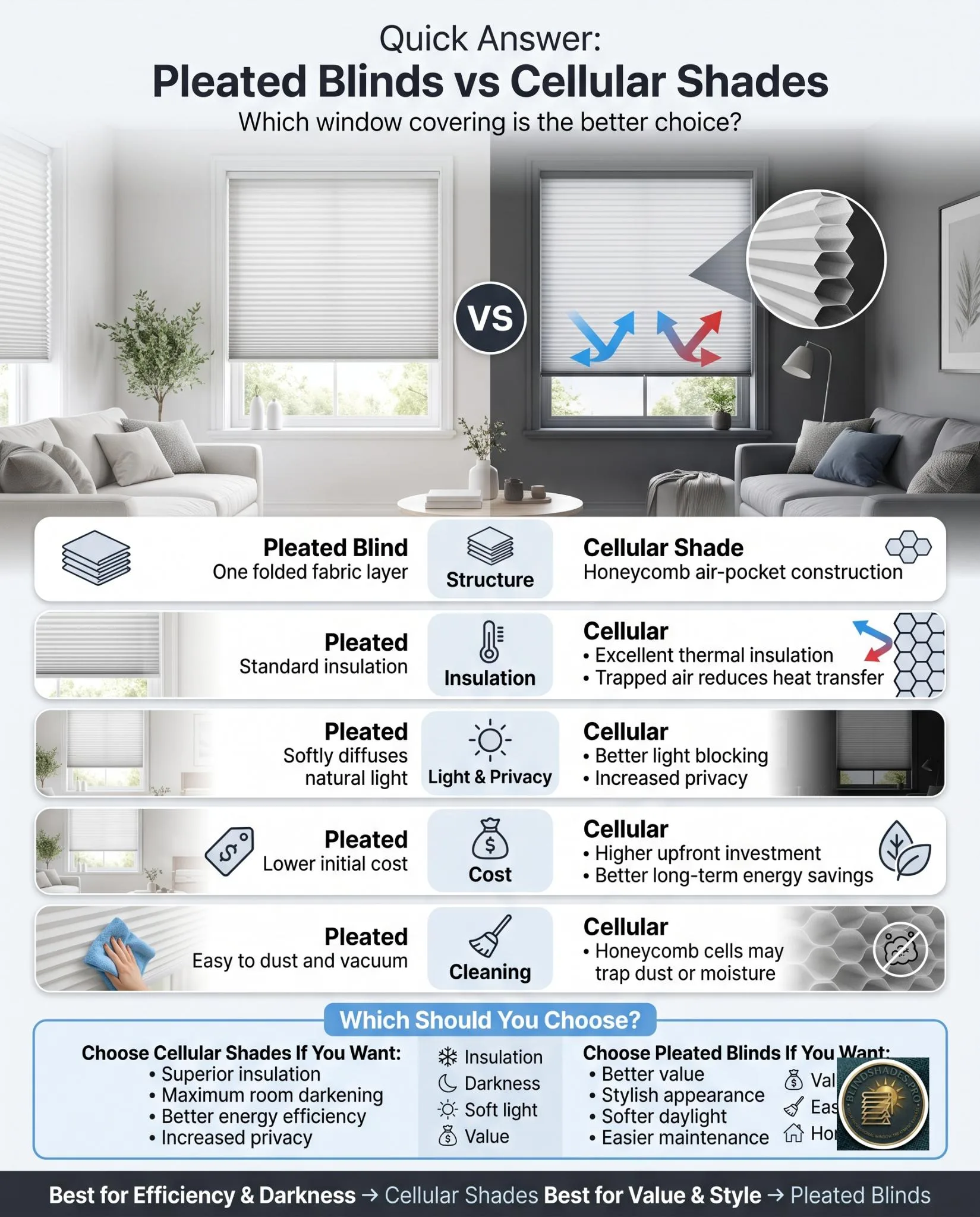
Authored by Michael Turner — 30 Years of Home Improvement Expertise | BlindShades.pro
Pleated blinds and cellular shades look almost identical from the front, but one difference decides everything: a pleated blind is a single layer of folded fabric, while a cellular shade is two layers joined into honeycomb-shaped air pockets. That air pocket gives cellular shades far better insulation, quieter rooms, and more complete light blocking, which is why they cost more. Pleated blinds, in turn, are simpler, cheaper, and offer a wider range of decorative fabrics with a slightly larger pleat. Choose cellular shades if energy efficiency, warmth, or a dark bedroom matters most, and choose pleated blinds if you want a classic fabric look at a lower price for a room where insulation is not the priority. This guide compares the two across structure, insulation, light, cost, and cleaning so you can decide with confidence.
Key Takeaways
- The honeycomb is the whole difference. Pleated shades have one fabric layer; cellular shades have honeycomb air pockets that trap air.
- Cellular insulates far better. The trapped air makes cellular shades the energy-efficiency standard, cutting window heat loss significantly; pleated shades insulate very little.
- Pleated costs less. Pleated blinds are more affordable upfront, while cellular shades cost more but can pay back through energy savings.
- Cellular darkens and quiets better. The layered structure blocks more light and absorbs more sound; pleated diffuses light more softly.
- Pleated is easier to clean. A single layer is simpler to dust and spot-clean; dust or moisture can get trapped inside a cellular honeycomb.
⭐ Quick Answer
Pleated blinds vs cellular shades comes down to one difference: a pleated blind is a single fabric layer, while a cellular shade has honeycomb air pockets that insulate.
- Structure: pleated is one folded layer; cellular is two layers forming honeycomb cells, as Graber explains.
- Insulation: cellular wins clearly, the trapped air cuts window heat loss, while pleated insulates very little, a point Hunter Douglas stresses.
- Light and privacy: cellular blocks light more completely; a single-layer pleated shade diffuses light more softly.
- Cost: pleated is cheaper upfront; cellular costs more but can pay back through energy savings, as Bali notes.
- Choose cellular for efficiency and darkness, pleated for value and style. Explore best cellular shades, best blackout pleated blinds, or our best pleated blinds guide.
The Core Difference: One Layer or Two
From the front they match; from the side, everything changes.
Look at a pleated blind and a cellular shade head-on and you will struggle to tell them apart, both are crisp, evenly folded fabric on a headrail. The difference is only visible from the side. A pleated blind is a single continuous sheet of accordion-folded fabric. A cellular shade, also called a honeycomb shade, is two layers of fabric bonded together so that each pleat forms a hollow tube, or cell, when viewed end-on, exactly like a honeycomb. That single structural difference, one layer versus a honeycomb of trapped air, is what drives every practical difference in insulation, light, sound, cost, and cleaning that follows. Everything else is a consequence of the honeycomb.
Pleated Blinds vs Cellular Shades: Full Comparison
The whole picture in one table.
| Factor | Pleated Blinds | Cellular Shades |
|---|---|---|
| Structure | Single layer of folded fabric | Two layers forming honeycomb cells |
| Insulation | Minimal | Strong, the trapped air insulates |
| Energy efficiency | Low | High (the main reason to choose cellular) |
| Light blocking | Good, especially with a liner | Best, more complete, better blackout |
| Sound absorption | Low | Higher, the cells dampen noise |
| Fabric variety | Very wide, larger pleat | Wide, smaller cell sizes |
| Cost | Lower upfront | Higher, offset by energy savings |
| Cleaning | Easier, single layer | Harder, dust can lodge in the cells |
| Best for | Value, style, mild climates | Insulation, darkness, extreme climates |
This is the comparison at a glance; the sections below explain the factors that most often decide the choice. In short, cellular shades win on insulation, light blocking, and sound, while pleated blinds win on price, fabric variety, and ease of cleaning. Which set of strengths matters more depends entirely on your room and climate.
Insulation and Energy Efficiency
This is the whole reason cellular shades exist.
If energy efficiency matters to you, this is the deciding factor. The honeycomb cells in a cellular shade trap a layer of air between the window and the room, creating an insulating barrier that slows heat moving through the glass, in winter and summer alike. Industry sources note that cellular shades can reduce heat loss through windows significantly, commonly cited at up to around 40 percent, which is why they are marketed as the energy-efficiency standard among fabric shades. A pleated blind, with its single fabric layer and no air pocket, provides very little insulation by comparison. So in a cold climate, a hot climate, or on a large or drafty window where energy bills matter, cellular is the clear choice; in a mild climate or a room where insulation is not a concern, the pleated blind’s lower price wins.
Light and Privacy
Both offer light-filtering to blackout; cellular seals better.
Both pleated blinds and cellular shades come in a full range of opacities, from light-filtering to room-darkening to blackout, so both can be configured for privacy or a dark bedroom. The difference is in how completely they block light. Because a cellular shade has two layers and a more continuous structure, it blocks light more thoroughly and makes a better blackout shade, while a single-layer pleated blind diffuses light more softly and, in unlined versions, offers less privacy after dark. For a genuinely dark bedroom, cellular has the edge; for soft, glowing daytime light in a living room, the pleated blind’s single layer is actually a pleasant feature. If you want the darkest pleated setup specifically, see best blackout pleated blinds.
Cost and Value
Pleated is cheaper to buy; cellular can pay itself back.
| Consideration | Pleated Blinds | Cellular Shades |
|---|---|---|
| Upfront price | Lower | Higher |
| Energy savings | Little | Can offset the higher price over time |
| Best value when | Insulation is not a priority | Heating and cooling costs matter |
On price, pleated blinds are the more affordable option upfront, thanks to their simpler single-layer construction, which is a major reason they remain popular for budgets and whole-home projects. Cellular shades cost more, but that higher price buys insulation that can reduce heating and cooling costs over time, so on an energy-hungry window the extra spend can pay itself back. The honest way to think about it: if the room does not need insulation, you are paying for a benefit you will not use with cellular, and pleated is the better value. If the room does, cellular’s higher price is an investment rather than a cost. Prices vary widely by size, fabric, and brand, so treat these as directional rather than exact.
Cleaning and Maintenance
Pleated is the easier one to keep clean.
| Cleaning factor | Pleated Blinds | Cellular Shades |
|---|---|---|
| Dusting | Easy, no cavity to trap dust | Dust can lodge in the cells |
| Grease or moisture | Wipes off a single layer | Can get trapped inside the honeycomb |
| Best setting | Kitchens, greasy or humid rooms | Drier, lower-grease rooms |
| Soaking | Never soak either type | Never soak either type |
Both types are low-maintenance and mostly need occasional dusting, but the honeycomb structure gives cellular shades one disadvantage: dust, and especially grease or moisture, can get trapped inside the cells, where it is hard to remove. A single-layer pleated blind has no cavity to trap debris, so it is a little easier to dust and spot-clean. Neither should be soaked, and the gentle care that keeps either looking good, dusting along the pleats and blotting stains rather than scrubbing, is the same for both, covered in how to clean pleated blinds. If a kitchen or other greasy environment is the setting, the easier-cleaning pleated blind has a small edge.
Pleat Size and Appearance
Pleated blinds usually have a larger pleat; cellular comes in set cell sizes.
Up close, there is a subtle look difference. Pleated blinds typically have a larger, more pronounced pleat, while cellular shades come in defined cell sizes, commonly around three-eighths to three-quarters of an inch, with smaller cells suiting smaller windows and larger cells suiting bigger ones. Pleated shades are also often the same color on the front and back, whereas many cellular shades are white on the room-facing side for a uniform look from the street. These are minor aesthetic points rather than performance differences, but if the exact look of the fold matters to you, they are worth noticing in a showroom or sample.
Which Should You Choose?
Match the shade to the room and the priority.
| Choose pleated blinds if | Choose cellular shades if |
|---|---|
| You are on a budget | Energy efficiency is a priority |
| Insulation is not a concern | You live in a hot or cold climate |
| You want a wide fabric look | You need a dark bedroom or media room |
| It is a living room or kitchen | You want quieter, better-insulated rooms |
| Easy cleaning matters | Long-term energy savings matter |
The decision comes down to your priority. Choose cellular shades if lowering heating and cooling costs, maximizing darkness, or quieting a room matters most, especially in a demanding climate. Choose pleated blinds if you are on a budget, want a classic textured-fabric look, or are furnishing a space like a living room or kitchen where maximum insulation is not needed and easy cleaning is a plus. Many homes use both, cellular in bedrooms and on big windows, pleated in lower-priority rooms. To explore cellular fully, see our best cellular shades guide, and for pleated, the best pleated blinds guide.
What About Roller Shades?
A third common option worth a quick look.
Pleated and cellular are not the only choice; roller shades are the other big contender, offering a smooth, single-panel look rather than folded pleats. Rollers suit a modern, minimalist aesthetic and blackout setups, while pleated and cellular give the classic folded-fabric look. If a roller is on your shortlist, see how it stacks up in pleated blinds vs roller blinds. And if neither pleated nor cellular feels right, our alternatives to pleated blinds covers the full range of options by priority.
Best Sources
- Bali — on cellular shades surpassing the insulating power of pleated and all other shades, and the shared simplicity and even pleats of both.
- Graber — on how similar pleated and cellular shades look from the front, both mounted on a headrail, and where they differ in fabric and function.
- Hunter Douglas — on cellular shades providing more energy efficiency than pleated because of their honeycomb construction, and typical pleat and cell sizes.
- Redi Shade — on both being built from similar fabrics and offering effective light control, with the honeycomb as the key structural difference.
- Blinds Chalet — on the honeycomb trapping air for insulation and sound absorption, and cellular reducing window heat loss significantly.
Related Guides
- Best Pleated Blinds Buying Guide
- Best Cellular Shades Buying Guide
- Best Blackout Pleated Blinds
- Pleated Blinds vs Roller Blinds
Frequently Asked Questions
What is the difference between pleated blinds and cellular shades?
Pleated blinds and cellular shades look almost identical from the front, but differ in construction. A pleated blind is a single layer of folded fabric, while a cellular shade is two layers bonded into honeycomb-shaped air pockets. That air pocket is the whole difference: it gives cellular shades far better insulation, more complete light blocking, and better sound absorption, which is why they cost more. Pleated blinds are simpler, cheaper, offer a wider fabric range, and are easier to clean. Choose cellular for efficiency and darkness, and pleated for value and style.
Which is better, pleated blinds or cellular shades?
Neither is universally better; it depends on your priority. Cellular shades are better for energy efficiency, darkness, and quiet, thanks to the insulating air in their honeycomb cells, making them the choice for demanding climates, bedrooms, and large windows, at a higher price. Pleated blinds are better for value, a wide fabric look, and easy cleaning, making them ideal for budgets and rooms like living rooms or kitchens where insulation is not the priority. Many homes use cellular where efficiency matters and pleated elsewhere, matching each shade to the room.
Are cellular shades worth the extra cost over pleated blinds?
They can be, when insulation matters. Cellular shades cost more than pleated blinds because of their honeycomb construction, but that structure traps air and can reduce window heat loss significantly, often cited at up to around 40 percent, which can offset the higher price through lower heating and cooling bills over time. On an energy-hungry window or in an extreme climate, that makes cellular a worthwhile investment. In a mild climate or a room where insulation is not needed, you would be paying for a benefit you will not use, so the cheaper pleated blind is the better value.
Do pleated blinds insulate as well as cellular shades?
No. Insulation is the single biggest difference between them. A cellular shade’s honeycomb cells trap a layer of air that slows heat transfer through the window, which is why cellular is marketed as the energy-efficiency standard among fabric shades. A pleated blind is a single fabric layer with no air pocket, so it provides very little insulation by comparison. If reducing heat loss or gain is a goal, cellular is clearly the better choice; if insulation is not a concern for the room, a pleated blind’s lower price makes it the more sensible option.
Are pleated blinds or cellular shades easier to clean?
Pleated blinds are slightly easier to clean. Because a pleated shade is a single layer of fabric, there is no cavity for dust or debris to lodge in, so it dusts and spot-cleans simply. A cellular shade’s honeycomb cells can trap dust and, in a kitchen, grease or moisture, which is harder to remove from inside the cells. Neither type should be soaked; both are best kept clean by gentle dusting along the pleats and careful blotting of stains. In a greasy or high-moisture setting, the easier-cleaning pleated blind has a small advantage.
