Insulating Windows for Renters

Authored By Michael Turner -30 Years Home Improvement Expertise | Updated 2026 | BlindShades.pro
Updated on July 24, 2026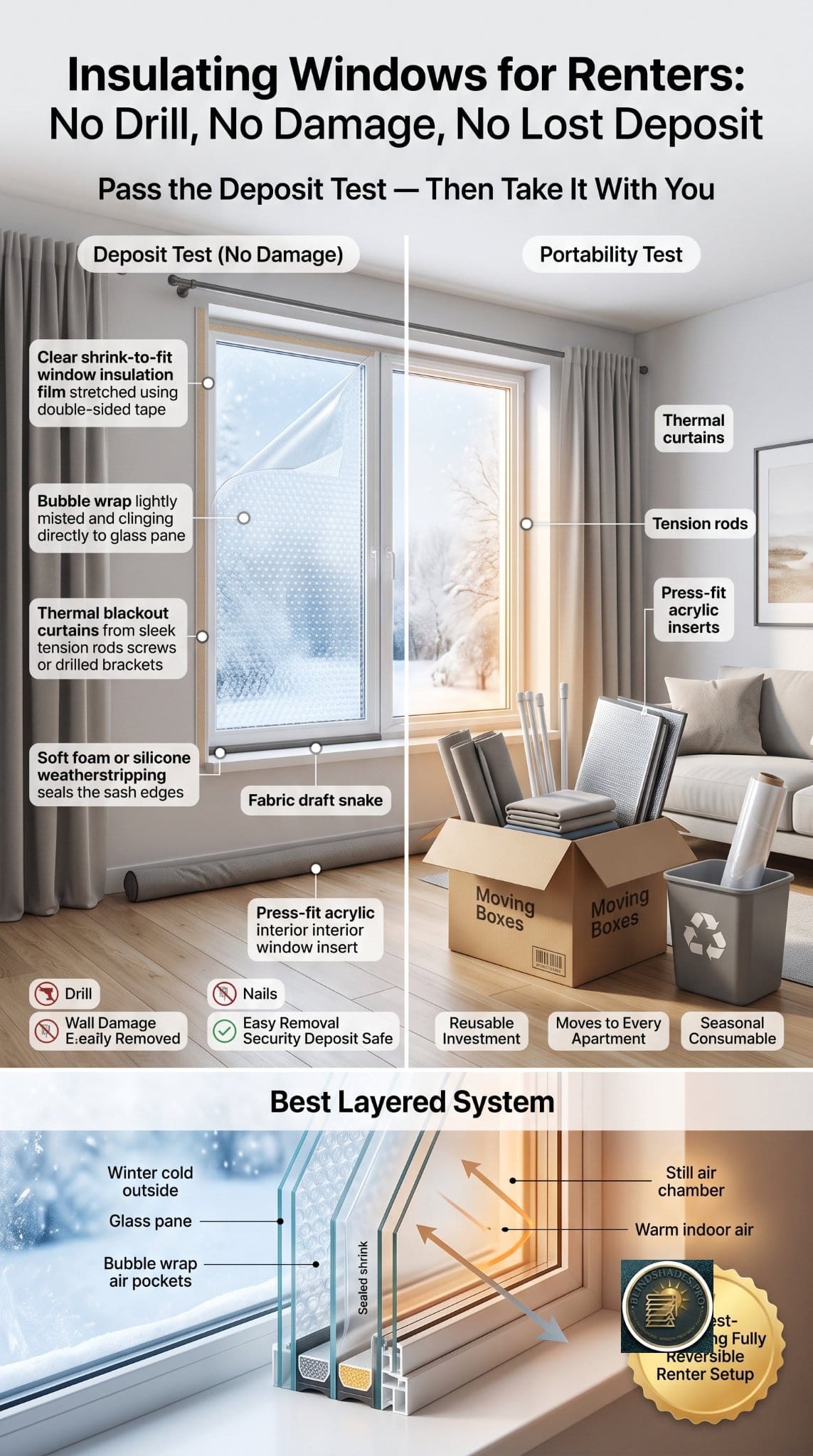
By Michael Turner — 30 years in window treatments
Insulating windows for renters is judged by two tests the method lists never run: does it come off clean at move-out, and does the money move with you? Shrink film, cling-only bubble wrap, tension-rod thermal curtains, draft snakes, and press-in inserts all pass the deposit test — but only some of them are assets you’ll carry to the next apartment. And the biggest deposit risk isn’t tape residue at all: it’s the mold that grows when every window in a rental gets sealed airtight. Score the methods on both tests, keep one window breathing, and put the real spend into things you own.
Key Takeaways
- The deposit-safe core is settled: shrink film that peels away at move-out, thermal curtains on tension rods, bubble wrap clinging to misted glass, repositionable weatherstripping, and draft snakes — the field’s consensus renter kit, all reversible.
- The community’s best method is a stack: bubble wrap misted onto the glass, shrink film sealed over it, no gaps — the eleven-year crown thread’s layered build, combining bubble insulation with a sealed air barrier.
- Portability is the unscored test. Film, tape, and rope caulk are consumed in place; curtains, rods, sewn panels, and press-in inserts are assets that move out with you. Frequent movers should weight the spend toward things they keep.
- Mold beats tape as the deposit killer. The field’s own safety rule — leave at least one window unsealed for airflow — matters most: a sealed, humid rental grows condensation and mold, and mold remediation dwarfs any residue charge.
- The landlord letter is the unlock nobody mentions: real weatherstripping, storm windows, even cellular shades improve the landlord’s property, and a short written request often gets them funded or permitted.
⭐ Quick Answer — Insulating Windows for Renters
Insulating windows for renters is judged by two tests the method lists never run — and the winning kit passes both:
- The deposit-safe core: shrink film that peels away at move-out, thermal curtains on tension rods with zero drilling, bubble wrap clinging to misted glass, draft snakes, and repositionable weatherstripping — the consensus kit Move.org’s apartment guide anchors.
- The community’s best build is the layered stack: bubble wrap misted onto the glass, shrink film sealed over the frame, no gaps — the eleven-year crown thread’s method, and the highest-performing fully reversible barrier a renter can make for pocket change.
- Score the spend on portability too: film and tape are consumed in place, while curtains, tension rods, sewn reflective panels, and press-in inserts like Indow’s are assets that move to the next apartment — frequent movers weight the budget toward things they keep.
- Protect the deposit from the real killer: leave at least one window breathing — a rental sealed airtight grows condensation and mold, and mold charges dwarf tape residue. Seal and dry together, per the U.S. Department of Energy’s air-sealing-plus-ventilation logic.
- Go deeper: the full method clinic and cost ladder live in cheapest ways to insulate windows, the summer panels in do reflective foil window covers work, and the layers worth owning outright in our Thermal & Insulated Blinds guide.
Insulating Windows for Renters: No Drill, No Damage, No Lost Deposit
Pass the Deposit Test — Then Take It With You: a renter’s insulation is judged twice, at the move-out inspection and at the moving truck.
The field agrees on the kit, and it’s a good one. Shrink-to-fit window film is called the ultimate renter-safe hack for a reason — double-sided tape and clear plastic trap a sealed air barrier over the frame, and the assembly peels away at move-out; the decade-old rented-apartment answer and this January’s step-by-step guides land on the same product. Thermal curtains hang from tension rods with zero holes. Bubble wrap presses onto lightly misted glass and simply clings — not pretty, as Move.org concedes, but effective and probably the cheapest barrier going. Draft snakes block sill drafts instantly, repositionable weatherstripping seals sashes without commitment, and Indow-style inserts press into the frame as a more permanent panel that still leaves no trace. The deep how-to for every method — install clinic, brand table, cost rungs — lives in our cheapest ways to insulate windows guide; this page’s job is the two tests that decide which of them a renter should buy.
Test one is the deposit test — surfaces and residue: tape on painted frames gets the painters-tape-first doctrine from how to stop cold air coming through windows, film comes down before it bakes on, and nothing gets drilled. Test two is the one no article scores: portability. A roll of film is consumed where it’s installed; lined thermal curtains, the tension rods holding them, press-in inserts, and the sewn reflective panels from do reflective foil window covers work are possessions. The film is the seasonal consumable; the curtains are the investment that moves to every future apartment.
And the community’s crown method deserves promotion from snippet to system: the layered stack — bubble wrap misted onto the glass first (spray and it clings), shrink film sealed over the frame second, no gaps anywhere. Bubble adds trapped air at the pane; film seals the assembly into one still-air pocket. The highest-performing fully-reversible build a renter can make for pocket change.
The Renter’s Method Ledger
| Method | Winter power | Deposit test | Takes with you? |
|---|---|---|---|
| Shrink film kit | Strong — the sealed air barrier | Passes; peels clean if removed by spring | No — consumable |
| The layered stack (bubble + film) | The reversible maximum | Passes; both layers release clean | No — consumable |
| Bubble wrap solo | Good, cheap, translucent | Passes; water-cling only | Reusable a season or two |
| Thermal curtains on tension rods | Strong with the seal geometry honored | Passes; zero holes | ⭐ Yes — the flagship portable |
| Press-in window inserts | Strong — a second pane, in effect | Passes; lifts out | ⭐ Yes — sized to fit, they move if windows match |
| Sewn reflective panels | The summer tool | Passes; frame-mounted, no glass contact | ⭐ Yes |
| Draft snakes | Small but instant | Passes trivially | Yes |
| Repositionable weatherstrip | Real gains at the sash | Passes; peels by design | No — consumable |
| Rope caulk | Good for frame gaps | Passes with spring removal | No — consumable |
What Actually Protects Your Deposit?
Rule one: leave one window breathing. The field’s own safety line is the page’s most valuable — keep at least one unsealed window active for airflow. A rental sealed airtight over a winter of cooking, showers, and breathing becomes a condensation farm, and the mold that follows is the deposit charge that makes tape residue a rounding error. Watch the glass for beading and run the diagnosis-and-drying ladder from thermal blinds and condensation at the first wet sill. Sealed and dry together, never sealed alone.
Rule two: send the landlord letter. The play the field skips: real weatherstripping, storm windows, repaired seals, even installed cellular shades are permanent improvements to the landlord’s property. A short written request — the drafty window, the cheap permanent fix, why it protects their frames from condensation damage — gets a surprising number of upgrades funded or permitted. The worst answer is no, and the paper trail protects you at inspection time.
Which Fits Your Rental?
| Your situation | The kit | Why |
|---|---|---|
| Single-pane windows, cold winter | The layered stack + heavy curtains on tension rods | Maximum reversible R on the worst glass |
| One cold bedroom | Film on that window + a thermal curtain | Target the spend where you sleep |
| Summer west glass | Sewn reflective panels, frame-mounted | The renter’s interception tool — removable by fall |
| Strict lease, nervous landlord | Cling-only and tension-only methods + the letter | Nothing adhesive, everything documented |
| Moving within a year | Curtains, rods, inserts, panels — the portable tier | Consumables burn money you won’t recover |
| Staying three years | Film seasonally + the landlord letter for permanent fixes | Long tenancies justify the ask |
Avoid These Mistakes
Sealing every window airtight. The mold farm is the real deposit risk. One window breathes, humidity gets watched, and the seal comes with the drying habits.
Duct tape on painted frames. The doctrine stands: painters tape first, sealing tape over it, everything peels in spring.
Leaving film up until move-out morning. Sun-baked adhesive is the residue that costs deposits. Film comes down when winter does.
Buying consumables before a move. Film and rope caulk spent in an apartment you’re leaving is money left behind — the portable tier exists for exactly this.
Drilling anyway. Tension rods, cling layers, and press-in inserts exist so no bit ever touches a rented frame. If a mount truly needs screws, that’s what the letter is for.
Who Should Buy Which?
The consumable tier (film, stack, strips, rope caulk) ✔
- Cold winters, long leases, worst-window targeting
- Anyone happy to spend a little each season for the sealed maximum
The consumable tier ✖
- Renters moving within months — the spend doesn’t travel
The portable tier (curtains, rods, inserts, panels) ✔
- Frequent movers building a kit they keep
- Strict leases where only zero-adhesive methods feel safe
The landlord-letter route ✔
- Long tenancies, genuinely defective windows, and any fix worth making permanent
The Bottom Line
Insulating windows for renters is everyone else’s physics with two extra judges: the move-out inspection and the moving truck. Run the consensus kit, score everything on removal and portability, keep one window breathing so mold never enters the story, and send the letter before assuming permanent fixes are off the table. The method depth lives in cheapest ways to insulate windows, the curtain seal rules in blinds vs curtains for insulation, and the layers worth owning outright in our Thermal & Insulated Blinds guide.
FAQ
What is the best way to insulate my apartment windows? The layered stack for pure performance — bubble wrap misted onto the glass, shrink film sealed over the frame, no gaps — with thermal curtains on tension rods over the top for the coldest rooms. It’s the community’s eleven-year answer, fully reversible, and built entirely from deposit-safe parts.
How do I winterize single-pane windows in a rental? Single panes are where the reversible kit earns most: the layered stack on the glass, repositionable weatherstrip at the sashes, a draft snake on the sill, a heavy curtain sealed to the wall at night. A press-in insert adds the second pane the window never had — and lifts out at lease end.
Will window film damage paint or cost me my deposit? Applied to the frame with its own double-sided tape and removed before summer heat bakes the adhesive, shrink film peels clean — that’s its whole design. The risks are leaving it up for years, or using aggressive tapes on painted wood; the painters-tape-first stack removes even that.
Do I need landlord permission to insulate my windows? For the cling, tension, and press-in kit — generally no, though strict leases vary. For anything adhesive on painted surfaces, or anything permanent, ask in writing: the letter often turns permission into funding, since sealed, dry windows protect the landlord’s own frames.
Related Guides
- Cheapest Ways to Insulate Windows — the full method clinic and cost ladder
- The Best Thermal & Insulated Blinds — the layers worth owning
- Do Reflective Foil Window Covers Work? — the summer panels
- Thermal Blinds and Condensation — the moisture discipline
