Wood vs Faux Wood Blinds: Which Should You Choose?

Authored By Michael Turner -30 Years Home Improvement Expertise | Updated 2026 | BlindShades.pro
Updated on July 16, 2026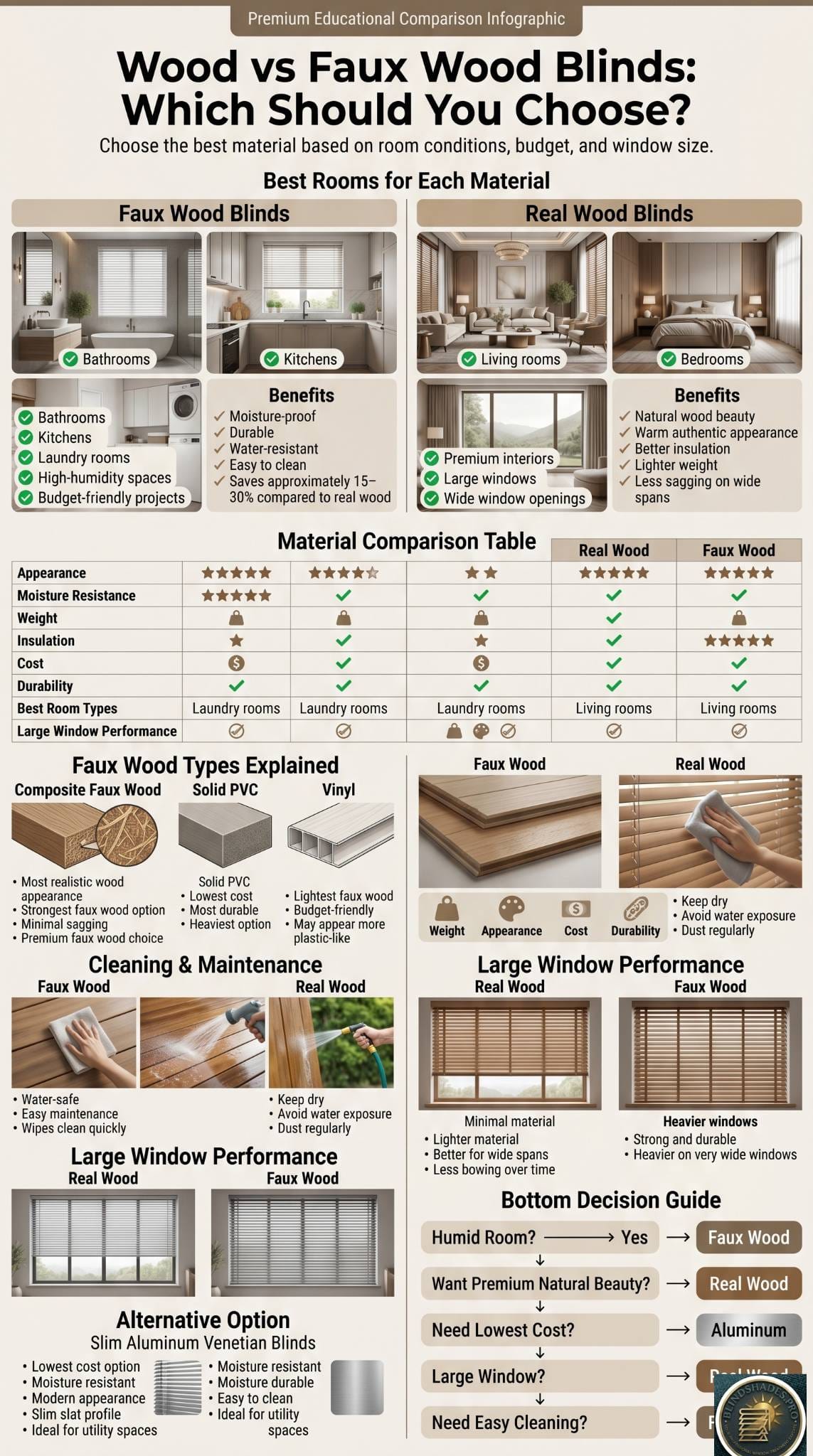
Authored by Michael Turner — 30 Years of Home Improvement Expertise | BlindShades.pro
The choice between wood and faux wood blinds comes down to three things: the room, your budget, and the window size. Choose faux wood for any humid room (bathrooms, kitchens, laundries) and to save roughly 15 to 30 percent, because it is moisture-proof and cheaper. Choose real wood for living rooms and bedrooms where you want the warmest, most authentic look and the best insulation, and for large or wide windows, because real wood is lighter and sags less across a span. Everything else follows from those three decisions.
Key Takeaways
- The single biggest divider is moisture. Real wood warps, swells, and cracks when it absorbs humidity, so it is the wrong choice for bathrooms, kitchens, and laundry rooms. Faux wood is made from PVC or a wood-polymer composite that is impervious to moisture, which makes it the default for any damp room. This one factor settles most decisions on its own.
- Faux wood is cheaper, by roughly 15 to 30 percent. Because it is made from man-made materials that are less expensive to source than hardwood, faux wood costs noticeably less for a similar look, which is why it is the budget-and-durability pick.
- Real wood is lighter, which matters more than people expect on large windows. This is the point most buyers get backwards: real wood weighs less than faux wood, so it operates more smoothly and sags less across a wide span. On big or wide windows, real wood is often the better engineering choice, not the indulgent one.
- Real wood wins on warmth, insulation, customization, and resale; faux wins on durability and easy cleaning. Real wood takes stains, comes in wider slats and exotic species, insulates better thanks to its natural structure, and adds resale appeal. Faux wood shrugs off scratches and moisture and wipes clean with water, but its printed grain is a touch less authentic up close.
- They are not your only two options. For many of the reasons people choose faux wood (moisture resistance and low cost), aluminum is a slimmer, even cheaper third choice worth knowing about before you decide.
Related guides: if real wood wins your comparison, the species, slat and brand decisions are in our real wood blinds buying guide.
⭐ Quick Answer
The choice of wood vs faux wood blinds comes down to three things: the room, your budget, and the window size.
- Choose faux wood for bathrooms, kitchens, and any humid room, and to save 15 to 30 percent. It is impervious to moisture, durable, and wipes clean — as The Curtain notes on its lower cost.
- Choose real wood for living rooms and bedrooms where you want the warmest look and best insulation — and for large windows, because real wood is lighter and sags less. Moisture is the enemy of real wood, per King Shade and Window.
- Faux sub-types matter: composite (wood fiber plus polymer) looks most like wood and sags least; solid PVC is cheapest and heaviest; vinyl is lightest but can look plasticky, as The Shade Store outlines.
- Cleaning differs: faux takes water or a hose; real wood must stay dry — see how to clean Venetian blinds.
- Consider aluminum too for moisture resistance at the lowest price in a slimmer slat — see aluminum vs wood Venetian blinds. For the full material decision and picks, see our best Venetian blinds guide.
Related guides: the best faux wood blinds guide — the Three-W Test, weight limits, and picks by gate.
Wood vs Faux Wood Blinds: The Full Comparison
Here is every deciding factor side by side — the one table most guides never assemble.
| Factor | Real wood blinds | Faux wood blinds |
|---|---|---|
| Material | Basswood, oak, or bamboo hardwood | PVC, vinyl, or wood-polymer composite |
| Moisture resistance | Poor — warps and cracks in humidity | Excellent — impervious to moisture |
| Cost | Premium | Roughly 15 to 30 percent less |
| Weight | Lighter | Heavier |
| Best window size | Large and wide (lighter, sags less) | Small to medium |
| Insulation | Best (natural air pockets) | Good, slightly less |
| Authentic look | Warmest, real grain | Convincing, but grain is printed |
| Customization | Most (stains, wide slats, species) | Limited |
| Cleaning | Dry or barely damp only | Damp cloth, even hose-washable |
| Durability | Good with care | Very high, scratch and dent resistant |
| Resale appeal | Higher | Neutral |
| Typical lifespan | 10-plus years with care | 10-plus years |
Read down the column that matches your priorities, and the choice usually becomes obvious. The sections below explain the factors that decide most rooms.
What Are Wood and Faux Wood Blinds Made Of?
Real wood is milled hardwood; faux wood is one of three synthetic builds, and which one matters.
Real wood blinds are milled from hardwoods, most commonly North American basswood for its light weight and straight grain, sometimes oak or bamboo. They take stain and paint, come in the widest range of slat sizes and finishes, and have the authentic grain and warmth synthetic materials only imitate.
Faux wood blinds are not one material but three, and choosing the right sub-type is a decision competing guides skip:
- Composite (wood-polymer): real wood fibers blended with PVC or polymer. It looks the most like real wood, is the most rigid (so it sags least of the faux options), and sits in the middle on price. This is the faux to choose if you want the wood look with the least compromise.
- Solid PVC: all plastic, the most durable and moisture-proof, the cheapest, but also the heaviest, which matters on wide windows.
- Vinyl (often hollow): the lightest and cheapest, but it can look and feel the most plasticky and is less rigid.
If you are choosing faux, composite is usually the best balance of looks, rigidity, and price; PVC is the value-and-moisture champion; vinyl is the budget floor.
Which Handles Moisture Better?
Faux wood, decisively — and this single factor decides most damp rooms.
This is the most important practical difference. Real wood is hygroscopic: it absorbs moisture from humid air, swells, then shrinks as it dries, and over repeated cycles the slats warp, crack, or twist. As King Shade and Window puts it, moisture is the enemy of real wood. Faux wood, by contrast, is impervious to moisture — you could submerge it without harm — which makes it the clear choice for bathrooms, kitchens, laundry rooms, mudrooms, and basements.
If a window sees steam, splashes, or persistent humidity, this factor alone points to faux wood regardless of anything else. For the specifics of wet-room blinds, see best Venetian blinds for bathrooms.
Which Is Cheaper?
Faux wood, by roughly 15 to 30 percent.
Cost is the other decider for many buyers. Because faux wood is made from man-made materials that are cheaper to source and process than hardwood, it consistently costs less for a comparable size and look. Industry estimates, including from The Curtain, put faux wood at around 15 to 30 percent less than equivalent real wood blinds. That gap widens on larger windows and with premium real-wood options like custom stains, exotic species, or wide slats, which carry a price premium. If budget is the priority, faux wood delivers most of the wood look for noticeably less.
Which Is Better for Large Windows?
Real wood — because it is lighter and sags less, which is the opposite of what most people assume.
Here is the counterintuitive point that trips up most buyers. Faux wood is heavier than real wood, and on a wide window that weight causes the blind to sag across the span, makes it harder to raise smoothly, and strains the mounting brackets over time. Real wood, milled from light basswood, weighs less and holds a wide span better. As The Curtain and other specialists note, real wood blinds weigh much less than PVC versions, making them easier to lift on tall windows.
A practical rule: for windows wider than roughly 60 to 72 inches, lean toward real wood for its lighter weight, or plan to split a faux-wood blind into two so each half stays manageable. Either way, account for it when you measure — see how to measure for Venetian blinds for the split-blind method. If wide-window weight is your main concern, real wood is the better engineering choice, not just the prettier one.
Which Insulates Better?
Real wood, because its natural structure resists heat transfer better than solid plastic.
Real wood blinds insulate slightly better than faux. The reason is structural: natural wood contains tiny air pockets in its cellular structure that slow the transfer of heat and cold, whereas the denser solid PVC in many faux blinds conducts more readily. The difference is modest, but in a room where you are managing heat loss or summer gain, real wood has a small edge, which adds to its appeal in living rooms and bedrooms.
Which Is Easier to Clean and Maintain?
Faux wood — it takes water and shrugs off scratches, while real wood must stay dry.
Maintenance is where faux wood earns its keep day to day. Because it is moisture-proof, you can wipe it with a damp cloth, use a mild cleaner, or in some cases hose it down, and it resists scratches, dents, and fading. Real wood needs gentler care: dry dusting, a barely damp cloth at most, and an occasional wood-appropriate polish, because water warps and stains it. The full method for each material is in how to clean Venetian blinds. If low-effort upkeep matters, faux wood wins clearly.
Which Looks Better and Adds More Value?
Real wood, for warmth, authenticity, and resale — though good faux is convincing from a normal distance.
For pure looks, real wood is hard to beat: genuine grain, the ability to take rich stains, wide slat options, and a warmth that reads as premium. High-quality faux wood imitates this well and is convincing across a room, but its grain is printed or embossed, and luxury buyers may notice the difference up close. Real wood also tends to add more resale appeal, reading as a quality, built-in feature to buyers. If the room is on show and authenticity matters, real wood is the choice; if practicality leads, faux gets you most of the look.
What About the Environmental Trade-Off?
Both have an honest downside — real wood is renewable but harvested; faux is durable but petroleum-based.
Neither option is simply the green one, and it is worth being straight about both sides. Real wood is a renewable, biodegradable material, and if the slats are FSC-certified the timber comes from responsibly managed forests, which is the more sustainable path — but it still relies on harvesting trees. Faux wood is made from PVC or polymer, which is petroleum-based and not biodegradable, and its production emits more CO2 than harvesting certified wood; its counterpoint is durability, since a faux blind that never warps may last longer and need replacing less often. If sustainability drives your choice, FSC-certified real wood is generally the stronger pick, with long-lived faux as a durability-based alternative.
Are Wood and Faux Wood Your Only Options?
No — aluminum is a slimmer, cheaper third choice for the same moisture-and-budget reasons people pick faux.
Many people land on faux wood for two reasons: moisture resistance and low cost. Aluminum delivers both, in an even slimmer, more modern slat and often at a lower price. It is rust- and moisture-proof like faux, lighter, and gives a sleek contemporary or commercial look rather than a wood look. The trade-off is that thin aluminum slats bend more easily and can be noisier. If you are drawn to faux mainly for practicality rather than the wood appearance, it is worth comparing the metal option too — see aluminum vs wood Venetian blinds.
Room-by-Room Verdict
Match the material to the room and the decision is straightforward.
| Room or need | Best choice |
|---|---|
| Bathroom, kitchen, laundry, basement | Faux wood (or aluminum) |
| Living room, dining room, bedroom | Real wood |
| Large or wide windows | Real wood (lighter, sags less) |
| Tight budget | Faux wood (or aluminum) |
| Highest-end look and resale | Real wood |
| Low-maintenance, kid- and pet-heavy homes | Faux wood |
Still weighing whether real wood earns its premium? See are wooden Venetian blinds worth it. For the complete material decision and our real-brand picks, see the best Venetian blinds guide.
Related guides: For complete buying advice, see our real wood blinds buying guide.
Related Guides
- Best Venetian Blinds Buying Guide
- Aluminum vs Wood Venetian Blinds
- Are Wooden Venetian Blinds Worth It
- Best Venetian Blinds for Bathrooms
Frequently Asked Questions
Are wood or faux wood blinds better?
Neither is universally better; it depends on the room, budget, and window size. Faux wood is better for humid rooms like bathrooms and kitchens, for tight budgets (it costs 15 to 30 percent less), and for low-maintenance homes. Real wood is better for living rooms and bedrooms where you want the warmest look and best insulation, and for large windows, because it is lighter and sags less.
Are faux wood blinds cheaper than real wood?
Yes. Faux wood blinds typically cost around 15 to 30 percent less than comparable real wood blinds, because the man-made materials are cheaper to source and process than hardwood. The gap is widest on larger windows and against premium real-wood options like custom stains, exotic species, or wide slats.
Do faux wood blinds look like real wood?
Good-quality faux wood blinds look convincingly like real wood from a normal distance and come in wood-grain finishes and colors. The difference shows up close: faux grain is printed or embossed rather than natural, so luxury buyers may notice it. Composite faux wood, which blends real wood fibers with polymer, looks the most authentic of the synthetic options.
Can faux wood blinds be used in a bathroom?
Yes — faux wood is one of the best bathroom choices because it is impervious to moisture and will not warp, swell, or crack in humidity or steam, unlike real wood. You can wipe it clean with water or even hose it down. Aluminum is another good moisture-proof option for wet rooms.
Which is better for large windows, wood or faux wood?
Real wood is usually better for large windows because it is lighter than faux wood, so it sags less across a wide span, raises more smoothly, and strains the brackets less. For windows wider than roughly 60 to 72 inches, lean toward real wood, or split a faux-wood blind into two so each half stays manageable.
